Reading time for each short story with images: under 1 minute
Why the Turtle Has a Shell
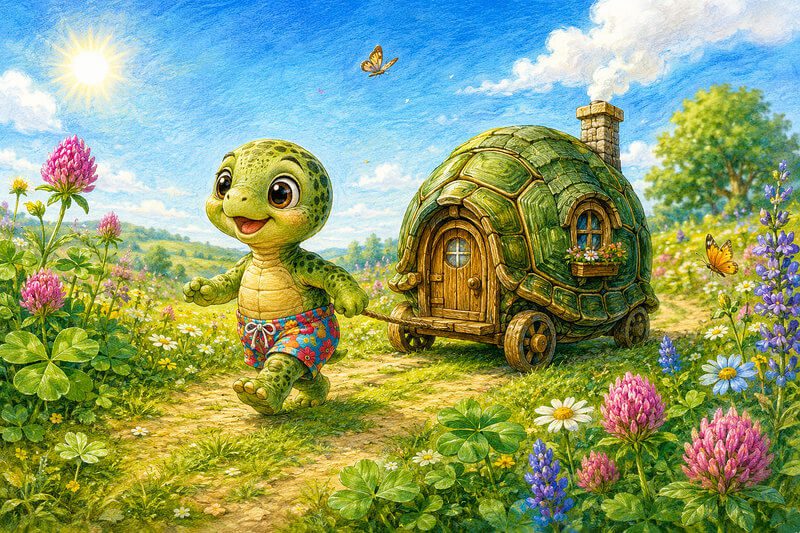
Sophie spotted a turtle.
“Why does it carry its house around?” she asked.
Grandma smiled.
“It doesn’t carry it.”
“No?”
“Nope. One day, the turtle hid from the rain under a tiny little house.
The rain stopped, and the turtle started heading home.
The little house came along too.
It stayed so close for so long that one day it became the turtle’s shell.”
More short stories with images for kids and parents:
The Polite Echo

The echo always answered.
Even when nobody was talking to it.
“Hello!” shouted Emma into the mountains.
“Hello!” the echo called back right away.
“How are you?” she added.
“How are you?” answered the echo.
“I wasn’t asking you,” Emma said with a huff.
“I wasn’t asking you,” agreed the echo.
And it answered anyway.
The Greedy Puddle
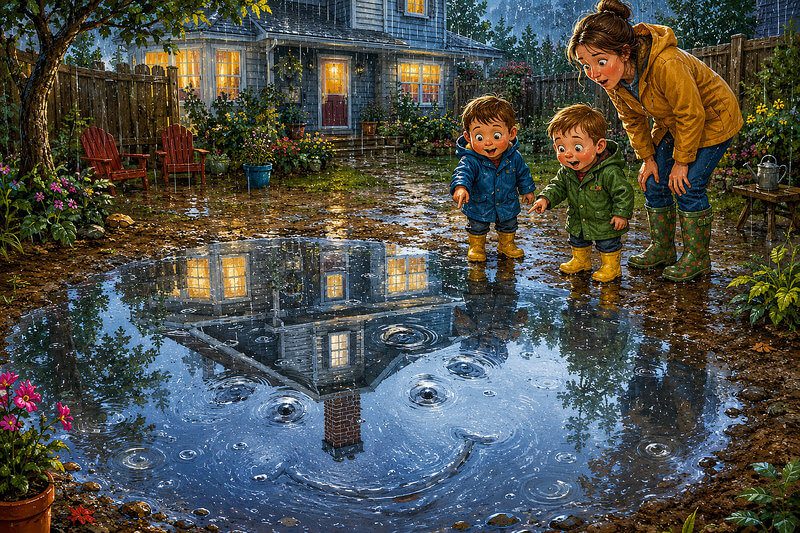
After the rain, a puddle appeared in the yard.
Small, round, and shiny.
Then one more raindrop fell from the sky.
Plop!
The puddle drank it right up.
Then another little drop.
And another.
“Look, Mom!” said Caleb. “The puddle is drinking the rain!”
Mom looked closer.
And the puddle really was drinking.
Plop!
Plop!
Plop!
With every gulp, it grew bigger and bigger.
Soon the fence’s reflection sank inside it.
Then the tree’s reflection sank too.
Then the reflection of the whole house disappeared.
Now only the chimney was sticking out of the puddle.
“Stop!” cried Caleb. “It’s going to eat the whole yard!”
But then the rain stopped.
The puddle gave a loud gurgle.
And couldn’t drink one more drop.
Maybe even greedy puddles can get full.
Who Will Pop First?
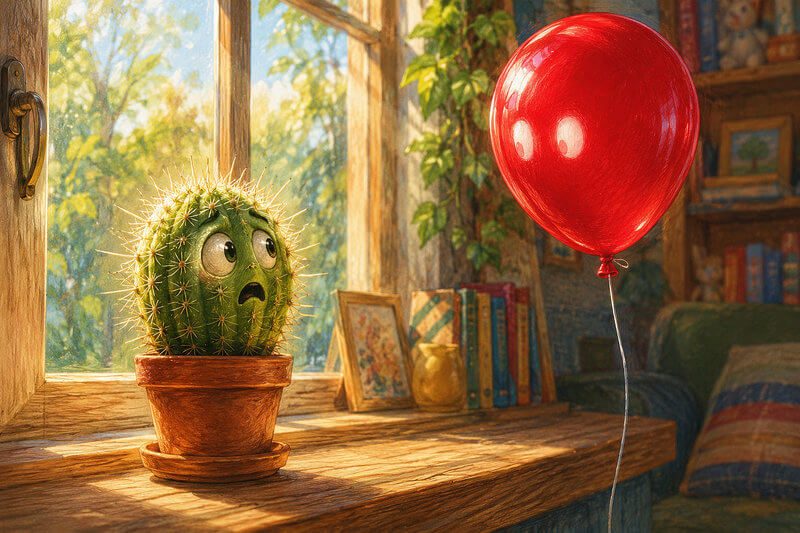
A cactus lived on the windowsill.
One day, someone brought a red balloon into the room.
The cactus saw it and poked out every single spine.
“Mom, why is he mad?” asked Lily.
“He isn’t mad,” Mom said. “He’s scared.”
“Scared of what?”
“The balloon.”
Lily blinked.
“Why?”
Mom shrugged.
“What if he pops first?”
The cactus watched the balloon very carefully.
The balloon watched the cactus very carefully.
That’s how they sat all day.
Each one waiting for the other to start something first.
By evening, the balloon floated up to the ceiling.
At last, the cactus stopped worrying.
The balloon had backed away first.
When Baxter’s Ears Blew Away
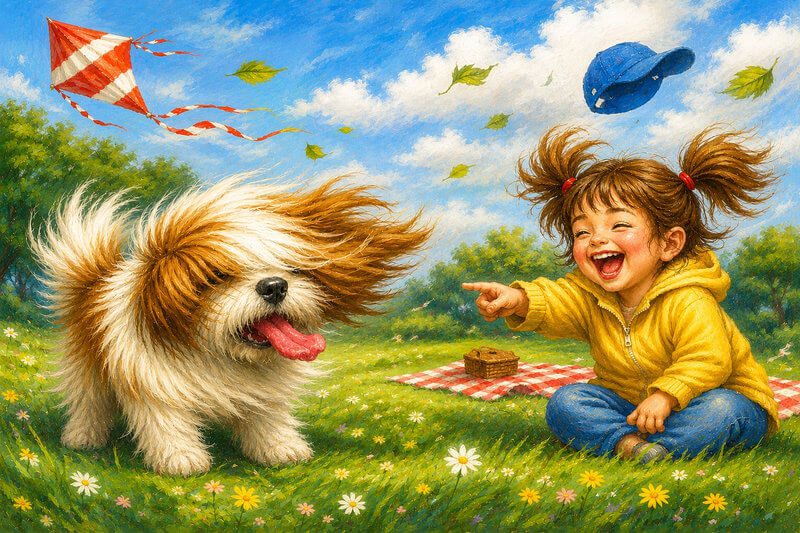
One day, a very strong wind blew in.
It blew so hard
that Baxter’s ears ran off ahead of him.
Baxter ran after them.
The ears flew over the path.
Baxter raced behind.
The ears sailed over a puddle.
Baxter jumped over the puddle.
The ears swooped around the flower bed.
Baxter swooped around the flower bed.
At last, the wind got tired.
The ears flopped back down on both sides of his head.
Baxter sat in the grass and panted hard.
“Well? Did you catch them?” the girl asked, laughing.
Baxter nodded and stuck out his tongue.
But just then, the wind rushed in again and carried off his tail!
Good thing tails can’t run as fast as ears.
The Hurried Snail
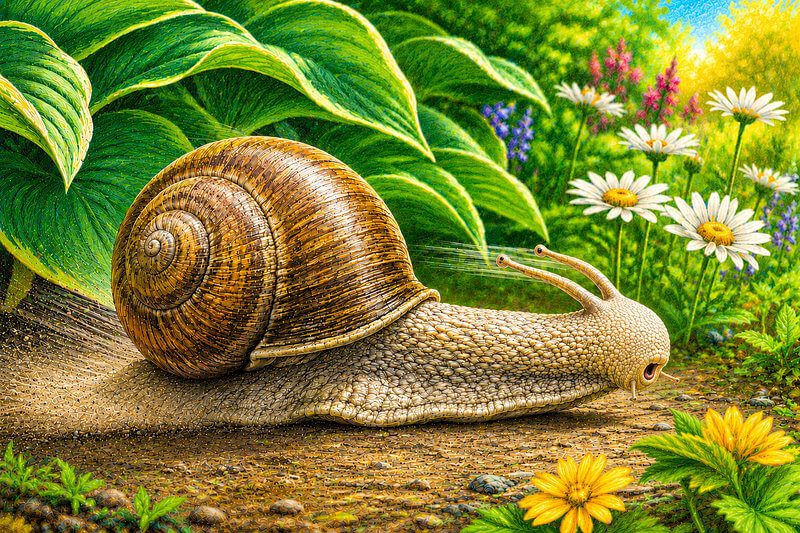
The snail was in a huge hurry.
It crawled so fast,
so fast,
so fast,
that its eye stalks couldn’t keep up.
“Wait for us!” shouted the eye stalks.
But the snail was hurrying to lunch.
At last, it stopped beside a delicious leaf.
The eye stalks caught up a minute later.
“Phew!” they said.
Then they drooped sadly.
Ever since then, the snail tries not to rush anywhere.
Its eye stalks like to arrive together.
The Giggling Rainbow
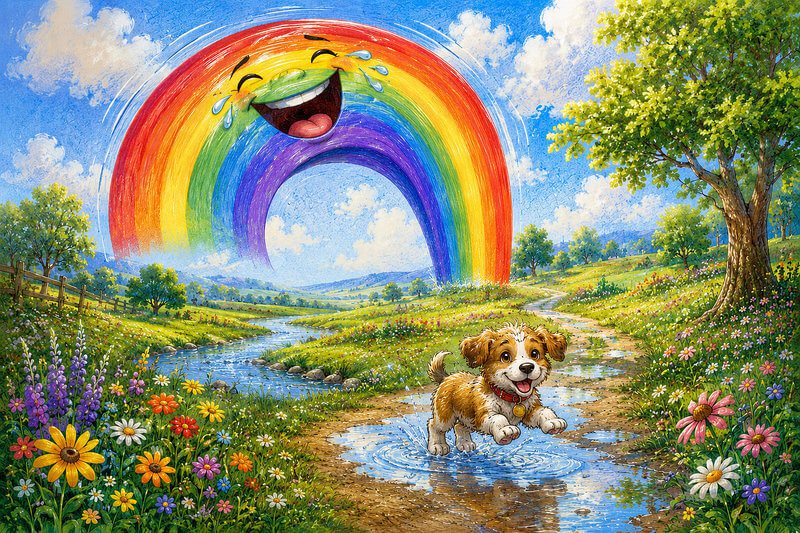
People told the rainbow,
“Stand up straight. You’re a rainbow!”
The rainbow tried to listen.
It really did.
But then it spotted a happy little river below.
Then it saw a meadow bursting with flowers.
Then it noticed a goofy puppy stomping through puddles.
And the rainbow burst out laughing.
It laughed so hard
that it bent right in half.
Since then, nobody asks the rainbow to stand up straight anymore.
It’ll just start giggling again.
The Brave Crayon
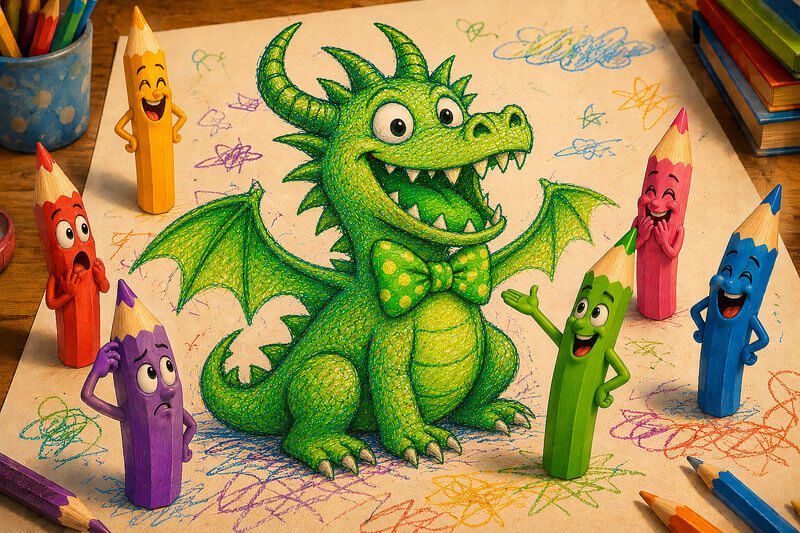
One crayon wanted to draw a dragon so badly
that it jumped onto the paper first.
“Be careful with that dragon!” called the other crayons.
But the brave crayon was already racing ahead,
its tip pressed firmly against the page.
First, it drew a long tail.
Then a mouth full of sharp teeth.
Then enormous wings.
And then it stopped.
“What happened?” asked the other crayons.
“This dragon turned out way too scary,” said the crayon. “I think I’m scared of it!”
“So what are you going to do now?”
The crayon thought.
And thought.
And then quickly drew a big bow on the dragon.
That made the dragon much friendlier.
The Pillow That Missed Sadie

That evening, the pillow was left on the couch.
All by itself.
The couch was quiet.
And lonely.
And the pillow felt very, very hurt.
At night, everyone fell asleep.
So did little Sadie.
But in the morning, the pillow was on her bed.
“Mom, how did it get here?!” Sadie asked, surprised.
Mom looked at her daughter and smiled.
“Maybe it came by itself.”
“But why?”
“I think it missed you.”
The pillow didn’t say a word.
It was still a little bit hurt.
The Nosy Door
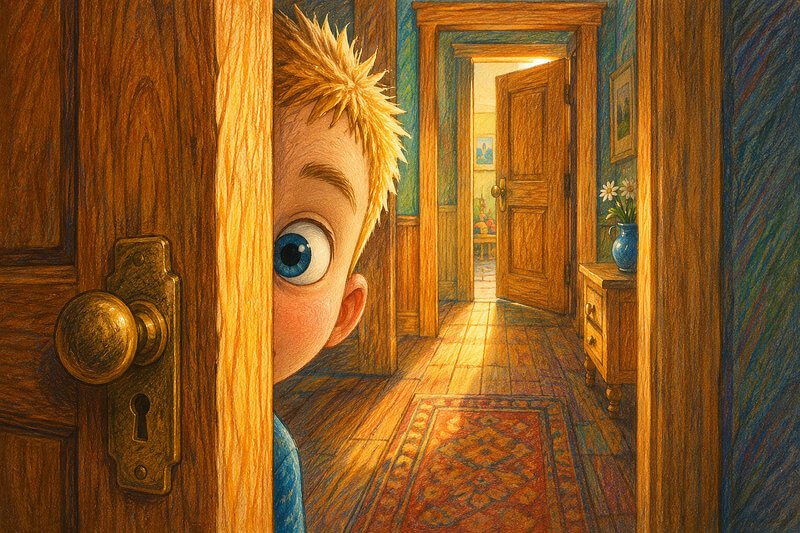
The door was open.
Just a tiny crack.
“Why isn’t it closed all the way?” asked Max.
Dad looked at the little crack.
“It’s being nosy.”
“What?”
“It wants to see what’s happening in the hallway.”
“So what did it see?”
Dad thought for a moment and said,
“Another door!”
Max peeked into the hallway.
At the other end, there really was another door.
Also open just a crack.
“Oh! Is that one looking too?”
“Of course.”
After that, the doors kept peeking at each other for a very long time.
And neither one wanted to close first.
What if it missed something interesting?
The Impatient Teapot
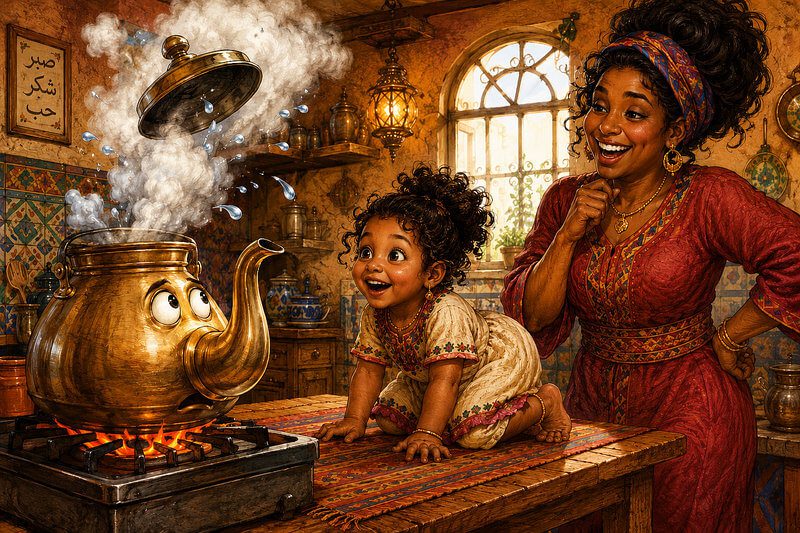
The Impatient Teapot
The teapot hadn’t boiled yet,
but its lid was already bouncing with excitement.
“Why is it jumping?” asked Mira.
“It can’t wait,” Mom said.
“Can’t wait for what?”
“To boil.”
The lid bounced even higher.
The teapot hadn’t even started boiling yet.
Imagine how excited the lid would be then.
The Brave Flashlight
Night came.
And it got dark.
Very dark.
The darkness hid under the table.
Under the bed.
Inside the closet.
Even in the corners.
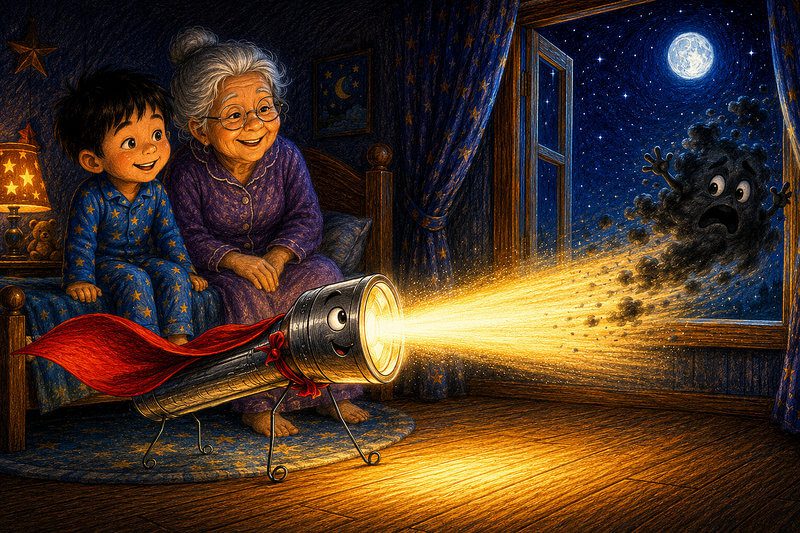
Then the flashlight clicked on
and faced all the darkness by itself.
It shined under the table.
It shined under the bed.
It shined into the closet.
The darkness backed away.
And away.
And away.
Then it ran off completely.
“Who won?” asked little Kai.
“The flashlight, of course!” Grandma said with a smile.
The flashlight glowed just a little brighter.
Just in case.
The Extra-Polite Fork
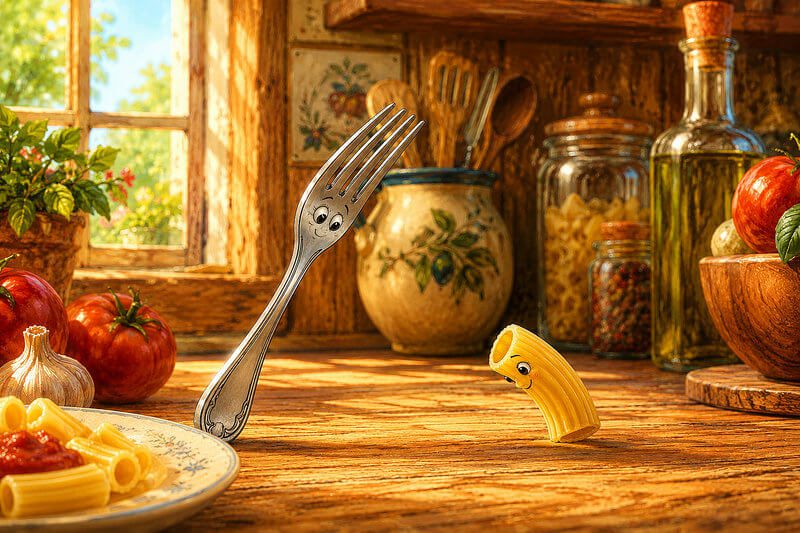
A fork spotted a macaroni noodle.
Before doing anything else, it said hello.
“Good afternoon, Mr. Macaroni.”
The macaroni noodle gave a polite bow.
“Good afternoon, Ms. Fork.”
Only then did the fork pick it up.
“Thank you,” said the macaroni.
“You’re very welcome,” replied the fork.
They both had excellent manners.
So they kept thanking each other.
The Shy Icicle
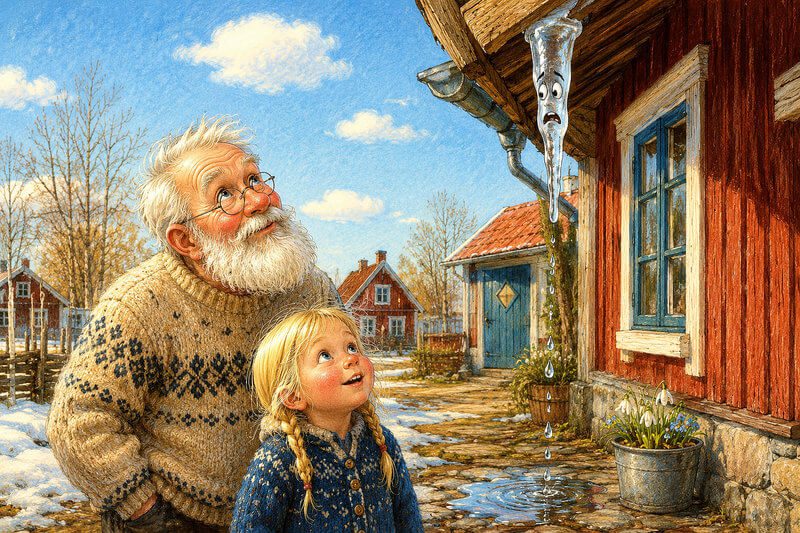
The icicle saw spring
and slowly started disappearing.
“Where is it going?” asked Lucy.
Grandpa looked at the icicle.
“It’s hiding.”
“Hiding from what?”
“Spring.”
The icicle got a little smaller.
Then smaller still.
And then it disappeared completely.
But spring found it anyway.
The Snowbank Who Ate Winter

The snowbank caught snowflakes with its big, soft mouth.
Catch.
Catch.
Catch.
Until it became the biggest, roundest snowbank in the whole yard.
“Whoa!” said Katie.
“What is it?” asked her older brother.
“It ate almost all of winter. What a little piggy!”
But the snowbank opened its mouth
and caught one more snowflake.
Just to be safe.
The Forgetful River
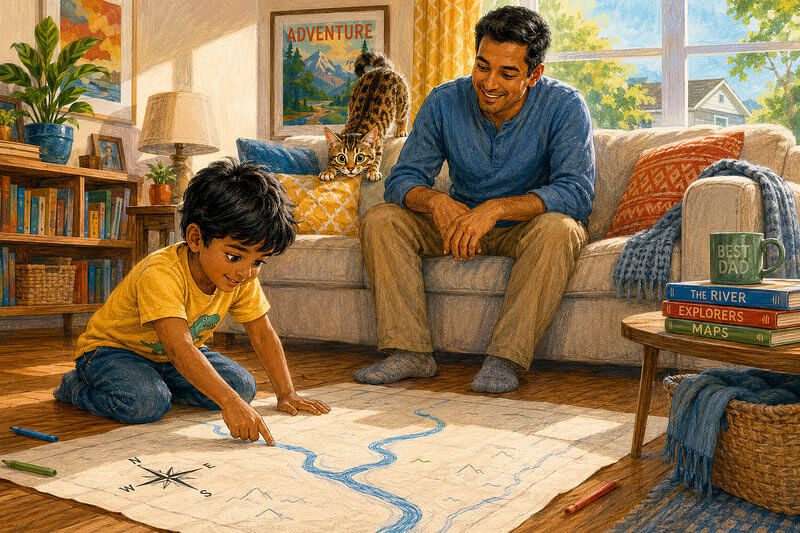
The river was in such a hurry to reach the ocean
that it misplaced a few of its bends along the way.
“Where did they go?” asked Leo.
Dad looked at the map.
“Here’s one.”
“And here’s another.”
“And one more over there.”
“So what happens now?”
“Nothing.”
Dad smiled.
“Tomorrow, the river will remember where it left them.”
The Candle and Its Flame
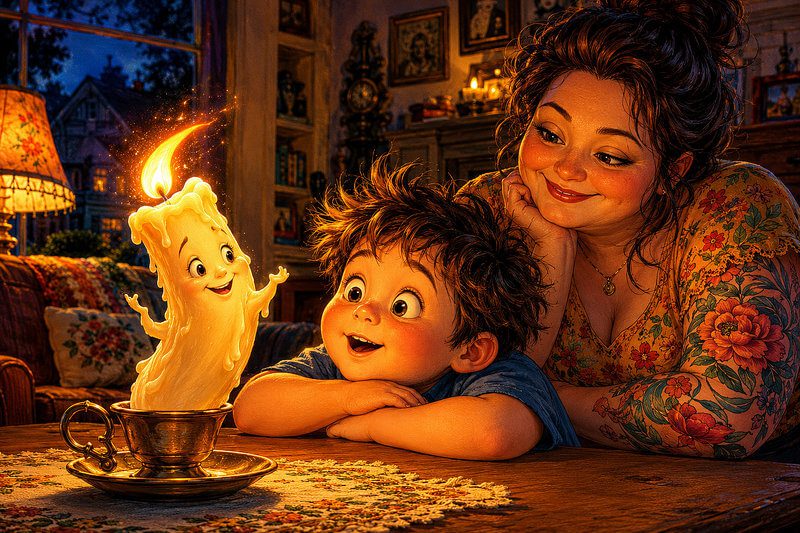
The candle loved its flame very much.
That’s why it carried it on top of its head.
“Why not in its hands?” asked Andrew.
Mom looked at the candle.
“It doesn’t have any hands.”
The flame swayed.
The candle swayed too.
They stayed close to each other all the time.
The Yawning Bridge
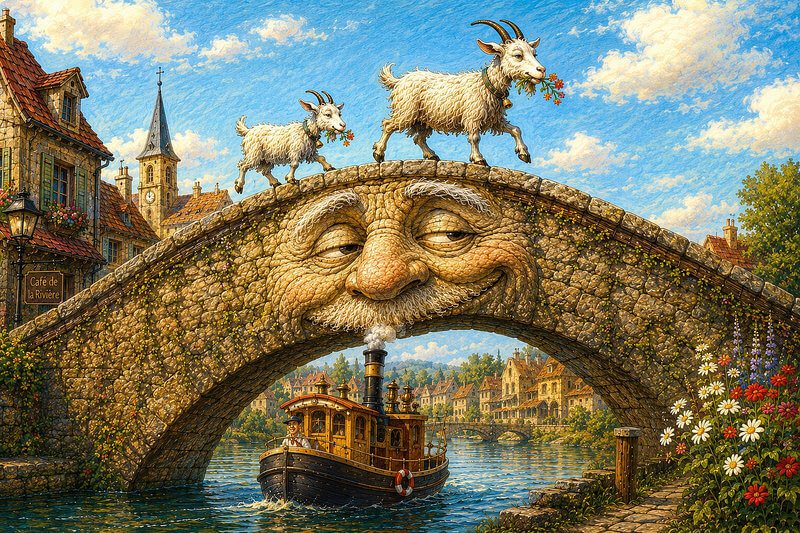
The bridge stretched across a river
and spent its days dozing peacefully.
Then a pair of little feet came pattering across.
The bridge woke up and yawned.
A moment later, a little steamboat floated underneath.
The bridge yawned again.
Then a goat and her kid clippety-clopped across.
The bridge yawned once more.
It kept yawning like that for many, many years.
That’s why a great big arch grew right in the middle of it.
A good yawn is simply too satisfying to hold in!
The Snow Who Wanted to Be a Duck
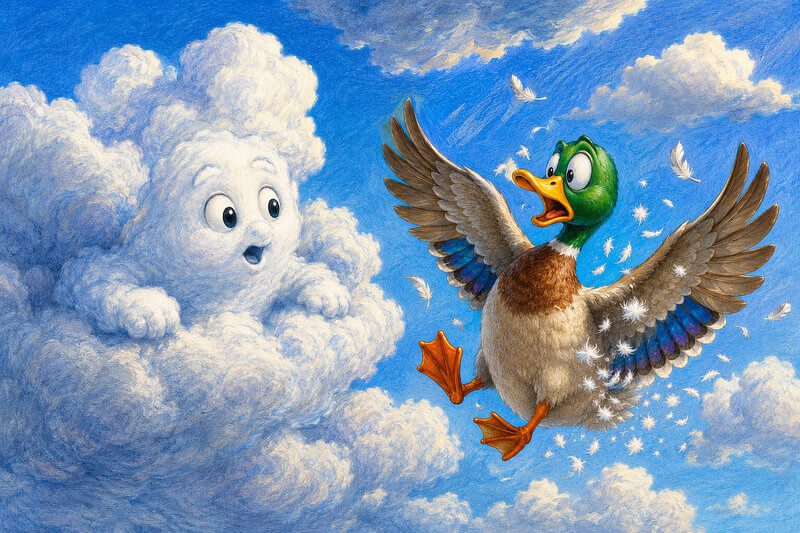
Snow sat inside a cloud.
And sat.
And sat.
Then a duck flew by
and lost a few fluffy feathers.
The feathers drifted down
slowly…
slowly…
slowly.
“I wish I could be fluffy like that,” thought Snow.
And right away, it became just as fluffy.
Really fluffy.
Ever since then, that’s how snow falls in winter—
soft and light.
As if it’s a little bit duck, too.
The Hungry Backpack
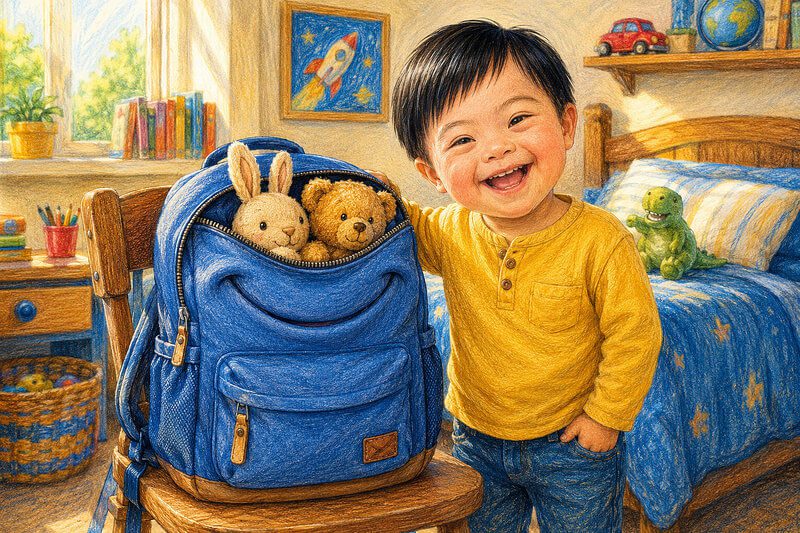
Big brother had a school backpack.
Every evening, the backpack gobbled up textbooks.
Then notebooks.
Then a pencil case.
And it still looked hungry.
“Why does it look so sad?” asked Mason.
“Because it’s always hungry,” Mom said.
Mason thought about that.
Then he ran to his room.
And tucked a stuffed bunny
and a little teddy bear
into the backpack.
“There! Now it’s happy.”
The backpack headed off to school the next morning feeling very pleased.
Big brother didn’t discover its secret until class had already started.
That’s when a tiny teddy-bear ear peeked out from inside.
The Swing Afraid of Heights
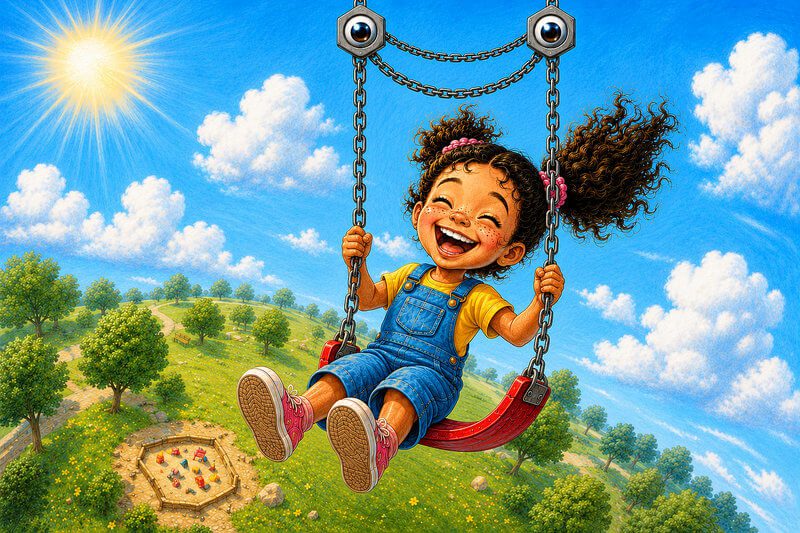
The swing was terribly afraid of heights.
Especially the very, very highest heights.
The kind that make your tummy flutter.
“Then why do you go up there?” asked Chloe.
The swing thought about it.
Creaked a little.
Then answered,
“Because kids love it.”
Chloe climbed onto the swing.
The swing swayed a tiny bit.
Then a little more.
Then a little more.
“Oh my goodness, that’s high!” it creaked.
But it still went higher.
And higher.
Because it was very brave.
The Chatty Path
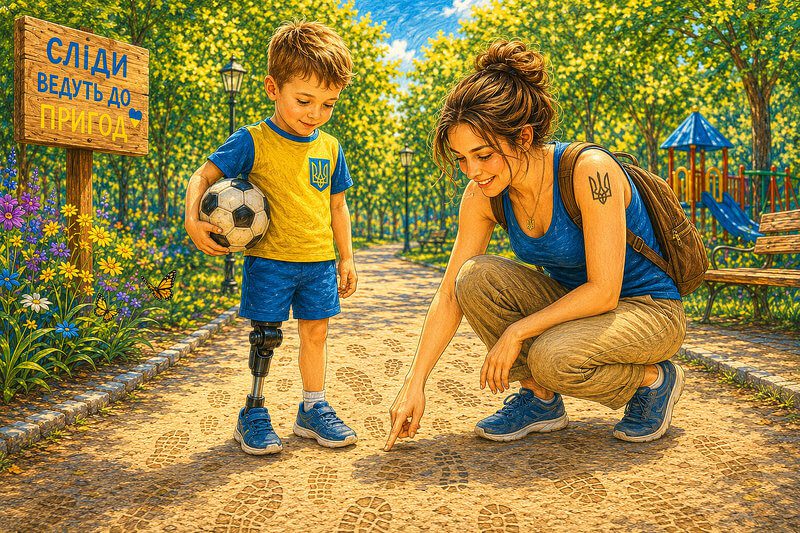
The path talked to shoes so much
that it became covered with their footprints.
“Where did all those come from?” asked Danny.
Mom looked down.
“They talked them into existence.”
“Who did?”
“The path and the shoes.”
Danny looked closer.
There were footprints everywhere.
It seemed the path had a lot to talk about.
The Curious Pocket
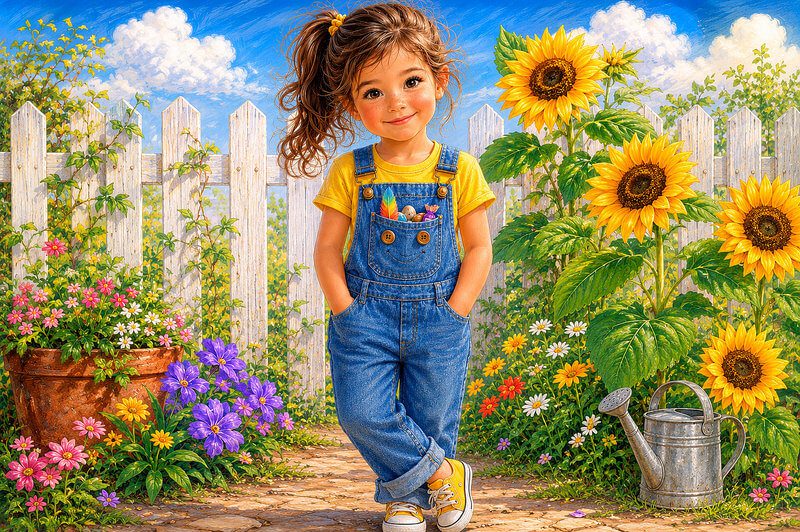
The pocket was always peeking inside itself.
It loved looking at children’s treasures.
Pebbles.
Feathers.
Candy wrappers.
And all sorts of important things.
That’s why pockets are almost never empty.
What if they missed something important?
The Snowman Who Forgot Summer
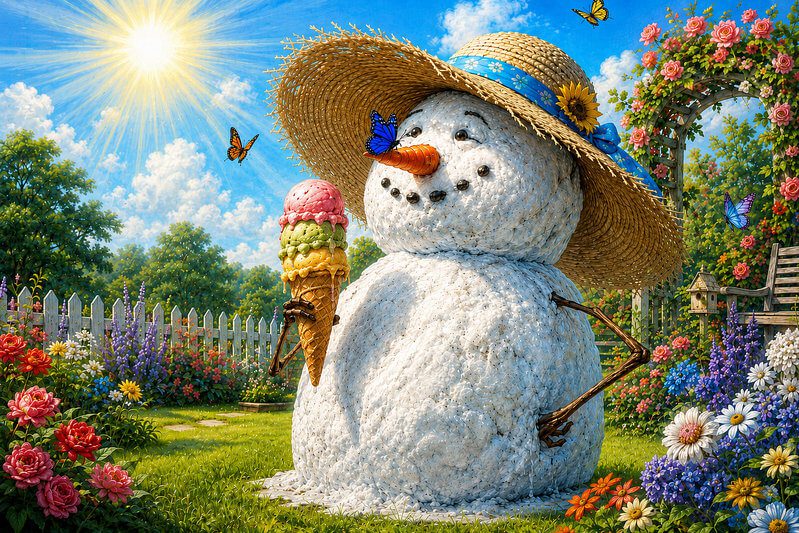
The snowman was thinking so hard
that he forgot to melt in spring.
So he stood there all summer long.
When winter finally returned,
the other snowmen were just being built.
But this one was already standing in the yard.
That’s why all the younger snowmen
respectfully called him Grandpa.
Even though he was made from the very same snow.
The Shy Mitten
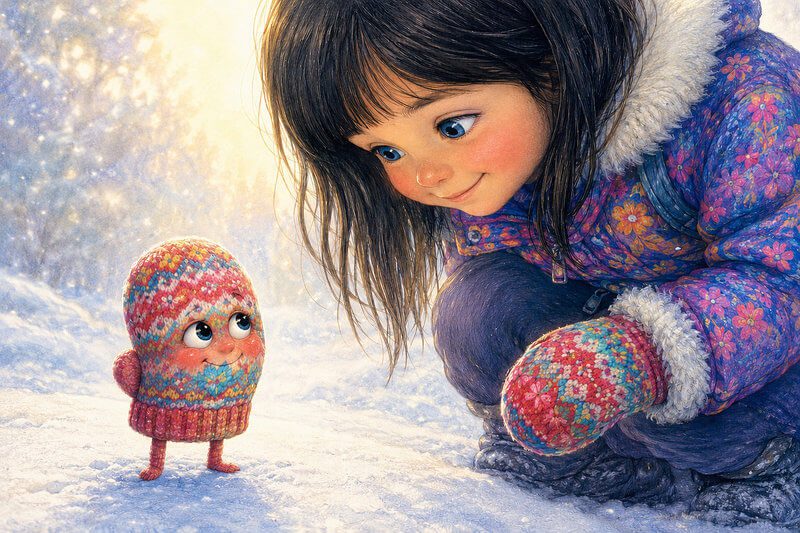
One mitten got lost.
And there it lay in the snow,
all alone.
People walked by.
Dogs ran past.
Snowflakes drifted down.
But the mitten kept waiting.
And waiting.
“Who is it waiting for?” asked Abby.
“Its sister,” Mom said.
The mitten lay quietly in the snow,
hiding its thumb behind its back.
It felt a little shy.
Which story became your family’s favorite?
💡 One Minute Is Enough: 5 Easy Questions to Ask After a Short Story
You just read a great short story with images on your phone while waiting in line, sitting in the car, or giving lunch a few minutes to cool. Now what? Say, “All done,” and move on with the day? Sure, you can. But if you have another minute or two, that tiny reading break can turn into a sweet little connection game.
Talking about the story can be even more fun than reading it. But stiff questions like “Who was good?” or “Who was bad?” can turn a playful pause into a mini lesson nobody asked for.
The Baby Bear Club is here to help you keep your preschooler engaged and stretch that read-aloud moment just a little longer. Here are 5 simple questions that work with almost any short story, take only a minute or two, and get young kids talking, imagining, laughing, and noticing feelings.
Five Go-To Questions for a Fun Reading Break
1. “If this character walked into our room right now, what game would we play together?”
- Why ask it: It sparks imagination and connects the story to your child’s real world.
- How it works: It’s an easy bridge from reading to active play. Maybe you kick a soccer ball with Danny on the path or take a ride on the brave swing.
2. “Can you show me the character’s face when they felt… [surprised/scared/happy]?”
- Why ask it: It supports emotional development for preschoolers and helps kids practice naming feelings through facial expressions.
- How it works: Preschoolers love making silly faces. Let your child show the surprised duck seeing snow for the first time, or the nervous cactus watching a balloon.
3. “If we wanted to make this character a snack, what would we give them?”
- Why ask it: It builds imagination, flexible thinking, and playful problem-solving.
- How it works: This question pulls kids right back into the story. What would the hungry backpack eat? How would you cheer up the snowman philosopher? Another ice cream cone, of course!
4. “What do you think this character’s favorite color is—or their favorite toy?”
- Why ask it: It helps children notice details, think about personality, and make simple inferences.
- How it works: This light, playful question helps your child build a fuller picture of the character, like why the extra-polite fork might love a very proper shade of blue.
5. “Let’s make up what happens next. What will this character do as soon as we close the page?”
- Why ask it: It builds sequencing, cause-and-effect thinking, and early storytelling skills.
- How it works: The story is over, but the day keeps going. It’s a gentle way to move from reading back into everyday play, preschool routines, and family life.
❓How to Read These One-Minute Stories: A Parent and Preschool Teacher’s Guide
Maybe you love classic storybooks with long chapters and beautiful illustrations. We do too. But let’s be honest—sometimes there isn’t enough time, energy, or the right setting for a thirty-page read-aloud.
That’s where one-minute short stories with images come in.
They’re not a replacement for books. They’re a pocket-sized parenting tool for those moments when your child needs a quick reset, a little connection, or something engaging right now.
Parents, preschool teachers, and daycare providers know that the attention span of a 3- to 5-year-old can disappear in seconds. So how do you get the most out of these short stories for kids and turn one minute of reading into meaningful fun?
Here are four simple ideas.
4 Easy Ways to Make Story Time More Engaging
- Use them during everyday waiting moments. These short stories with images were made for phones and tablets. Read one while waiting at the doctor’s office, sitting in traffic, riding the bus, waiting for food to cool down, or standing in line. One minute can transform boredom into connection.
- Go all in with character voices. These stories are short, so every word matters. Make the scared cactus sound tiny and shaky. Let the hungry backpack rumble with satisfaction. Preschoolers love sound effects, silly voices, and dramatic read-aloud storytelling.
- Explore the pictures together. The illustrations aren’t just decorations—they’re part of the story. Look for funny little details. Can your child find the kitten reaching toward the map? Where is the shy mitten hiding its thumb? What silly thing is happening near the giant snowbank? This helps build observation skills and keeps young readers engaged.
- Skip the lesson. One of the quickest ways to end the fun is asking, “So what’s the moral of the story?” Preschoolers don’t need a quiz after every story. These stories about feelings, imagination, and everyday experiences are meant to spark laughter, curiosity, creativity, and conversation—not turn reading into homework.
A tip for preschool and daycare teachers. These one-minute stories are perfect transition tools. Use them between active play, snack time, cleanup, or getting ready for outdoor play. Read one story aloud, then invite the group to make the surprised face of the snowman in the straw hat. You’ll have a room full of engaged children—and a lot less shouting, repeating, and reminding.