
Children between three and seven rarely tell stories the way adults expect. They jump from one idea to another, answer serious questions with complete confidence, and can turn an ordinary conversation into an adventure about pirates, pancakes, or invisible dragons. That unpredictability is exactly what makes a family interview worth recording.
Many parents decide to interview their child because they want to preserve memories, yet the greatest challenge is not choosing a camera or writing a list of questions. The real challenge is helping a young child forget that an interview is happening at all. When children feel relaxed, they share thoughts, feelings, and funny observations that no adult could ever plan in advance.
Learning how to interview a child is less about asking clever questions and more about creating the right atmosphere. A successful conversation feels like play, curiosity, and genuine interest rather than a performance. Once parents understand that difference, even a ten-minute interview can become one of the most meaningful family memories they ever create.
Why Child Interviews Become Family Treasures
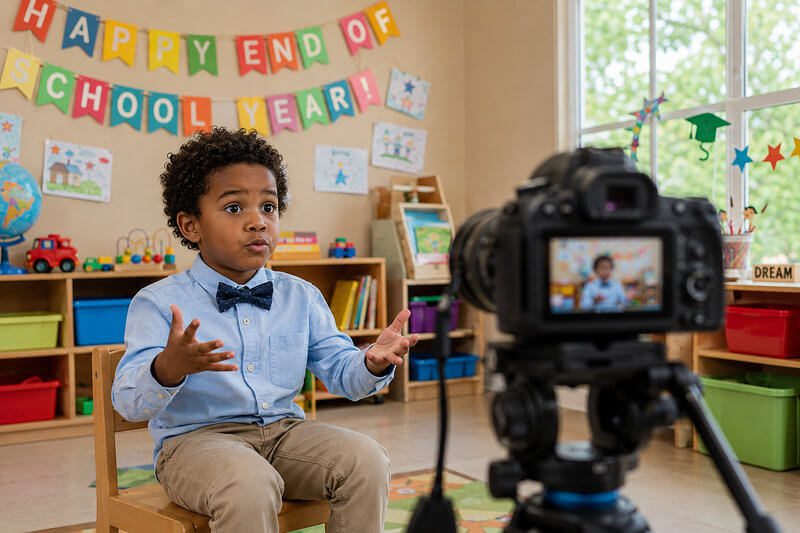
Photographs freeze a moment, but they cannot capture the sound of a child’s laugh, the way certain words are pronounced, or the wonderfully unexpected logic that belongs only to early childhood. A simple conversation preserves something much bigger than appearance. It keeps a child’s personality exactly as it exists at that stage of life.
Children change remarkably fast between the ages of three and seven. Favorite games disappear, imaginary friends move on, fears become funny stories, and dreams evolve almost overnight. Parents often notice physical changes because they happen in front of their eyes every day. The changes in the way children think and speak are much easier to miss until they hear an old recording years later.
Family interviews also become meaningful because they celebrate ordinary life. They do not require birthdays, vacations, or special occasions. One quiet afternoon on the living room floor may eventually become the recording everyone wants to watch again because it reminds the family what childhood really sounded like.
Preparing Your Child for a Successful Interview
The best interviews begin before anyone asks the first question. Children rarely enjoy sitting down because an adult announces that it is time for an interview. They respond much better when the conversation grows naturally out of something they already enjoy doing.
Parents often spend too much time preparing equipment and too little time preparing the atmosphere. A comfortable child will usually create a wonderful interview with nothing more than a phone camera, while an uncomfortable child may struggle even with professional lighting and expensive microphones.
Play First, Interview Later
Children between three and seven enter conversations most naturally through play. Build a tower together, color a picture, read a favorite book, or invent a simple game before recording begins. Those few relaxed minutes help children forget that anyone expects answers from them.
Play also creates natural topics for conversation. Instead of searching for interesting questions, parents can simply continue talking about what the child is already doing. A child who is pretending to run a bakery or care for toy animals will usually have plenty to say without feeling interviewed.
Choose a Place That Feels Familiar
Young children pay attention to their surroundings. An unfamiliar room or carefully arranged recording space may become far more interesting than the conversation itself. A favorite corner of the living room, a blanket fort, the backyard, or a bedroom floor surrounded by toys usually works much better because the child already feels comfortable there.
Comfort affects conversation more than appearance. Soft lighting, perfect decorations, or matching backgrounds matter very little if the child feels nervous. A familiar place encourages longer answers, more laughter, and far more spontaneous storytelling.
The Camera Should Help, Not Take Over
Many parents worry about recording the perfect video, yet children notice something entirely different. They notice whether the adult is looking at them or constantly checking the screen.
Place the camera where it can quietly do its job, then forget about it. Smile, react naturally, and focus on listening instead of filming. The interview should feel like a conversation that happens to be recorded, not a recording that happens to include a conversation.
Help Your Child Start Talking Without Pressure
Many children do not answer the first question because they need a few minutes to settle into the conversation. That hesitation is completely normal. It does not mean they are shy or unwilling to participate. They are simply deciding whether this is another grown-up activity with expected answers or a safe place to share whatever comes to mind.
Avoid opening with questions that feel too broad or too important. Instead, begin with something happening right now. Ask about the toy in their hands, the picture they just finished, or the game they want to play after the interview. Once children realize there are no right or wrong answers, they usually begin talking much more freely.
Follow your child’s attention instead of trying to control it. If a simple question leads to an unexpected story, let the story continue. The most memorable family interviews often begin in completely ordinary ways and gradually become something nobody planned.
Why “How Was Your Day?” Usually Falls Flat
Adults ask this question almost automatically, yet young children often respond with “Good,” “Fine,” or “I don’t know.” The problem is rarely the child. The question asks them to summarize an entire day, something that is surprisingly difficult between the ages of three and seven.
Children remember moments much better than summaries. They think about the funniest thing that happened, the biggest surprise, the game they enjoyed most, or the person who made them laugh. Specific questions help them return to those moments without feeling overwhelmed.
Instead of asking one broad question, guide the conversation toward a single experience.
- “What made you smile today?”
- “What was the funniest thing you did?”
- “Who made you laugh?”
- “What surprised you today?”
- “If you could do one part of today again, which one would you choose?”
These examples are not scripts that must be followed every time. They simply show how small, focused questions naturally encourage children to tell stories instead of giving one-word answers.
Questions That Keep the Conversation Growing
A successful interview depends less on the next prepared question than on what happens after the first answer. Many parents accidentally interrupt wonderful stories because they are eager to move through their list. Young children often need a little encouragement before they explain what they really mean.
The easiest way to continue the conversation is by showing genuine curiosity. Instead of changing the subject, stay with the child’s answer and invite them to add another detail. One thoughtful follow-up question can lead to several minutes of natural conversation.
Simple prompts work remarkably well.
- “What happened next?”
- “Can you show me what that looked like?”
- “Why do you think that happened?”
- “How did that make you feel?”
- “What would you do differently next time?”
The goal is not to collect long answers. The goal is to make children feel that their ideas matter. Once they notice someone is truly listening, they often continue talking without needing many additional questions.
Small Habits That Can End a Great Conversation
Children notice much more than adults realize. A raised eyebrow, a quick correction, or an impatient glance at the clock can completely change the mood of an interview. What felt like a playful conversation may suddenly feel like a test.
Try to react with curiosity even when an answer surprises you. Young children mix imagination with reality all the time, and that is a natural part of how they understand the world. Correcting every detail or steering the conversation back to what seems logical usually shortens the interview instead of improving it.
Listening is often the most valuable skill a parent brings to a child interview. When children feel accepted, they become more confident, more expressive, and much more willing to share the wonderful stories that make these recordings worth keeping for years.
Read Next!
Looking for more ways to start meaningful conversations with your child? Explore these guides filled with creative prompts, age-specific ideas, and family interview inspiration.
- 🧸 Questions for Ages 6–7
- 🌱 Funny Questions for 5-Year-Olds
- ✨ Questions for Ages 3–4
- 🎈 Preschool Questions
- 🏡 Family Interview Book
- 🎙️ 50+ Interview Questions
Build Your Own Questions Without Repeating Yourself
Parents often spend more time searching for interview questions than actually talking with their child. After a few interviews, many begin to notice that the same prompts appear everywhere and the conversations start sounding alike. Fortunately, you do not need hundreds of prepared questions to keep every interview interesting.
A simple pattern works much better than a long checklist. Instead of memorizing dozens of questions, learn a few creative frameworks. You can change one word, one character, or one situation, and a completely new conversation appears. These question builders also grow with your child because they can be adapted to different ages, interests, and personalities.
Question Builder #1. An Animal With an Unusual Job
Children naturally enjoy combining familiar things with unexpected situations. Giving an ordinary animal an extraordinary job immediately sparks imagination without making the question feel complicated.
The answer itself is rarely the most interesting part. What matters is the explanation that follows, because children begin inventing stories, solving imaginary problems, and creating their own little world.
- “If a giraffe became your teacher, what would school be like?”
- “What would happen if a penguin opened a bakery?”
- “If a bear drove the school bus, what would everyone do?”
- “Which animal would make the funniest doctor?”
- “If a rabbit became the mayor of your town, what would change?”
Question Builder #2. What If Something Came to Life?
Young children often believe that everyday objects have personalities. A favorite blanket, backpack, or stuffed animal already feels like a friend, making this type of question easy to understand.
Instead of asking children to invent something completely new, invite them to imagine that something familiar suddenly became alive. The answers often become surprisingly thoughtful as well as funny.
- “If your backpack could talk, what would it tell me?”
- “What would your teddy bear say about today?”
- “If your favorite book came to life, what adventure would it choose?”
- “What would your toothbrush complain about?”
- “If your bed could tell stories, which one would it tell first?”
Question Builder #3. Who Makes the Rules?
Children spend much of their day following rules created by adults. Giving them the opportunity to imagine being in charge often leads to creative, hilarious, and surprisingly logical answers.
Questions like these encourage children to explain their ideas instead of simply choosing between right and wrong.
- “If children made all the family rules, what would change first?”
- “Who should decide when bedtime begins?”
- “If your dog became the boss of the house, what would happen?”
- “If toys voted for a leader, who would win?”
- “Who would make the best president of your playground?”
Question Builder #4. Turn Everyday Family Life Into a Story
Some of the best interviews begin with familiar people instead of imaginary characters. Family experiences already feel safe, making children more willing to tell detailed stories and share genuine feelings.
The questions do not need dramatic situations. Ordinary family moments often produce the warmest conversations because children remember them differently than adults do.
- “What is your favorite thing we do together?”
- “If our family could travel anywhere tomorrow, where would we go?”
- “What makes our home feel special?”
- “What should we do together more often?”
- “What is your funniest family memory?”
Question Builder #5. The Magic of “Why?”
Many parents ask “why” only when correcting behavior. During an interview, the same word has a completely different purpose. It encourages children to explain their thinking instead of searching for the answer an adult wants to hear.
Keep the questions playful and open. Curiosity creates much richer conversations than correction ever could.
- “Why do you think stars come out at night?”
- “Why do people need friends?”
- “Why do birds like to sing?”
- “Why do you think birthdays feel exciting?”
- “Why do you think people dream?”
These question builders are designed to inspire conversation rather than produce perfect answers. Once you understand the pattern, you can create hundreds of original questions that feel fresh every time without relying on the same interview lists again and again.
When Your Child Goes Quiet, Starts Laughing, or Suddenly Becomes a Dinosaur
Every parent imagines a calm conversation filled with thoughtful answers. Young children usually have a different plan. One minute they are describing their favorite playground, and the next they are crawling across the floor pretending to be a dinosaur or laughing so hard they cannot finish a sentence. Moments like these do not mean the interview has failed. They often become the most memorable part of the recording.
Children between three and seven move quickly between imagination, conversation, and play. Expecting them to stay focused like adults creates unnecessary pressure for everyone involved. A successful interview follows the child’s rhythm instead of trying to replace it.
When Your Child Doesn’t Want to Talk
Silence makes many parents nervous, so they immediately ask another question. Unfortunately, this usually creates even more pressure because the child barely has time to think before hearing something new.
Give your child a little space instead. Smile, stay relaxed, and wait. Young children often need several seconds before organizing their thoughts. If the silence continues, return to something familiar instead of insisting on the original topic. Talking about a favorite toy, today’s game, or something happening in the room often brings the conversation back naturally.
Sometimes the best decision is to stop recording for a few minutes. Play together, have a snack, or go outside. When the interview begins again, children frequently respond as if nothing happened.
When Your Child Starts Being Silly
Silly behavior is part of childhood, especially between the ages of three and seven. Instead of treating it as a distraction, try seeing it as another way children communicate. A funny face, an invented character, or a burst of laughter often means the child feels comfortable enough to be completely themselves.
Join the moment instead of fighting it. If your child suddenly decides to answer every question like a pirate, continue the conversation with the pirate. If they become a dinosaur, ask the dinosaur a question. Following their imagination usually keeps the interview moving far better than asking them to “be serious.”
Children who are enjoying themselves often return to ordinary conversation on their own after a few playful minutes.
When the Plan Completely Falls Apart
No interview with a young child follows a script from beginning to end. Toys fall over, siblings appear unexpectedly, someone remembers a funny story halfway through another answer, and the conversation changes direction without warning. None of this needs to be edited out or avoided.
Some of the most treasured family interviews include interruptions, laughter, mistakes, and completely unexpected conversations. Those moments remind everyone that the recording captured real life rather than a performance.
Parents often discover that the interview they almost stopped recording becomes their favorite one years later. Flexibility is one of the most valuable skills you can bring to a conversation with a young child.
A Little Play, A Little Patience, and Plenty of Respect
A great child interview is built on trust. Children share their funniest stories, biggest ideas, and honest feelings only when they believe they are being heard instead of judged. Every reaction from a parent shapes that experience, whether it is a smile, a follow-up question, or simply taking the time to listen without interrupting.
Respect does not make interviews feel serious. Quite the opposite. When children know they can answer freely, they become more relaxed, more creative, and much more willing to keep talking.
Help Short Answers Grow Into Stories
A child who answers with one or two words is not necessarily uninterested. Young children often need help turning a thought into a story because they are still learning how to organize experiences.
Instead of changing the subject, stay with the answer for a moment. Ask what happened before, what happened next, or what made that moment special. One simple follow-up often reveals an entire story that would have remained hidden.
Children love making adults laugh, but there is an important difference between laughing together and encouraging children to perform for the camera.
Celebrate funny moments as they happen naturally. There is no need to ask children to repeat a joke, make another silly face, or say something again because it sounded amusing. Genuine laughter always feels warmer than repeated performances.
Not Every Funny Question Is a Good Question
Humor should never come at the child’s expense. Questions that embarrass, confuse, or encourage children to laugh at someone else rarely create positive memories.
Choose playful situations instead of uncomfortable ones. Imagination, pretend games, talking animals, and impossible adventures usually produce much better conversations than jokes based on teasing or making someone feel awkward.
Age Matters, but Every Child Is Different
Two children of the same age may respond to the very same question in completely different ways. One may tell long stories while another answers briefly before running back to play. Neither style is better.
Pay attention to your child’s personality instead of comparing them with other children. The best interview is the one that matches their energy, attention span, and natural way of communicating.
Every Child Thinks in Their Own Way
Some children answer through stories. Others explain everything with examples. Some invent imaginary worlds, while others stay close to everyday experiences. There is no single pattern that every child follows.
The interview becomes much richer when parents adapt to the child’s way of thinking instead of expecting every answer to sound the same.
Your Child Matters More Than the Recording
Family interviews are meant to preserve childhood, not create perfect videos. If your child becomes tired, distracted, or simply wants to stop, respect that decision without disappointment.
The recording can always continue another day. Protecting your child’s comfort is far more important than finishing every planned question, and that feeling of safety is exactly what makes future interviews successful.
Common Mistakes That Can Ruin a Child Interview
Even thoughtful parents sometimes make small mistakes that change the entire mood of an interview. Most of them happen without anyone noticing. Adults become focused on getting through a list of questions, capturing the perfect video, or hearing a particular answer, while the child quietly begins losing interest.
Fortunately, these habits are easy to avoid. A relaxed conversation almost always creates better memories than a perfectly organized interview.
Asking Too Many Questions
It is tempting to use every interesting prompt you have saved, especially when your child seems happy to talk. After a while, however, the conversation can begin to feel like a quiz rather than an enjoyable family moment.
Choose fewer questions and spend more time exploring each answer. A single unexpected story is usually worth much more than twenty rushed responses.
Talking More Than Your Child
Parents naturally want to encourage, explain, and share their own experiences. Without realizing it, they sometimes answer half of their own questions before the child has a chance to speak.
Give your child room to think. Listen carefully, pause, and allow silence to do some of the work. Young children often continue talking after a few quiet seconds, adding details that never would have appeared if another question had arrived immediately.
Suggesting the “Correct” Answer
Children quickly notice what adults expect to hear. Once they begin searching for the “right” answer instead of their own answer, the interview loses much of its authenticity.
Questions should invite curiosity rather than approval. If your child says that dinosaurs still live in the forest or that cookies grow on trees, enjoy the imagination instead of correcting the idea. The purpose of the interview is to preserve childhood, not evaluate knowledge.
Correcting Every Word
There is a time to practice pronunciation and grammar, but a family interview is rarely that moment. Interrupting children to fix every mistake often breaks the rhythm of the conversation and makes them more cautious about speaking.
Years later, many parents smile at the way certain words were pronounced or how their child described the world. Those little imperfections become part of the memory rather than something that needed to be edited away.
Letting the Question List Become More Important Than the Conversation
Prepared questions are useful, but they should never control the interview. Sometimes the most meaningful moment appears after a completely unexpected answer that has nothing to do with the original plan.
Allow the conversation to wander naturally. If your child begins telling a fascinating story, follow it instead of returning immediately to the next question on the page.
Recording for an Audience Instead of Your Child
Family interviews become much more genuine when children feel they are talking with a parent instead of performing for other people.
Avoid asking children to repeat answers because they sounded funnier the first time or encouraging them to act differently for the camera. Years from now, authentic conversations will matter far more than polished recordings.
Saving Today’s Interview for Years to Come
A meaningful interview deserves more than a random place in a crowded photo gallery. Families often record wonderful conversations, promise themselves they will organize everything later, and then spend years trying to find a particular video among thousands of files.
Creating a simple system from the beginning takes very little effort and makes those memories much easier to enjoy as the years pass.
Create Organized Folders Instead of One Long Camera Roll
Keep interviews in one dedicated folder for each child. Organizing recordings by year or age makes it easy to watch childhood unfold in order instead of searching through hundreds of unrelated videos.
Give Every Interview a Meaningful Name
Simple names work best because they immediately remind you what the recording contains.
Examples such as “Emma Age 4 Birthday Interview” or “First Day of Kindergarten 2026” are much easier to recognize than automatic file names created by a phone.
Keep the Original Recordings
Editing can be fun, but always save the original version as well. Background laughter, small mistakes, unexpected interruptions, and ordinary family sounds often become the details everyone treasures most years later.
Build Your Family Archive One Interview at a Time
There is no need to record lengthy interviews every month. Even two or three conversations each year gradually become an extraordinary collection of family memories.
Children enjoy seeing how they have changed, while parents often notice little details they had completely forgotten. The archive grows naturally without becoming another project that feels difficult to maintain.
Save More Than Just Videos
A family interview can include much more than recorded conversations. Drawings, handwritten answers, birthday cards, photos taken before and after the interview, and small notes about the day all help tell a richer story.
Years later, these little pieces come together to create a fuller picture of childhood than any single recording could provide.
An Interview Doesn’t Always Look Like an Interview
Many parents imagine a child sitting in a chair, looking at the camera, and answering questions one after another. That format works for some children, but many young kids communicate much more naturally while doing something else. Movement helps them think, imagination keeps them engaged, and familiar activities remove the feeling that they are being observed.
If your child struggles to sit still, do not treat that as a problem to solve. Instead, bring the conversation into an activity they already enjoy. The interview often becomes richer because the child forgets about the camera and focuses on the experience instead.
During Playtime
Play is the most natural language of childhood. Whether your child is building with blocks, pretending to cook dinner, or rescuing toy animals, the conversation can happen alongside the game without interrupting it.
Rather than pulling your child away from play, step into their world. Ask questions about what they are creating, who the characters are, or what might happen next. Many children share far more while their hands are busy than when they are asked to sit quietly.
While Drawing
Drawing gives children time to think before answering. The small pauses between pencil strokes often lead to longer, more thoughtful responses because there is no pressure to reply immediately.
You can even ask your child to draw a favorite memory, an imaginary place, or today’s happiest moment before talking about the picture together. The artwork becomes another keepsake alongside the interview itself.
During a Walk
Some children become much more talkative outdoors than indoors. Walking through a park, collecting leaves, watching birds, or simply exploring the neighborhood creates a relaxed rhythm that encourages conversation without making it feel formal.
The changing surroundings also provide endless conversation starters. Instead of searching for another prepared question, parents can simply respond to what the child notices along the way.
Through a Favorite Toy
A shy child may find it easier to answer if the questions are directed toward a favorite stuffed animal, puppet, or action figure. The toy becomes part of the conversation, reducing pressure while making the interview feel playful.
Sometimes children even answer in the toy’s voice before gradually returning to their own. That transition happens naturally and often leads to surprisingly open conversations.
Before Bedtime
Bedtime is often one of the quietest moments of the day. Without distractions, schedules, or excitement, many children become more reflective and willing to talk about their thoughts.
Keep the conversation short and gentle. The goal is not to create a long interview before sleep, but to capture a few honest moments while your child feels calm, comfortable, and ready to share.
When Your Child Starts Interviewing You
One of the most delightful moments in any family interview arrives when children stop answering questions and begin asking their own. Many parents instinctively steer the conversation back toward the child, yet those unexpected role reversals often become the highlight of the entire recording.
Allowing children to become the interviewer shows that their curiosity matters too. It also reminds them that conversations work best when everyone has a chance to speak and listen.
Why Reverse Questions Are a Gift
Children ask questions adults would never think to ask each other. They are wonderfully direct, unexpectedly funny, and sometimes surprisingly thoughtful.
A simple question such as “Were you scared when you were little?” or “What was your favorite toy?” creates a connection that goes beyond the original interview. Suddenly, the conversation belongs to the whole family instead of focusing on only one person.
Questions Children Love Asking Adults
Young children often become fascinated by their parents’ childhood once they realize adults were children too.
- “What was your favorite game?”
- “Did you ever get in trouble at school?”
- “What did you want to be when you grew up?”
- “Who was your best friend?”
- “What made you laugh when you were my age?”
These conversations help children see parents as people with their own memories and stories rather than simply the adults asking questions.
Answer Honestly and Keep It Simple
Children usually recognize when an answer feels rehearsed. Honest, age-appropriate responses create trust and encourage children to continue asking meaningful questions.
There is no need to make every answer sound important. Simple stories about favorite games, funny mistakes, or childhood adventures often become the ones children remember best.
The Interview Becomes a Family Conversation
The most successful interviews rarely stay one-sided for very long. Questions move naturally between parent and child, laughter interrupts the planned order, and unexpected stories appear from everyone in the room.
When that happens, there is no reason to guide the conversation back to the original script. Family interviews become most meaningful when they feel like real conversations shared together rather than a list of questions that simply needed to be finished.
Questions That Can Rescue Almost Any Interview
Even the most carefully planned interview may lose momentum. Young children get distracted, answer with only a few words, or suddenly decide that talking is less interesting than watching a ladybug crawl across the porch. That does not mean the conversation is over. Sometimes it simply needs a different direction.
Instead of preparing hundreds of questions, it helps to remember a few types of prompts that naturally encourage children to keep talking. These questions invite stories rather than short answers and give children enough freedom to use their imagination.
Questions That Begin With Wonder
Young children are naturally curious. Questions that start with surprise or discovery encourage them to think aloud instead of searching for a correct answer.
- “What surprised you the most today?”
- “What is something you wish everyone knew?”
- “If you discovered a secret door, where would it lead?”
- “What would you love to see for the first time?”
- “What do you think is the most amazing thing in the world?”
Questions About Feelings Without Becoming Too Serious
Children often talk about emotions more easily when feelings appear naturally inside everyday situations instead of becoming the entire topic.
- “What made you feel really proud today?”
- “When do you laugh the hardest?”
- “What always helps you feel better?”
- “Who makes you feel safe?”
- “What makes a really happy day?”
Questions That Use Imagination
Imagination removes the fear of giving a wrong answer. Children stop trying to please adults and begin creating stories that belong entirely to them.
- “If you could invent a new animal, what would it look like?”
- “If clouds were made of something else, what would you choose?”
- “If every tree could talk, what would they say?”
- “If your room became magical tonight, what would happen first?”
- “If you could make one new holiday, how would everyone celebrate?”
One Question Children Almost Always Love
Among hundreds of possible prompts, one type of question consistently encourages children to talk longer than expected. It asks them to imagine changing the world around them.
Instead of asking what already exists, ask what they would change. Children enjoy creating new rules, solving imaginary problems, and improving everyday life in wonderfully creative ways.
- “If you could change one thing in the whole world, what would you change first?”
This single question often leads to funny ideas, thoughtful observations, and conversations that continue long after the camera stops recording.
Why a Four-Year-Old Sounds Different From a Seven-Year-Old
Children between the ages of three and seven develop at an incredible pace. Two interviews recorded only a few years apart can sound as if they were made with completely different people. Understanding these changes helps parents choose the right approach instead of expecting the same style of conversation every year.
Age offers useful guidance, but personality always comes first. Some children enjoy long conversations early on, while others prefer listening and observing before they begin sharing their thoughts.
Younger Children Think Through Objects and Play
Three and four-year-olds often explain the world using toys, animals, favorite foods, and everyday experiences. Their answers may seem unexpected to adults because imagination and reality naturally blend together at this age.
Rather than separating fantasy from fact, encourage the story to continue. The interview becomes much richer when children feel free to think aloud without being corrected.
Older Children Begin Explaining Their Ideas
Around the ages of five to seven, many children start connecting events, giving reasons for their choices, and explaining why they believe something is true. Their answers become longer because they enjoy sharing opinions instead of simply naming favorite things.
Parents can gently introduce more open-ended questions during this stage, allowing children to describe their thinking rather than choosing between simple options.
Age Is a Guide, Not a Rule
Every child develops differently. One six-year-old may happily tell ten-minute stories, while another prefers answering with just a few thoughtful sentences. Both approaches are completely normal.
The best interviews adapt to the individual child instead of following strict expectations. Paying attention to personality will always produce a more natural conversation than focusing only on age.
Phrases That Make Children Answer More Carefully
Children pay close attention to the reactions of the adults around them. A single sentence can either encourage them to keep talking or make them wonder whether every answer will be judged. Once that happens, interviews often become shorter, quieter, and much less natural.
Parents rarely use these phrases with bad intentions. Most are meant to help, teach, or guide. During a family interview, however, they can unintentionally replace curiosity with caution. Choosing encouraging responses instead allows children to feel safe sharing their thoughts, even when those thoughts are unusual or unexpected.
“No, That’s Wrong”
Young children do not always separate facts from imagination, and that is a normal part of development. Correcting every unusual answer interrupts the flow of the conversation and teaches children to search for approval before speaking.
If something needs to be discussed later, the interview is usually not the best moment. Let the story continue first, then return to the topic another time if necessary.
“Don’t Make Things Up”
Imagination is one of the greatest strengths of early childhood. A child who invents talking trees or flying turtles is not trying to mislead anyone. They are exploring ideas in the way that feels most natural to them.
Family interviews become much richer when fantasy has room to exist alongside real memories. Those imaginative answers often become the ones everyone remembers years later.
“Say It Properly”
Interrupting children to correct pronunciation, grammar, or word choice may seem helpful, but it often breaks their confidence. Instead of thinking about the story, they begin thinking about whether they are speaking correctly.
Allow the interview to capture childhood as it truly sounds. Those little speech patterns are part of the memory and often become treasured details as children grow older.
“That’s a Strange Answer”
Children see the world differently from adults. An answer that sounds surprising today may reveal creativity, curiosity, or a unique way of solving problems.
Rather than judging the answer, ask another question. Curiosity almost always leads to a better conversation than evaluation.
A Child Interview Should Always Feel Safe
The most meaningful interviews happen when children know they can speak freely without worrying about being corrected, laughed at, or compared with anyone else.
When parents respond with patience, interest, and genuine attention, children gradually become more confident. They tell longer stories, ask more questions, and reveal the thoughts that make each stage of childhood so wonderfully unique.
Knowing When It’s Time to Finish
Ending an interview at the right moment is just as important as starting it well. Many parents continue asking questions because the conversation has been enjoyable, yet young children often show subtle signs that they are ready to move on long before they actually say so.
A shorter interview that ends with smiles creates much better memories than a longer one that finishes with frustration. Leaving children excited for the next conversation helps turn interviews into a tradition they genuinely enjoy.
When Answers Become Shorter
If detailed stories slowly turn into one-word replies, your child is probably becoming tired rather than losing interest in you.
Instead of asking another question, thank your child for sharing their thoughts and consider ending the recording while the mood is still positive.
When Your Child Starts Leaving the Conversation
Some children announce that they are finished. Others simply begin playing with toys, looking around the room, or wandering away while still holding the conversation in the background.
Rather than calling them back repeatedly, accept that the interview has naturally reached its ending. Respecting those signals makes children much more willing to participate again another day.
When Everything Turns Into Complete Chaos
Laughter, movement, and playful interruptions are wonderful parts of childhood. There is a difference, however, between happy energy and a child who has completely shifted into another activity.
If every answer disappears beneath running, jumping, or endless pretend games, it is often better to stop recording and simply enjoy the moment together.
Finish a Little Earlier Than You Think
Parents sometimes hope for “just one more question.” More often than not, that extra question becomes the point where the interview loses its natural rhythm.
Ending while your child is still engaged leaves both of you with a positive experience. That feeling becomes the reason children happily agree to another interview in the future.
Turning Child Interviews Into a Family Tradition
The most meaningful family interviews are rarely the longest or the most carefully planned. Their real value comes from consistency. A short conversation repeated over several years creates a remarkable record of childhood, allowing families to watch personalities, interests, and dreams grow naturally over time.
A tradition does not need to feel formal or complicated. Choose a few moments each year that already matter to your family and let the interview become part of the celebration. Children soon begin looking forward to these conversations because they become another familiar part of growing up.
A Birthday Interview Every Year
Birthdays are one of the easiest times to record an interview because they naturally invite reflection. Ask a few similar questions each year, then finish with something new that matches your child’s current interests.
Watching birthday interviews in order becomes one of the clearest ways to see how quickly childhood changes. Favorite games, biggest dreams, funniest stories, and even the sound of a child’s voice evolve from year to year.
One Ordinary Day
Not every meaningful interview needs balloons, presents, or special occasions. Some of the most treasured recordings happen on completely ordinary afternoons.
Ask your child to describe today’s adventure, the funniest thing that happened, or what made them smile before dinner. Years later, those everyday moments often become the most fascinating because they show what family life really looked and sounded like.
The Question of the Week
If long interviews feel overwhelming, try asking just one thoughtful question each week. The conversation may last only a few minutes, but those small moments gradually build a wonderful collection of memories without requiring much preparation.
This approach also works well for children with shorter attention spans because they never feel trapped in a long conversation.
Family Interview Night
Every few months, gather together and watch older interviews as a family. Children love seeing how they looked, sounded, and thought when they were younger. Parents often notice details they had completely forgotten.
These evenings usually inspire new conversations, fresh questions, and plenty of laughter. Before long, the interview itself becomes only one part of a much larger family tradition.
Why Children Rarely Answer the Way Adults Expect
Adults often imagine one type of answer before asking a question. Young children rarely follow that script. Their thinking moves in surprising directions, connecting ideas in ways that seem completely unexpected from an adult perspective.
Instead of trying to guide children toward a particular response, allow yourself to enjoy the unexpected. Those surprising answers are often the reason families return to old interviews again and again.
Adults Listen for One Thing, Children Notice Another
Ask an adult about a trip to the zoo, and they might describe the animals or the weather. Ask a five-year-old, and they may spend five minutes explaining a squirrel they saw in the parking lot.
Children naturally focus on details that feel exciting to them, even if adults barely noticed those moments at all. Their answers reveal what captured their attention rather than what adults considered important.
Childhood Logic Is Wonderfully Different
Young children build explanations using imagination, observation, and experience all at once. Their reasoning may sound unusual, yet it often follows a surprisingly clear pattern once they have time to explain it.
Resist the urge to interrupt or correct. Asking one more follow-up question usually reveals the fascinating logic behind an answer that first sounded completely unexpected.
Don’t Chase Perfect Answers, Chase Genuine Ones
There is no prize for giving the most accurate or impressive response during a family interview. The purpose is to preserve a child’s real thoughts, not polished ones.
Honest answers, unfinished ideas, funny mistakes, and imaginative stories create recordings that feel alive. Years later, families rarely remember whether an answer was correct. They remember how completely it sounded like their child.
A Quick Checklist Before You Press Record
A successful interview begins long before the camera starts recording. A few small preparations make the conversation feel easier for both parent and child, helping everyone focus on the moment instead of solving little problems along the way.
You do not need expensive equipment or a perfect plan. A calm atmosphere, realistic expectations, and genuine curiosity will always matter more than technical details.
The Interview Starts Before the First Question
Spend a few minutes talking, playing, reading a book, or laughing together before recording begins. This simple transition helps children move naturally into conversation instead of feeling that they have suddenly become the center of attention.
Choose a time when your child is rested, comfortable, and not thinking about the next activity. Hungry, tired, or rushed children rarely enjoy interviews, no matter how creative the questions may be.
A Small Check Before Recording
Take a quick look around before pressing the record button. Make sure the camera is steady, the room is reasonably quiet, and your phone has enough storage and battery life.
After that, stop thinking about the equipment. The interview should never pause because you are constantly adjusting the camera or checking the screen.
There Is No Such Thing as a Perfect Interview
Some recordings will last fifteen minutes. Others may end after five. One child may answer every question, while another spends half the interview pretending to be a dinosaur.
None of those moments make the interview less valuable. Real family memories are wonderfully imperfect, and that is exactly what makes them worth keeping.
Questions That Are Better Left Unasked
The purpose of a family interview is to help children express themselves freely. Certain questions create the opposite effect by introducing comparison, embarrassment, or pressure. Avoiding them helps children feel relaxed and confident enough to answer honestly.
When in doubt, choose curiosity over judgment. A thoughtful conversation will always create stronger memories than a clever question designed to surprise or test a child.
Questions That Compare Children
Comparisons immediately shift the focus away from the child and toward competition. Even if they seem harmless, they often make children wonder whether they are expected to rank themselves against someone else.
- “Who is smarter, you or your friend?”
- “Who behaves better at school?”
- “Who is Mommy’s favorite?”
- “Who is the best in your class?”
- “Who listens better, you or your brother?”
Questions That Create Shame or Feel Like a Test
Family interviews should never feel like an exam or an opportunity to point out mistakes. Questions that encourage embarrassment usually make children more cautious throughout the rest of the conversation.
- “Why did you get in trouble?”
- “What did you do wrong today?”
- “Why can’t you remember that?”
- “Did you behave badly?”
- “Can you prove that you know the answer?”
Questions With an Uncomfortable Personal Focus
Some topics deserve privacy, especially for young children. A family interview should remain a place where children feel respected rather than exposed.
- “Who do you like more?”
- “Who made you cry?”
- “What secret have you never told anyone?”
- “Who is the meanest person you know?”
- “Tell everyone something embarrassing about yourself.”
A Conversation Your Family Will Treasure for Years
The best child interviews are never measured by the number of questions asked or the length of the recording. Their value comes from capturing a child’s personality exactly as it exists today. A favorite toy, a funny explanation, an unexpected opinion, or a burst of laughter may seem ordinary now, yet those moments often become priceless with time.
Keep the process simple, stay genuinely curious, and let each conversation unfold at your child’s pace. Whether you record one interview every birthday or a few short conversations throughout the year, you are creating something far more meaningful than a video. You are preserving the voice, imagination, and unique perspective of childhood before it quietly changes into the next beautiful stage of growing up.