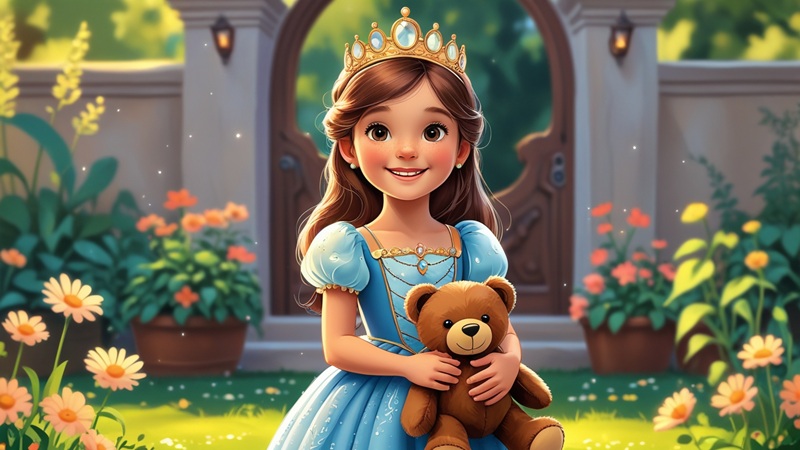
Sometimes, the evening becomes the most precious time of the day. You sit down right next to your little one, open a book or a screen—and the magic begins. Reading short bedtime stories isn’t just a way to pass the time; it’s a special ritual of closeness and trust between parent and child. A parent’s voice becomes a soft bridge to sleep, and the story itself transforms into a warm shelter from all the day’s worries and bustles.
When Mommy and Daddy Are Wizards
🎧 Read and drift off to sleep in a cozy, relaxing atmosphere:
White Noise
Soothe your little one with calming, womb-like sounds
Music Box Lullaby
A timeless, classic bedtime melody for toddlers
Toddler Zen
A soothing mindfulness track for bedtime resisters
💡 iPhone Users: To keep the audio playing continuously, do not press the lock button. Simply place your phone face down.

Reading time: 1 minute
Little Annie often wondered: how did Mommy always know exactly where her favorite doll was hiding? And how could Daddy fix even the broken wheel on her toy car?
One evening, Annie looked up and asked:
“Mommy, Daddy, are you guys wizards?”
They both smiled and nodded warmly.
“Of course we are,” Mommy said softly. “I can turn ordinary flour and chocolate chips into warm, delicious cookies.”
“And I,” Daddy added with a smile, “can turn a few wooden boards into a cozy doghouse for our puppy, Buddy.”
Annie clapped her hands with joy:
“Then I want to be a wizard too!”
“You already are, sweetie,” Mommy replied. “Because whenever you smile, the whole house lights up with happiness.”
Annie laughed and wrapped her arms tightly around her parents. From that night on, she knew a beautiful secret: real magic isn’t about spells—it’s about love, care, and the little wonders we share every single day.
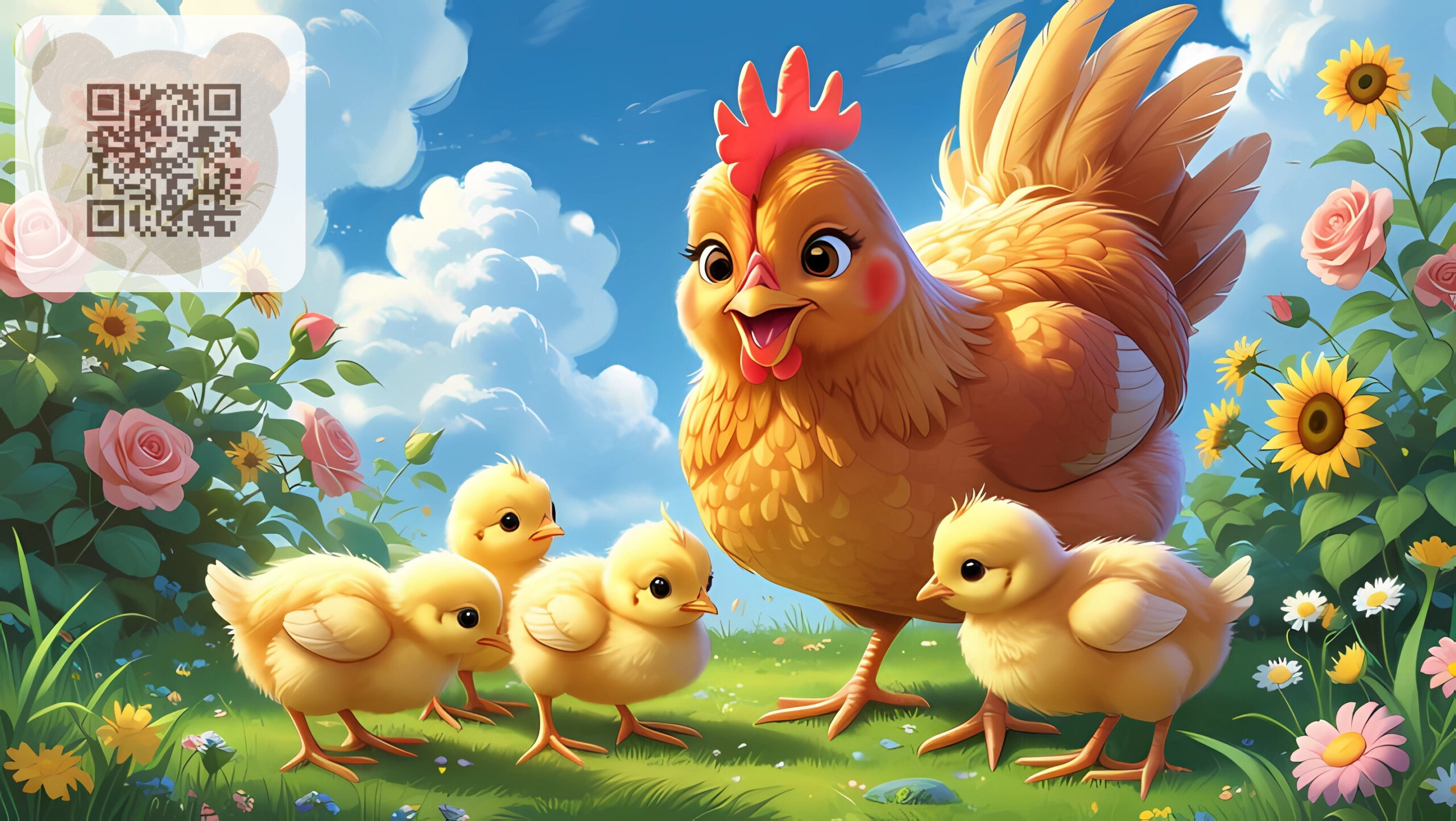
The Little Chicks and Mother Hen
Reading time: 2 minutes
Out in the green meadow, right beneath a great big oak tree, Mother Hen was out for a walk with her fluffy little yellow chicks. They hopped through the soft grass, found tiny seeds, and chirped with joy.
But suddenly, one little chick spotted a shiny beetle and chased it far away from mommy. Another chick saw a fluttering butterfly and ran off in the opposite direction.
Mother Hen clucked with worry:
“Cluck-cluck-cluck! Come back right away!”
The little chicks heard their mother’s voice and knew they shouldn’t wander off on their own. They scurried back as fast as their tiny legs could carry them and snuggled deep under her warm wings.
Mother Hen gently stroked them with her feathers:
“I am always here for you, my sweet ones. But remember—we are stronger together, and you are always safest right by mommy’s side.”
The chicks nodded their tiny heads, and from that night on, they always stayed close together.
Little Snail Hurries Home

Reading time: 1 minute
Out in the garden after the rain, Little Snail was out for a gentle crawl. He was so busy admiring the sparkling raindrops on the grass that he completely forgot it would soon be dark.
“Oh dear, I need to get home right away!” he suddenly realized, crawling as fast as he could.
But Little Snail moved so slowly that a friendly grasshopper soon caught up with him.
“Hop onto my back, I’ll help you get there fast!” the grasshopper offered cheerfully.
“Thank you, but I must do it on my own,” Little Snail replied softly.
So, a kind butterfly showed him a clever shortcut through the leaves, and a tiny beetle helped him find a way around a big puddle.
At last, Little Snail reached his cozy little shell.
“I made it after all!” he said with a happy smile. “I might be small and slow, but kind friends will always help you find your way back home.”
Little Pip and the Star

Reading time: 1 minute
Out in a vast, golden cornfield, there lived a tiny gray mouse named Pip. Every single night, he would step outside his cozy little burrow and gaze up at the sky. He loved one bright, twinkling star more than all the others.
“Oh, how I wish I could be your friend!” Pip whispered into the night.
Then, one magical night, the star tumbled softly from the sky, landing right beside him and turning into a shimmering, cosmic pebble. Pip stepped closer with gentle paws, picked it up, and held it near his heart. The pebble glowed with a soft, warm light, as if it were smiling right back at him.
From that evening on, Pip sat by his starry pebble every night, sharing all his little field adventures. And the star always answered with its sweet, flickering glow. And just like that, Little Pip had found the most loyal friend in the whole world.
Little Rusty and the Forest Path

Reading time: 1 minute
One sunny afternoon, a curious little fox cub named Rusty found a narrow path hidden deep in the woods. It wound its way between soft moss and green ferns, looking completely magical.
‘I wonder where it leads?’ Rusty thought to himself.
As Rusty strolled down the path, he discovered something wonderful at every turn: a bright butterfly, a sweetly singing bird, and a little bunny who gave him a happy wave. But the path just kept rolling along, further and further into the forest.
At the very end of the trail, a beautiful meadow opened up, filled with a swirling cloud of glowing fireflies. They lit up their tiny lanterns, casting a soft, twinkling glow all around. Rusty lay down in the cool, gentle grass and smiled, realizing a beautiful secret: it doesn’t matter where the path ends, but rather the beautiful wonders we find along the way.
Your little one will also love:
5 Short Bedtime Stories to Read Online to help your child drift into a sweet sleep!
Support the creation of new fairy tales for children! ❤️


How Bedtime Stories Help Your Child Relax for Sleep
You’ve probably noticed how quickly a toddler calms down just by hearing your familiar, warm voice. When you choose a soothing, slow-paced text, your child literally drifts into the rhythm of the story, letting go of all the day’s stress and overstimulation.
Reading short bedtime stories can become a wonderful routine as early as 1 to 3 years old. Often, just a few minutes of a simple, gentle plot is more than enough to make their breathing deeper and their tiny movements slower and calmer.
Picture this: your 3-year-old is still tossing and turning in bed, but then you open a screen to read a quick calming story—about a little mouse named Pip who found a star and carries it home, about Rusty the fox cub and his fireflies, or about Snail and his kind friends. Within just a few sentences, your toddler stops fidgeting, as their attention completely locks onto your voice.
Choosing the Right Story for Every Age Milestone
It’s essential to remember that children process language and imagery differently based on their developmental age.
- Age 3: At this stage, highly predictable and simple plots work best, such as “The Leaf Boat.” A short bedtime story for a 3-year-old should last no longer than 2–3 minutes, and clear, cozy pictures are key to helping them visualize the story.
- Age 4: Four-year-olds are ready for gentle adventures. A bedtime story for a 4-year-old might follow a curious fox cub exploring a trail and meeting new animal friends. At this age, focusing on themes of friendship, empathy, and emotions is incredibly helpful.
- Age 5: A bedtime story for a 5-year-old can include simple dialogues and a first choice: “What should the hero do next?”. At this milestone, some children can even read the short text by themselves, feeling a great sense of pride in their success.
- Ages 5–6 (Kindergarten): For kindergarteners, it’s best to choose stories with a gentle conflict and a meaningful moral—how characters disagree and make up, or how they learn to share. A bedtime story for 5-to-6-year-olds helps them prepare for school, guiding them toward more complex narratives and meaningful chats about actions.
How a Quick Bedtime Story Helps Your Little One Drift to Sleep
Reading gentle stories before bed is a cozy little ritual that builds healthy sleep habits, sparks your child’s imagination, and strengthens the emotional bond between parent and child.

Step 1: Use “Story Sound Effects”
Turn reading into an interactive audio adventure: gently tap your fingers on the nightstand when a character is walking, or make a soft rustling sound with the pages. These tiny sound effects bring the plot to life and effortlessly hold your child’s attention.
Step 2: Engage Your Child’s Sensory Imagination
Ask your little one to imagine the smells, colors, or textures within the tale. For example: “Little Pip is holding a glowing cosmic pebble—what do you think it smells like? Is it cool and fresh like the night air, or warm like the bedroom lamp?” This builds deep focus and creativity.
Step 3: Change Your Reading Pace
When the characters feel strong emotions—slow your voice down to build soft anticipation. When the plot is peaceful—speed up just a tiny bit. This natural rhythm helps your child transition seamlessly from active focus to complete relaxation.
Step 4: Ask Gentle, Interactive Mini-Questions
Without breaking the calming flow of the plot, ask sweet little questions like: “What do you think Little Rusty will do next?” or “Where do you think the wind will blow our Leaf Boat?” This gently keeps their mind engaged while building soft critical thinking skills.
Step 5: Create a Cozy “Closing Ritual”
Before you gently close the book or turn off the screen, guide your child to take one deep, slow breath in, and let it out softly. Whisper: “And just like that, the story is tucked in for the night, and your sweet dreams are ready to begin.” This simple cue tells their busy brain that it’s time to sleep.
A Quick Pro-Tip for Parents:
Always match the short story’s theme to your child’s emotional mood. For toddlers ages 3–4, stick to very simple plots with warm, bright imagery. For kindergarteners ages 5–6, choose tales that involve gentle adventures or sweet lessons about making good choices.
Why Text Versions Are the Best Choice for Bedtime
Many parents ask: why read aloud when you can just turn on an audio recording? The answer is beautifully simple: when you open the text of a short bedtime story, your child hears the warm, soothing rhythm of your unique voice. This brings an irreplaceable feeling of safety, emotional closeness, and trust.
Additionally, the gentle habit of reading short bedtime stories helps spark a lifelong interest in books. It transforms text on a screen into a meaningful, tech-free bonding experience—precious shared time between parent and child.
Colorful illustrations make the process even more enchanting. A short bedtime story with pictures helps your toddler fully engage with the narrative. They can choose their favorite illustration, look closely at it again tomorrow, and spot tiny details. For a little child, this isn’t just storytime—it’s a magical journey into dreams.
Practical Bedtime Routine Tips for Parents
To turn your evening storytime into a calming, seamless ritual, try these quick ideas:
- Give your child the power of choice before you begin—letting them pick a short bedtime story for kids is a wonderful step toward building gentle independence.
- Alternate between deeply calming and slightly more playful tales, like “Little Pip and the Star” or “Little Rusty and the Forest Path.”
- Occasionally offer a modern, realistic short bedtime story—young kids love recognizing familiar, everyday situations twisted into a magical fairy-tale key.
And most importantly: when you open a website to read quick bedtime stories, never let it turn into a dry formality. Your warm voice, your gentle breath, and your undivided attention are the absolute best gifts you can give your child.
Try picking just one soothing story tonight to experience it fully together with your little one. To make sure you always have the best calming tales right at your fingertips, bookmark Baby-bear.org. Here, we collect the finest short bedtime stories to read online for free—making your evening routine easy, sweet, and delightful.
Frequently Asked Questions
- Is it okay to read short bedtime stories to children every single night?
Absolutely. In fact, it’s highly recommended by child psychologists. Short stories help toddlers wind down after a busy day, establish a predictable bedtime routine, and naturally build healthy language comprehension skills. The key is to stick to peaceful, gentle plots with happy endings. - How do I choose the best short story for a child aged 3 to 6?
It’s best to tailor your choice to their developmental age milestone. For toddlers ages 3–4, focus on extremely short, simple stories with repetitive elements. For kindergarteners ages 5–6, you can choose slightly longer narratives with a sweet, comforting moral. - What is the main difference between bedtime stories and educational learning stories?
Bedtime stories are specifically designed to be soft, slow-paced, and deeply relaxing to induce sleep. Educational stories, on the other hand, focus on active cognitive learning milestones like counting, critical thinking, problem-solving, or vocabulary training. - Are pictures and illustrations necessary in bedtime stories for toddlers?
Yes, clear and cozy illustrations are incredibly helpful. A short bedtime story with pictures allows little children to better process the plot, sparks their creative imagination, and makes the screen-free text transition much more engaging. - Is it okay to use audiobooks or audio stories instead of reading aloud?
Yes, calming audio stories are a wonderful alternative, especially when parents are exhausted after a long day. However, it’s still important to read aloud yourself whenever you can—the live, loving voice of mommy or daddy is completely irreplaceable. - How often can we reread the exact same short bedtime story?
Children absolutely thrive on repetition. Rereading familiar, favorite tales plays a massive role in vocabulary retention, phrasing familiarity, and naturally strengthens their long-term memory. - How can I get my child interested in bedtime stories if they don’t like listening?
Try shifting toward active, interactive storytelling. Read together using cozy pictures, introduce a favorite stuffed animal as a story character prop, or use light play-acting. Often, keeping it consistent as a short, predictable bedtime ritual is all it takes. - How long should a perfect short bedtime story be?
Ideally, between 5 to 7 minutes. This translates to roughly 150 to 200 words. This exact length is perfectly calculated to hold a little child’s attention span without overstimulating their busy brain before sleep. - At what age milestone should you start reading stories to children?
You can safely begin from the very first months of life. Even if your tiny newborn doesn’t grasp the meaning of the words yet, they are actively absorbing the rhythm of your language, boosting auditory development, and feeling completely safe and loved.
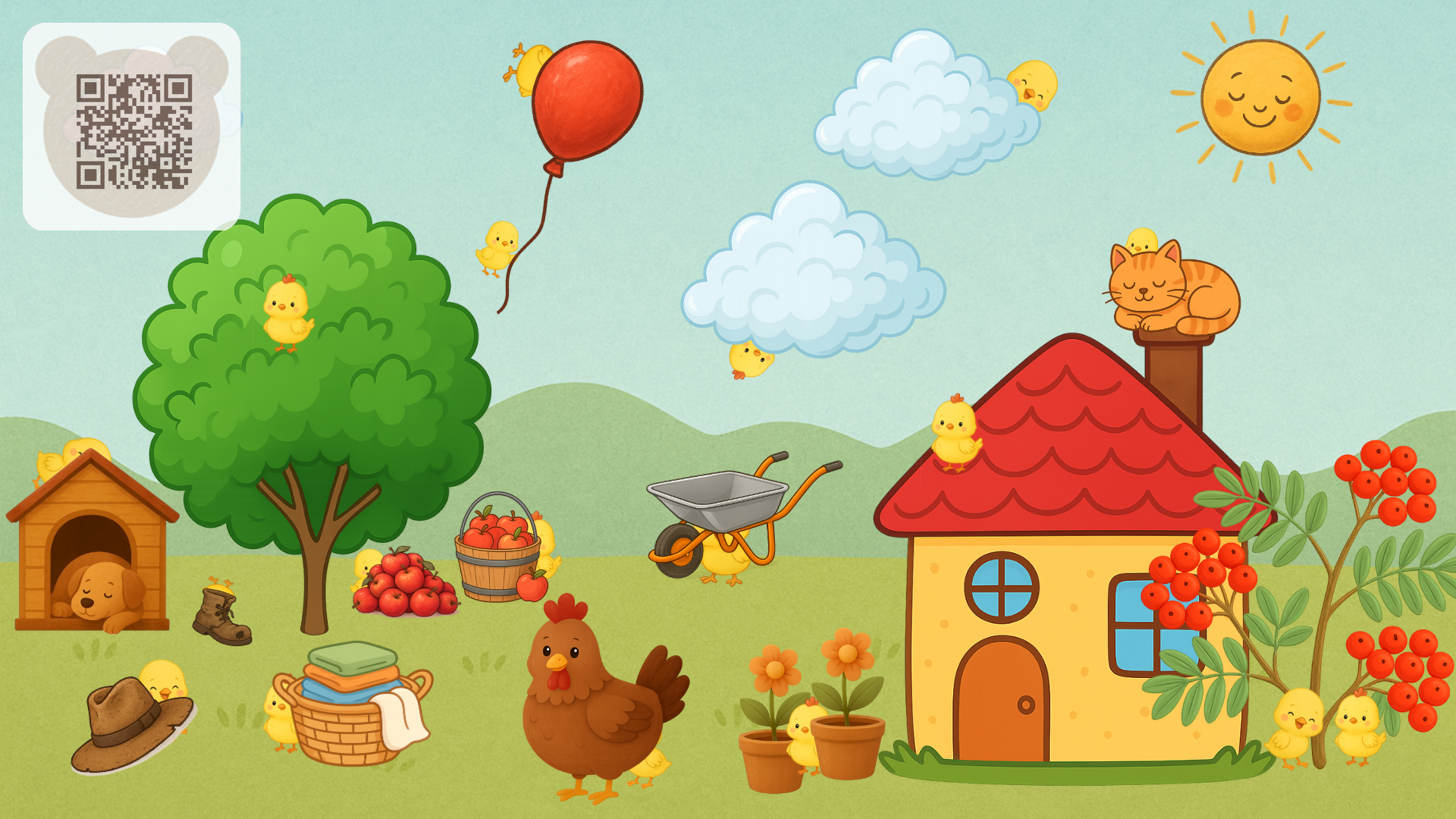
Free Printable Bedtime Game: Help Mother Hen!
Can your little one help Mother Hen find her missing chicks? They’ve hidden themselves in the most unexpected and silly places! You can play right here online while staying on our site, or simply download and print out this high-quality picture for a quiet, screen-free bedtime activity. It’s a wonderful, calming way to build your toddler’s observational skills before sleep!