Let’s face it: your brain is currently 90% decision fatigue and 10% caffeine. Between perfecting the nursery aesthetic and obsessing over car seat safety, you’re stuck staring at your screen asking, “how many pacifiers do i need for a newborn?” I get it—it feels like a high-stakes guessing game where the prize is five extra minutes of sleep. As a parenting educator, I’ve seen the “minimalist” dream vanish the second the last clean binky slides into the floorboard abyss during a 3 AM meltdown. You don’t need a warehouse of silicone, but you do need a survival strategy. Let’s cut through the noise and find that sweet spot for your baby’s self-soothing journey—without the late-night flashlight search and the “new parent” panic.
Quick Answer: How Many Pacifiers You Really Need

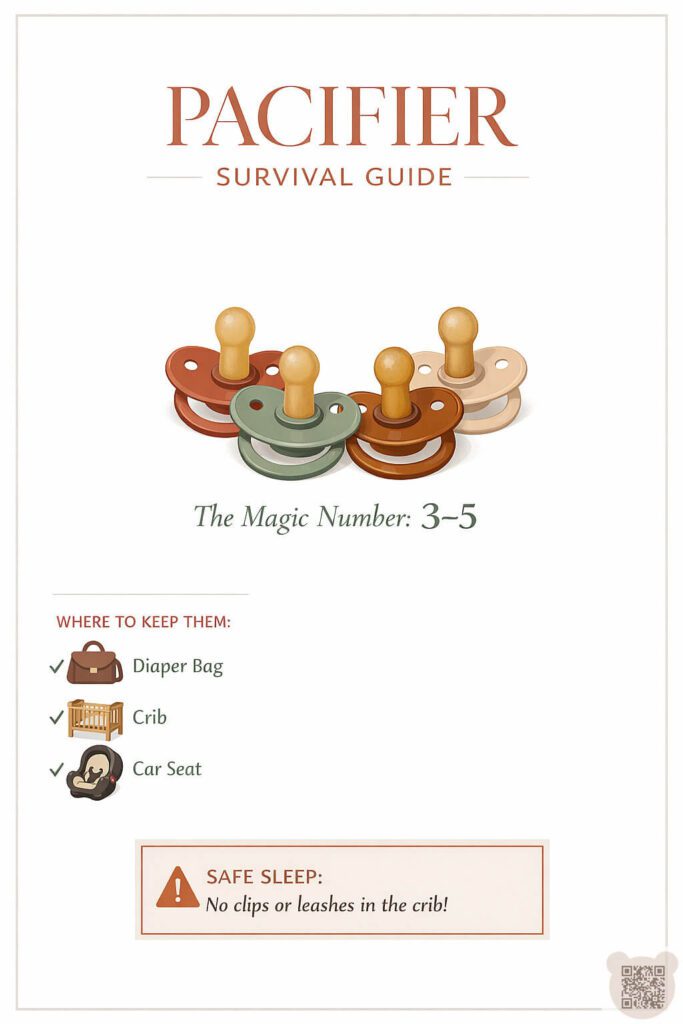
If you’re looking for a straight-to-the-point answer: most parents need 3–5 pacifiers for a newborn.
Think of it as a “rotation strategy” rather than a stockpile. Here is the breakdown of why this is the sweet spot for your newborn pacifier stash:
- One in use: The active binky helping your baby stay calm.
- One on deck: A clean backup for when the first one inevitably hits the floor.
- One in the diaper bag: So you aren’t that parent frantically searching for a “soother” in the middle of Target.
- One (or two) in the wash: Because newborn life is a cycle of sterilizing and rotating.
While it’s tempting to buy a dozen, remember that baby preference is real. It’s much smarter to start with a small trial and error pack rather than committing to a bulk order of a brand your little one might reject.
Read next:
- No baby handbook? I wrote one for you. Get practical educator tips to survive and enjoy the chaos.
- Check out our Newborn Spring Survival Guide to finally master the “is my baby too hot?” guessing game.
- To Sip or Not to Sip? The Truth About Water for Infants. When “just a little bit” is actually too much.
- The Minimalist Guide to Newborn Essentials: Less Gear, More Love
Why You Actually Need More Than One
As an educator, I always tell parents: preparation isn’t about being “extra,” it’s about stress management. When you wonder how many pacifiers does a newborn need, think of it as your primary backup system.
Here is why a single “binky” is never enough:
- The “Gravity Test”: Newborns have a unique talent for dropping things at the worst possible moment. If you’re out for a walk and the pacifier hits the sidewalk, you’ll be glad you have a spare in your pocket.
- Hygiene Rotation: You don’t want to be stuck at the sink scrubbing and boiling a single silicone nipple while your baby is having a full-blown meltdown.
- The Stealth Factor: Having multiple locations (the crib, the car seat, the diaper bag) means you never have to play “where’s the pacifier” in the dark.
Pro-Tip (The “Trial Pack” Strategy). Before you go all-in, remember that how many pacifiers for newborn babies you should buy depends on their preference. Start with a multi-brand starter kit. Some babies are “picky eaters” when it comes to shapes—orthodontic vs. round—and you don’t want to waste money on a 6-pack they’ll just spit out.
How Many Pacifiers Should I Buy for a Newborn Baby?

If you are a first-time parent, the math can be confusing. How many pacifiers do you need for a baby to feel prepared but not cluttered? To make it easier, I’ve broken down the “Pacifier Math” based on different parenting styles and needs.
The Pacifier Math Table
| Level | Quantity | Best For… | Why it works |
|---|---|---|---|
| The Minimalist | 2–3 | Testing the waters | Perfect for the first week to see if your baby even likes the brand. |
| The Sweet Spot | 4–6 | Everyday sanity | You always have a clean one while others are in the wash or “lost” under the crib. |
| The Safe Bet | 7–10 | High-needs / Travel | Ideal if you’re commuting, traveling, or if your baby relies heavily on non-nutritive sucking for sleep. |
Important Note: When figuring out how many newborn pacifiers do i need, remember the “Golden Rule of 2”: Always have two available in every “station” (the nursery, the living room, and the diaper bag).
How Many Pacifiers to Pack for the Hospital
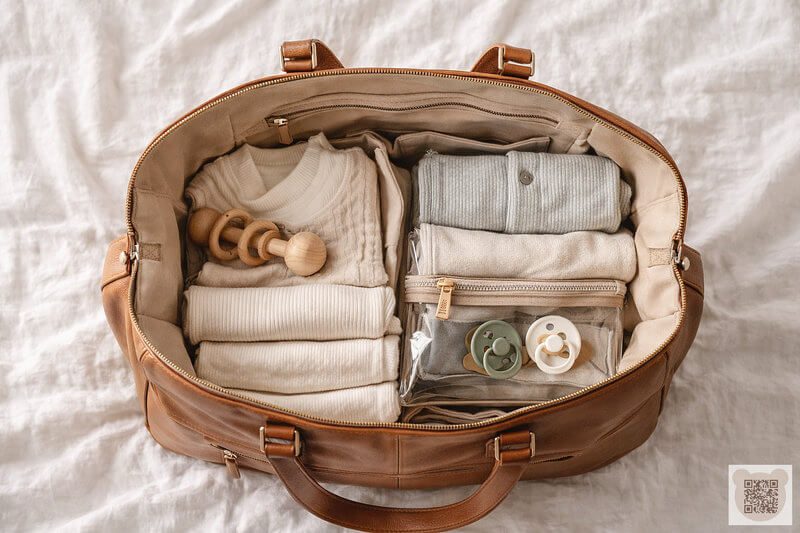
When you’re double-checking your hospital bag checklist, the urge to overpack is real. You want to be ready for every “what if.” But as an educator who focuses on those first delicate days of bonding, my advice is to keep it simple.
So, what is the best pacifier quantity for hospital bag essentials?
- The Magic Number: Just 1 or 2.
- The “Why”: Most US hospitals and birth centers actually provide a standard medical-grade “soother” (like the ones from Soothie or Mam) if you need one. More importantly, those first 48 hours are crucial for establishing feeding and bonding. You want a couple of options just in case, but you don’t need your entire stash yet.
Pro-Tip for the Birth Center: Check your hospital’s “pacifier policy” beforehand. Some lactation-friendly facilities encourage waiting a few days to avoid nipple confusion, while others are totally fine with them from hour one. Having two different nipple shapes in your bag is the smartest way to handle that first “test drive” without overcomplicating your stay.
Minimum vs. Recommended vs. “Safety First”
Let’s break it down into real numbers. When you’re figuring out how many pacifiers do you need for a baby, it helps to look at it through the lens of your daily routine. As a teacher, I recommend finding your “comfort zone” so you’re never caught off guard.
Here is the breakdown of the recommended number of pacifiers for a newborn based on your lifestyle:
- Minimum (2–3 pacifiers): This is your “starter kit.” It’s enough to get through the first few days while you’re figuring out if your baby actually likes a specific brand.
- Recommended (4–6 pacifiers): This is the sweet spot. It allows for one in the crib, one in the diaper bag, one in the stroller, and a couple in the wash. You won’t feel like you’re constantly chasing a binky.
- The “Safety First” Stash (7+ pacifiers): If you have a multi-story house or a baby who relies heavily on non-nutritive sucking for sleep, having a larger stash (a “safe запас”) is a total game-changer for your mental health.
Educator’s Note: Remember the “Pacifier Rotation.” Even if you have a dozen, don’t use them all at once. Keep the extras sealed and rotate them to ensure they wear out evenly and stay hygienic.
What If Your Baby Refuses a Pacifier?
It’s the scenario no one tells you about at the baby shower: you’ve picked the cutest colors, sterilized the nipple, and your baby says, “No, thank you.” If your little one keeps spitting it out, don’t take it personally—and definitely don’t panic about how many pacifiers for newborn stages you’ve already bought.
As an educator, I see this as a baby’s first lesson in autonomy. Here is how to handle a “refusal” without losing your cool:
- Respect the “No”: Some babies are simply thumb suckers or prefer other ways to soothe. Forced pacifier use can lead to a negative association.
- The Shape Shift: Sometimes it’s not the pacifier; it’s the shape. Try switching from a bulb to an orthodontic nipple. This is where your trial and error packs really pay off.
- Check the Timing: If they are hungry or over-tired, a pacifier might feel like a “trick” rather than a comfort. Wait for a calm moment to reintroduce it.
The Silver Lining: If your baby truly refuses, you’ve just saved yourself the future struggle of the “pacifier fairy” visit. But before you give up, remember that how many pacifiers should i buy for a newborn baby initially should be kept low—just 2 or 3—until you know for sure they are a “pacifier baby.”
The Educator’s Secret: Real-Life Survival Tips
Over my years of working with families, I’ve noticed that the “pacifier struggle” is rarely about the silicone nipple itself—it’s about finding that first rhythm with your baby. To make your life easier (and your nights longer), here are my top takeaways for managing your newborn’s stash:
- Observe the “Spit-Out” (Observation): If your baby constantly spits the binky out, they might be telling you the flow is too fast or the shape feels “off.” Before buying a massive 10-pack, observe their facial tension. A relaxed baby is the goal, not just a “plugged” one.
- The “Car Seat Hack” (Real-Life Situation): You’re driving solo, the baby starts fussing, and the pacifier is somewhere in the floorboard abyss. Always tether a spare to the car seat handle (safely, outside the reach of the harness). It’s a total game-changer for those stressful trips to the grocery store.
- The “Nightstand Reserve” (Pro-Tip): Keep at least two glow-in-the-dark versions on your nightstand. Trust me, at 2 AM, trying to find a clear pacifier on a white sheet is a level of “parenting ninja” you don’t want to master.
- Don’t Rush the Introduction (Advice): One of the best tips for parents is to wait until feeding is well-established (usually 3–4 weeks) before introducing a binky. This helps you understand the difference between “I’m hungry” and “I just need to suck for comfort,” making it easier to determine how many pacifiers does a newborn need for actual soothing.
The Safe Sleep Rule (A Must-Know): While pacifier clips and cute beaded leashes are a lifesaver during the day, they are a big “no” for sleep. As an educator, I can’t stress this enough: never leave a pacifier clip attached to your baby in the crib. It’s a safety hazard that isn’t worth the risk. For nighttime, stick to “naked” pacifiers only. If you’re worried about finding them in the dark, that’s where those glow-in-the-dark versions I mentioned earlier truly shine!
The Bottom Line: Trust Your Instincts (and Your Stash)
At the end of the day, the answer to “how many pacifiers do i need for a newborn” isn’t set in stone. Whether you end up with a minimalist set of three or a “safety first” collection of ten, remember that you are doing a great job.
Parenting is a series of small adjustments. If your baby loves their binky, great! If they prefer their thumb or just extra snuggles, that’s great too. Don’t let the pressure of “perfect preparation” steal your joy. Start with a few, observe your little one, and keep a spare within reach—your sanity is worth more than any stockpile. You’ve got this, and your baby has the best “support system” they could ask for: you.
Important: This article is for informational purposes only. The suggested methods are pedagogical and do not replace professional medical advice, diagnosis, or treatment. Always consult a pediatrician regarding any concerns about your child's health.