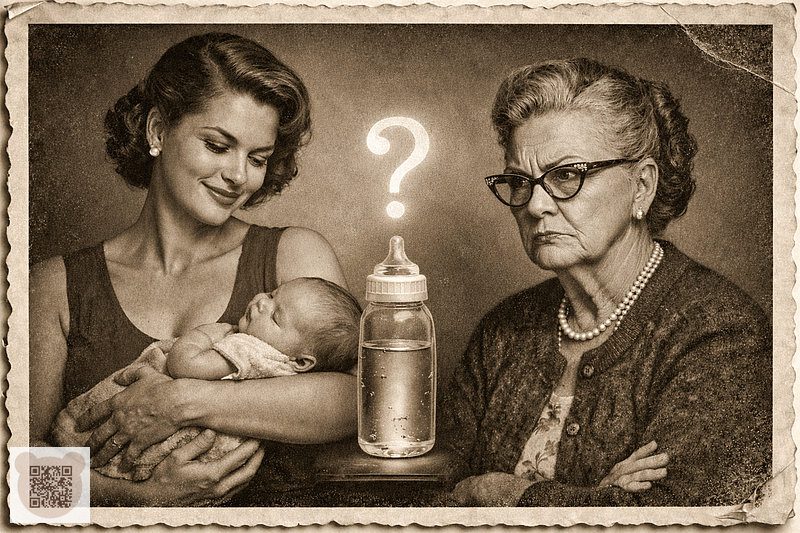
“He’s crying — does that mean he’s thirsty?” This question almost inevitably arises for parents during the first months of a baby’s life. Advice comes from all sides and is often contradictory: some insist that water is essential, while others warn of possible harm. It is hardly surprising that such confusion gives rise to anxiety and the fear of making a mistake. In this article, we will calmly and without alarm examine when it is appropriate to give water to an infant — and when parents can set their worries aside and simply trust the child’s natural needs.
The short answer: should you give water to an infant
According to modern pediatric guidelines and WHO recommendations, a healthy baby under six months of age does not require any additional fluids. Breast milk and infant formula consist of more than 80% water, fully providing both nourishment and hydration.
- Excessive supplementation at this age can be dangerous: it may create a false sense of fullness, slow weight gain, and even disrupt electrolyte balance.
- That said, life is broader than rigid rules, and the question of whether an infant needs water may arise in certain special circumstances:
Extreme heat: when the temperature indoors or outdoors rises above 28–30°C and the baby shows clear signs of thirst. - Medical indications: high fever, diarrhea, or constipation (on a doctor’s recommendation).
The beginning of complementary feeding: once solid foods appear in the diet, clean water becomes essential.
In all other situations, the answer to whether an infant should be given water is no. The key is not to turn supplementation into a routine before six months of age, but instead to be guided by the baby’s well-being and the conditions around them. During exclusive breastfeeding in hot weather, it is usually best simply to nurse more frequently.
Why Parents Begin to Question Water
Doubts about whether a baby should be given water do not arise out of nowhere — and this is a completely natural expression of care. Most often, anxiety is fueled by specific situations in which we, as adults, feel uncertain:
- Abnormal heat. When we ourselves feel the urge to drink a whole liter of water, it seems almost cruel not to offer a bottle to the baby.
- Advice from the older generation. Grandmothers often insist on giving water, referring to the fact that “this is how we were raised,” which makes parents question modern guidelines.
- Unexplained crying. If a child has just eaten but continues to fuss, the first thought that comes to mind is: “Maybe they’re simply thirsty?”
- Fear of dehydration. This is the strongest trigger. We are afraid of missing a dangerous condition, so we try to play it safe with an extra sip of water.
This is exactly where harmless yet regrettable parenting mistakes sometimes occur: for example, trying to replace a full feeding with water, or being overly persistent with the bottle when the baby doesn’t need it. It’s important to understand that your anxiety comes from a desire to protect, but when deciding whether a baby needs water, it’s wiser to rely on biological markers (urination frequency and the condition of the mucous membranes) rather than a subjective sense of thirst:
- Urination frequency: a healthy baby under 6 months should have between 12 and 20 wettings per day (or 6–8 well-filled disposable diapers). Urine should be pale and without a strong odor. If a diaper remains dry for more than 3–4 hours or the urine becomes deep yellow, this is a signal of insufficient fluid intake.
- Condition of mucous membranes and skin: take a look inside the baby’s mouth — the tongue and gums should be moist and shiny. Dry lips, thick saliva, or the absence of saliva during crying (crying without tears after the age of 2 months) indicate a lack of moisture. Also check the soft spot on the head: normally it should be level with the skull bones; a sunken fontanelle is a serious sign of dehydration.
By separating your own emotions from the child’s real physiological needs, you will see the situation much more clearly.
Why Water Is Usually Not Given in the First Months of Life
In the first months of life, a baby’s body functions like a finely tuned mechanism, where nourishment and hydration are inseparably linked. For this reason, pediatricians generally do not recommend introducing water into an infant’s diet before the child begins exploring solid foods. There are several well-founded reasons why water should not be given to an infant without specific medical indications.
Breast Milk and Formula Already Contain Water
Doctors point to the unique composition of breast milk: it adapts to a baby’s needs and consists of more than 80% biologically active water. During a feeding, the so-called “foremilk” primarily quenches thirst, while the richer, fattier “hindmilk” provides satiety. In the case of formula feeding, properly prepared infant formula likewise supplies the baby with the full volume of fluid required. In this way, the child receives natural hydration together with essential nutrients.
How Excess Water Can Be Harmful
When considering the potential harm of water for an infant, specialists highlight two main factors that may affect a baby’s development:
- Reduced appetite. A newborn’s stomach is very small. Even a small amount of water can fill it, creating a false sense of fullness. As a result, the baby may consume less milk or formula than needed, which over time can lead to insufficient calorie intake and slower weight gain.
- Impact on the feeding process. Supplementing with water can interfere with normal feeding: during breastfeeding, it may sometimes lead to reduced milk supply in the mother, as the baby’s need to nurse decreases. In addition, an infant’s kidneys are not yet physiologically ready to process large volumes of excess fluid, placing unnecessary strain on them. That is why, up to six months of age, the best source of moisture for a healthy baby remains the nourishment they are already accustomed to.
When Water Can Be Offered After All
Despite general recommendations, there are circumstances in which offering water is justified and sometimes even necessary. Pediatricians emphasize that it is important to be guided by the child’s condition rather than by universal rules, since every body has its own individual needs.
Below are the main situations in which a bottle of water may appear in a baby’s diet:
- The introduction of complementary foods. As soon as cereals, vegetable purées, or meat purées enter a baby’s menu, water becomes an essential addition. It helps the digestive system adapt to denser, unfamiliar foods and helps prevent constipation.
- Formula feeding. Babies who receive formula may occasionally need a small amount of water between feedings. Even the most advanced formulas have a more stable composition than breast milk, so when thirst arises—especially in a dry indoor environment—offering water can be appropriate.
- Extreme heat. If the air temperature indoors or outdoors rises well above comfortable levels and the baby shows signs of restlessness, dry lips, or wets diapers less frequently, a small amount of water can help maintain proper hydration.
- A doctor’s recommendation. In certain conditions—such as intoxication, high fever, diarrhea, or suspected physiological jaundice—a pediatrician may prescribe a specific supplementation regimen.
In these situations, water is not a substitute for nourishment but an important tool for supporting a baby’s well-being amid changing environmental conditions.
The Author’s Personal Experience: Water as a Preventive Measure Against Thrush
At times, medical indications call for stepping beyond general rules and taking an individual approach. One such example occurred when my daughter, at just two months of age, was diagnosed with oral thrush (stomatitis).
Alongside the main course of treatment, the pediatrician recommended short-term supplementation with water. The reasoning was simple and sound: it was the height of summer, and thickened saliva—caused by moisture loss in the heat—was encouraging the growth of harmful bacteria in the mouth.
In this case, water was not given for nourishment, but used as a temporary measure of hygiene and prevention, underscoring the fact that medical advice must always take precedence over universal guidelines.
Can You Give Water to an Infant: What Pediatricians Say
Over the past decades, modern pediatrics has reconsidered approaches to infant care, forming a unified view on the issue of water balance. Today, the answer to whether infants can be given water is grounded in the physiological characteristics of a child’s development and the composition of their nutrition. Most specialists agree that under normal conditions and in the absence of health concerns, a baby up to six months of age receives everything they need from breast milk or properly adapted formula.
The general medical consensus holds that excessive stimulation of the kidneys with water and the risk of replacing nourishing calories with “empty” fluid are unjustified in the early months of life. This position is also shared by the well-known Ukrainian pediatrician Yevhen Komarovskyi, whose views align with contemporary medical recommendations. Experts emphasize that a newborn’s gastrointestinal tract is designed to process breast milk specifically, which in itself serves as both food and drink.
Nevertheless, when considering whether water may be given to an infant, physicians always make allowances for environmental conditions. If the air in a room is excessively dry due to heating, or if an unusually hot summer sets in, pediatricians allow small amounts of water to be offered. The key is to give water from a spoon or a training cup between main feedings, without replacing полноценное nourishment. Thus, the medical stance ultimately rests on the principle of reasonableness: water is not an essential component of an infant’s diet before six months of age, but it may serve as a helpful measure when comfortable living conditions are clearly disrupted.
Why an Infant Might Need Water
Although under normal conditions breast milk fully meets an infant’s needs, there are moments when additional hydration may be considered a supportive measure. Understanding why an infant might be given water helps parents respond flexibly to changes in routine and well-being, without disrupting the natural processes of digestion.
There are several situations in which a baby’s body may benefit from clean water:
- Adjusting the indoor climate. During the winter months, heating radiators often dry the air in homes. In such conditions, the delicate mucous membranes of a baby’s nose and throat can dry out more quickly, and a couple of sips of water may help restore a sense of comfort.
- Oral hygiene after complementary feeding. With the introduction of the first cereals or vegetables, water may be needed to gently rinse the mouth of food residues—an полезная habit from the moment the first teeth appear.
- Easing constipation. At times, especially during a transition to a new formula or at the beginning of a baby’s acquaintance with solid foods, bowel function may slow. In such cases, a small amount of fluid can support gentler digestion.
- Fluid loss through active sweating. If a baby is dressed too warmly or stays in a stuffy room, their body loses moisture through the skin. Water in this situation helps replenish these minor losses between regular feedings.
It is important to remember that in all these examples, water serves only as a supplement. The decision of why to offer water to an infant in a particular situation is usually made through careful observation of the child’s behavior: if the baby willingly takes a few sips while maintaining a healthy appetite for their main nourishment, this may be fully justified by the circumstances.
Common Parental Mistakes
When it comes to infant hydration, mothers and fathers often rely on advice from older generations or on their own intuition. However, modern research highlights several common parental mistakes that can unintentionally disrupt a baby’s feeding routine:
- Giving water “just in case.” Supplementation often happens without any real reason—such as heat or illness—simply because adults assume the baby must be thirsty. This can result in the infant consuming less nourishing milk than they actually need.
- Replacing a feeding with water. At times, when a baby cries, parents offer a bottle of water instead of breast milk or formula. If the child is truly hungry, water only “tricks” the stomach for a short while, without providing the energy required for growth.
- Forcing a child to drink. If a baby firmly refuses water, pushing the spoon or nipple away with their tongue, it is best not to insist. A healthy child’s body senses its needs well, and refusal usually means that the fluid from milk or formula is entirely sufficient.
- Using sweetened water. Adding sugar or sweetened herbal teas at an early age encourages unhealthy taste preferences and places unnecessary strain on the pancreas.
Understanding these nuances helps parents avoid needless fuss and build a harmonious routine guided by the baby’s real needs.
If You Have Doubts — That’s Normal
In the first months of parenthood, every day brings dozens of new questions, and deciding whether to give water is just one of them. It is important to remember that in this search for the right answers, there are no “bad” or “wrong” parents. Your doubts and your desire to understand the details are, in fact, one of the purest expressions of love and care for your baby.
Today’s information space is filled with conflicting advice: grandmothers insist on giving “a little water from the very first day,” while modern guidelines recommend waiting until six months. In such a flood of opinions, it is easy to feel lost. Keep in mind that:
- Your intuition matters. You spend twenty-four hours a day with your child and sense their condition better than anyone else.
- Questions are a sign of awareness. If you are reflecting on whether supplementation is appropriate, it means you are taking your baby’s health seriously and responsibly.
- Your doctor is your main ally. If you feel that your baby may not be getting enough fluids, or if you are worried about the heat in your home, do not hesitate to discuss it with your pediatrician. A qualified specialist can ease your fears and suggest a solution tailored specifically to your child.
Above all, remain calm and remember: you are doing everything possible to help your baby grow healthy and happy. Every step along this path, even the smallest one, is part of your unique journey through parenthood.
In Short: When to Give Water to an Infant
To sum up, the key guidelines for parents can be gathered into one clear and practical list. This checklist will help you quickly decide whether it is worth offering your baby a bottle of water:
- ❌ In the first months (up to 6 months) — water is usually not needed. A healthy baby, whether breastfed or formula-fed, receives the full amount of fluid required from their primary nutrition.
- ✅ After 6 months (with the introduction of complementary foods) — water becomes essential. As thicker foods such as purées and cereals appear in the diet, clean water supports proper digestion.
- ✅ As needed (special situations) — water may be offered during extreme heat (above 28–30°C), when indoor air is very dry, or if the baby shows clear signs of thirst.
- ⚠️ When in doubt — consult a pediatrician. If your baby seems lethargic, has dry mucous membranes, or shows changes in urination patterns, be sure to see a doctor. A specialist will determine whether supplementation is necessary in your specific case.
Remember: there is no universal formula, and attentive observation of your baby’s needs is the best way to ensure their comfort.
Summary Table: Water for Infants (Up to 6 Months)
| Situation | Pediatric Recommendation | Explanation / Note |
|---|---|---|
| Healthy condition,
comfortable temperature |
❌ Usually not required | Breast milk or formula covers 100%
of the fluid needs. |
| Start of complementary feeding
(from ~6 months) |
✅ Necessary | Helps the digestive system cope with solid foods. |
| Extreme heat (>28°C / 82°F) | ✅ Can be offered | To support water balance if the baby
shows signs of thirst. |
| High fever / diarrhea | ✅ Mandatory
(as prescribed by a doctor) |
Risk of dehydration; medical
supervision is required. |
| Dry indoor air | ✅ Can be offered | A few sips help moisten the mucous
membranes. |
| Giving water “just in case” | ❌ Not recommended | May reduce appetite for primary nutrition. |
Support the creation of new fairy tales for children! ❤️