Do you feel that endless remarks and lectures no longer work? Let the woodland creatures become your allies in raising a child: these short, meaningful fairy tales turn dry rules into exciting adventures, where a child aged 4–6 comes to understand for themselves the value of honesty, order, and courtesy. Forget the sermons — a professional educator has prepared a ready-made weekly program for you with audio versions, cozy illustrations, and therapeutic games that help a child understand the consequences of their actions through sincere empathy with the characters.
🗺️ Plan “Week of Kind Meanings”
I designed this program as a step-by-step path toward mutual understanding. At the heart of every meeting are short, meaningful fairy tales that help a 4–6-year-old child see themselves from the outside and, without unnecessary lectures, choose the right strategy of behavior.
- Monday: Day of Order. We begin with the story of Boris the Badger. We will discuss how the mountain called “later” steals our playtime, and together we will try to tame the household clutter.
- Tuesday: Day of Empathy. We explore the case of Vera the Squirrel. These children’s meaningful fairy tales are short but rich: they teach a child to feel another’s joy when a returned item brings happiness.
- Wednesday: Day of Courtesy. We meet Walter the Wolf Cub. I suggest using a “politeness magnet” in conversation and seeing how kind words attract new friends.
- Thursday: Day of Attention. We listen to the tale of Mila the Mouse. We learn to value silence and listen to others so as not to miss the most important woodland magic.
- Friday: Day of Reality. We spend time with Hammy the Hamster. We put gadgets aside and search for five things around us that are more interesting to touch or taste than a sticky screen.
- Saturday: Day of Trust. We examine the story of Ludwig the Fox Cub. We discuss why telling the truth is easier than trying to “wash away” even the tiniest untruth.
- Sunday: Day of Harmony. We finish the week with Puffy the Bunny. My instructive fairy tales for children about good behavior explain that rules are not boring — they are warm and safe.
Why do I recommend this plan?
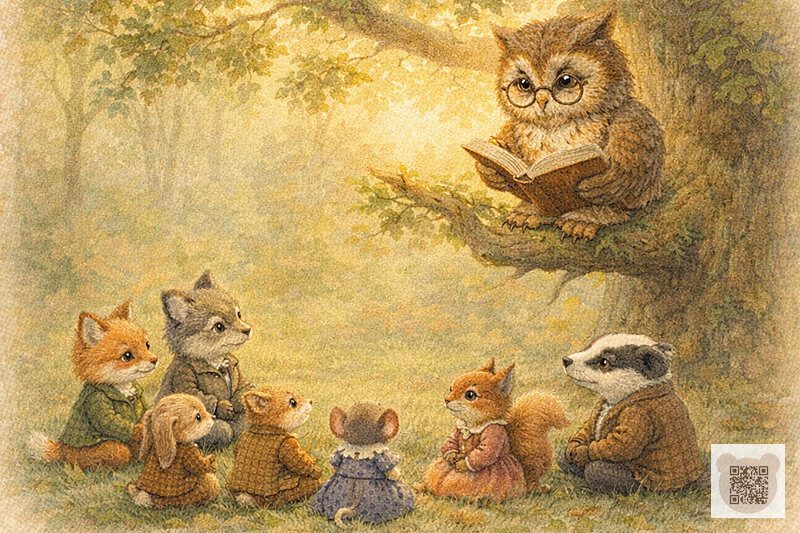
My short meaningful fairy tales for children are adapted to the psychology of ages 4–6. You can read them online or listen to them in my audio narration — the main thing is to do it regularly. As a teacher, I know that a systematic approach helps establish good habits gently and without stress for the whole family.
1. Boris the Badger and the Mountain Called “Later”
This tale teaches a child to understand the consequences of procrastination and realize that things put away on time are the key to freedom and personal space.
Fairy tale reading time: 4.5 minutes.
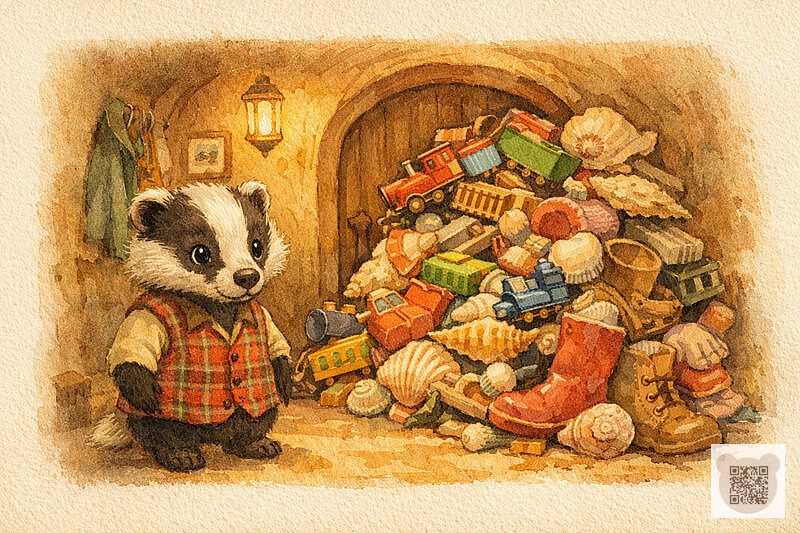
Boris was a well-mannered badger. That is, of course, if one did not count his habit of leaving things exactly where they slipped from his paws. He had a cozy burrow beneath an old alder tree, furnished with sturdy pieces made from polished roots.
On Thursday Boris was expecting guests. He was turning five years old — the age when a badger is already supposed to have both a proper pocket watch and perfect order in his burrow. Yet on Wednesday morning, in Boris’s hallway, a dreadful mess had taken over.
There lay:
- A wooden railway set (thirty-two carriages and one broken signal);
- A wood-carving kit;
- Rubber boots smeared with blue clay;
- And an enormous heap of empty nutshells.
— Boris, — said his neighbor, the old mouse Mrs. Shshur, peeking through the doorway, — if you do not clear away this pile, the postman will not be able to slip your birthday parcel through the slot.
— I will do it later, Boris replied, without looking up from painting his model sailing ship. — Right now I am busy with an important matter. Besides, it is not a pile at all, but an artistic installation.
He simply nudged the railway a little farther into the corner, closer to the exit, so it would not interfere with walking around the room.
At noon Boris decided it was time to sweep the floor. But in the way lay a stack of old newspapers and a set of paints.
— Later, Boris muttered and simply pushed the newspapers toward the railway. Now the mountain in the hallway had grown to the size of a respectable mound.
By evening Boris felt hungry. To reach the jar of honey and the croissants, he had to step over the mountain of things. His paw caught on a railway carriage, he fell, and in annoyance he shoved everything he could reach toward the front door.
It should be noted that badgers are very strong creatures, but sometimes their strength is directed not quite where it ought to be.
There was a dull “crunch.” The Mountain Called “Later” pressed against the front door from the inside. Boris paid no attention to it. He ate the honey and went to bed, deciding that morning is wiser than evening.
On Thursday morning Boris woke in a splendid mood. He put on his best checkered waistcoat with mother-of-pearl buttons and a freshly starched bow tie. Today was his birthday!
Soon voices were heard outside.
— Happy birthday, Boris! — squeaked Mrs. Shshur. — We brought a wild raspberry pie and a new watering can for your garden! Open up!
Boris walked to the door and wanted to push it open. But the door from top to bottom was blocked with all sorts of things. The mountain of newspapers, railway pieces, boots, and unwashed cups jammed the passage so tightly as if it had been filled with cement.
— Just a moment! — shouted Boris, trying to pull at least one carriage from the pile. But the harder he pulled from below, the more things came crashing down from above.
He was locked in. Inside his own house. In his finest waistcoat. And outside, scarcely a yard from his nose, his friends were eating a pie filled with fragrant raspberries. They did not wait for him, for pies, as everyone knows, have a habit of growing cold, and guests — of losing patience.
It took Boris three hours to clear the heap. When he finally stepped out into the daylight, breathing heavily and brushing the dust from his waistcoat, only crumbs of pie remained on the clearing and a note: “We left the present under the bush. Happy ‘later,’ dear Boris.”
Since that day Boris learned one very important rule: the Mountain Called “Later” grows faster than weeds after rain, and it has a curious habit of locking you in precisely when you wish most dearly to go out.
Vocabulary Work (enriching speech)
The special style of these tales is wonderful because it does not simplify language for children, but introduces “grown-up” words within a clear and lively context. Here are some words from the story worth discussing:
- Respectable appearance — ask your child: “What do you think this means? Did Boris look like a rascal or like a serious gentleman?” (Explain that it means someone who inspires respect).
- Installation — this is how Boris described his mess. A funny word for something arranged to be displayed. You may joke: “Are your socks on the floor an installation too?”
- Jammed — when something gets stuck so tightly that it will not move.
- Procrastination (this word can be introduced for children aged 5–6) — explain that it is the “scientific name” for the “later” virus.
- Starched (tie) — explain that long ago clothes were stiffened and smoothed with a special powder so that they looked very festive.
Questions for Discussion (with a therapeutic effect)
These questions will help the child arrive at the conclusion about the value of tidiness on their own, without direct pressure from an adult.
- Observation: “Why did Boris not notice the mountain in the corridor at first? Did it seem dangerous to him in the beginning?”
- Feelings: “What did Boris feel when he heard the smell of pie and the voices of friends behind the door but could not go out? Was it unfair or simply the result of his own actions?”
- Cause and effect: “Who really locked Boris inside the burrow — a wicked enemy, or Boris himself?”
- Solution: “If Boris had a time machine and could return to Wednesday morning, what one small action might have saved his celebration?”
- Personal reflection: “Do you think there might be a place in our home where a little ‘later’ mountain is quietly beginning to grow? Shall we check whether it is blocking some important door?”
Game Task “Anti-Later”
To reinforce the message of the tale, suggest the game “A Parcel for Boris”:
Imagine we are postmen. We must deliver a present to Boris, but the path is blocked by a “mountain” (scatter a few pillows or toys along the way to the room). Let us “clear the heap” right now so that Boris’s celebration (or our evening today) may begin without delay.
2. Vera the Squirrel and the Basket That Was Not Hers
This tale helps a child develop emotional intelligence, clearly showing that taking what belongs to another robs not only the owner of joy, but ourselves as well.
Fairy tale reading time: 3–4 minutes.
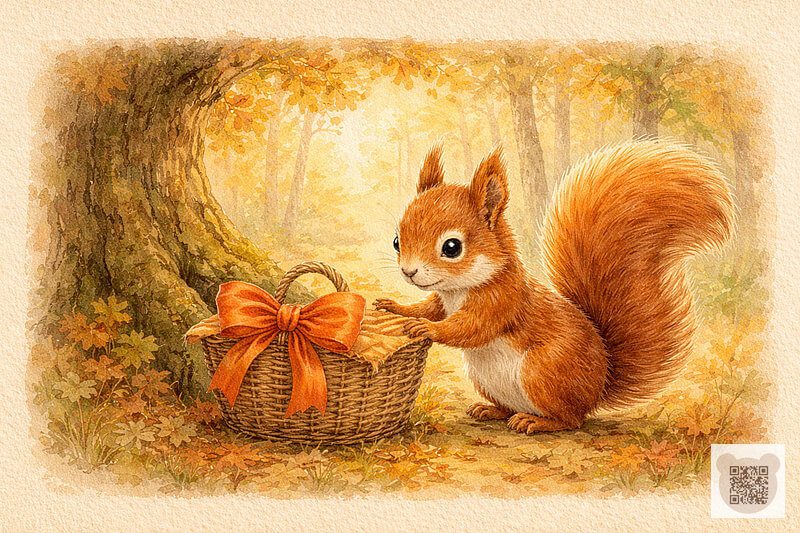
Vera was a very house-proud squirrel. She wore an apron with a deep pocket and always watched the ground carefully, looking for useful things.
One morning, at the foot of an old oak, Vera found a basket. It was a lovely little thing, woven from willow twigs, lined with checked flannel. Inside there was neither a note nor a name.
— What luck! — exclaimed Vera. — Since it lies here all alone, it must now be mine.
At once she filled the basket with the finest forest hazelnuts and tied a long silk ribbon the color of ripe rowan berries to the handle. Vera was so proud of her discovery that she spent the whole day strolling through the forest, showing off the basket to her neighbors.
Toward evening, when the shadows grew long, Vera sat down to rest by the stream. She untied the ribbon to straighten the bow when suddenly she heard bitter sobbing. Behind a raspberry bush sat a tiny mouse in a neat little dress, weeping miserably.
— What troubles you so, my dear? — asked Vera rather stiffly, pressing the basket close to herself.
— Oh, dear squirrel! I have lost my basket, the one my grandmother gave me for my birthday. It had a flannel lining that I treasured so much…
Vera felt her fluffy tail twitch awkwardly. She glanced at the checked fabric inside her “find.” She very much wanted to say: “I found it, which means it is mine.” But at that very moment a sharp gust of wind blew up, snatched Vera’s crimson ribbon, and carried it straight into the churning current of the stream.
— Oh! My beautiful ribbon! cried Vera. In another second the ribbon vanished beneath the water.
Vera froze. Her heart tightened with sudden loss. It had been her favorite ribbon, and now the place where it once lay in her little box was empty. She looked at the mouse, who was still crying over her lost basket.
“If I feel so sad about a ribbon,” thought Vera, “then how sad must this mouse feel, when I have taken her new basket? And not just any basket — but a birthday gift from her grandmother?”
Vera sighed, walked over to the bush, and held out the willow basket to the mouse.
— I believe this belongs to you, my dear. I found it near the oak and… merely kept an eye on it so that no one else would take it.
The mouse beamed. She thanked Vera so warmly that Vera even felt a little shy. As she walked home with empty paws, Vera felt light and joyful. She had lost her ribbon, yet found something far more precious: the understanding that another’s joy at having a thing returned is greater than your own joy from keeping what was never yours.
Vocabulary Work (enriching speech)
- Flannel (flannel lining) — a soft and pleasant fabric to the touch. You can tell the child that cozy pajamas are often made from it.
- House-proud — someone who loves order and takes good care of their home and supplies.
- To take for oneself — to keep something that does not belong to you.
Questions for Discussion (with a therapeutic effect)
- Why did Vera the Squirrel decide the basket was hers now? (She justified herself because the object was lying alone.) Discuss: if something is lying without its owner nearby, does that mean it has no owner?
- What helped Vera understand the mouse’s feelings? (The loss of her own favorite ribbon. She tried on the mouse’s sadness for herself.)
- How did Vera’s mood change when she returned the basket? (She felt light and calm.) Ask: “Do you think it is heavy to carry someone else’s belonging in your pocket?”
Game Exercise “Lost and Found”
Take the child’s favorite toy and hide it somewhere visible. When the child finds it, ask: “Imagine someone else had found this toy and would not return it. What would you feel? And what might the person feel who found it and decided to give it back to you?”
3. Walter the Wolf Cub — the Terror of Little Ones
Fairy tale reading time: ~1.5 minutes.
The tale of Walter the Wolf Cub helps a child see that rudeness builds walls of loneliness, while politeness becomes that very “magic magnet” that draws friends closer and makes the world brighter.
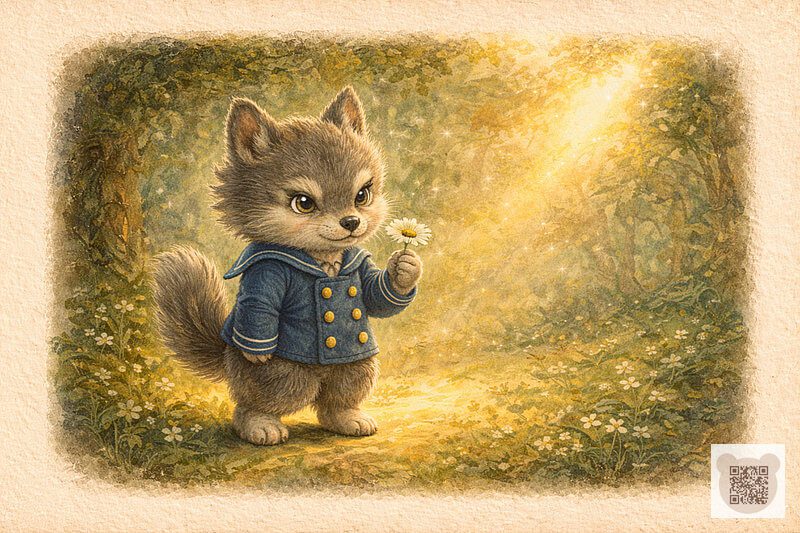
Walter possessed very sharp teeth and a very short temper. He wore a little sailor suit with golden buttons, yet his manners were by no means admiral-like.
If he met a snail upon the path, Walter did not step around it but growled fiercely: “Out of my way!” If a butterfly settled upon a flower, he would snap his teeth just above its wings, merely to see how frightened it would become.
— Walter, — his Aunt Wolf would say, — politeness is like a magnet. If you keep frightening everyone away, the world around you will fall to pieces.
— Nonsense! — Walter replied, striking a lilac bush with his stick so hard that the petals scattered everywhere. — The strong must be feared by all!
One morning Walter went to the clearing beloved by all the young creatures of the forest. He was in an especially foul mood and terribly wished to frighten someone. Marching irritably along the path, he heard cheerful laughter and playful scuffling from afar — someone was happily playing. The wolf cub thrilled with anticipation: now he would SCARE THEM GOOD! Yet when Walter stepped into the clearing, it was empty. At the sight of his shadow the frogs plunged into the mud, the birds fell silent, and the grasshoppers hid themselves in the thickest grass.
Walter bared his teeth and growled at an old stump. The stump, of course, did not grow frightened, which only angered the wolf cub all the more. Then he noticed bright sunbeams dancing merrily upon the fern leaves.
— Hey, you! — shouted Walter. — Stand still at once! I am in charge here!
He leapt upon a patch of sunlight, trying to pin it beneath his paw, and menacingly snapped his teeth. Suddenly a great gray cloud covered the sun, and the sunbeams vanished at once. It grew cool and quiet.
Walter stood in the middle of the empty clearing. There was no one left to growl at. No one left to shove. Even the sunbeams had fled from him. He tried to howl his victory song, but his voice sounded lonely and pitiful.
— Hey! — he called sadly. — Anyone there? I was only joking!
But no one answered. The forest folk held their breath, waiting for the rude little wolf to go away. Walter sat upon the ground and stared at his paws. All at once he understood that being “the most fearsome” meant being the most lonely. His paws were strong, but they could not embrace a friend. His voice was loud, but he could not call someone to come and play football.
Walter walked home slowly. Now he tried not to step upon the ants’ paths. He did not knock down grass and flowers with his stick. He did not snap his teeth at a lingering butterfly. Nor did he bark at the little hedgehog who hurriedly curled himself into a ball.
When the next morning a sunbeam again peeped through his window, Walter did not growl. He lifted his nose to the warmth and, somewhat shyly, whispered: “Good morning.” His voice sounded faint, and his smile came out crooked from lack of practice. Yet having tried it once, Walter the Wolf Cub did it better and better each day.
Vocabulary Work (enriching speech)
- Foul mood — when everything irritates you and you feel like grumbling for no reason.
- To snap (one’s teeth) — to close the teeth sharply with a clicking sound.
- Nonsense! — an old-fashioned word meaning “silliness” or “rubbish.”
- Manners — the rules of behavior. They may be good (politeness) or bad (rudeness).
- To hide oneself — to conceal oneself so quietly that no one notices.
Questions for Discussion (with a therapeutic effect)
- Why did Walter behave rudely even with snails and butterflies? (He believed that if others feared him, he would be the most important and the strongest.)
- What happened when Walter found himself alone in the clearing? (He realized that silence and loneliness are very sad. Strength brings no joy if there is no one to play with.)
- Why does Aunt Wolf call politeness “glue”? (Because polite words help people — and animals — stay together and be friends. Without them, friends scatter in every direction.)
- How did Walter change his behavior at the end? (He began to act carefully and spoke quietly.)
Exercise “The Friendship Magnet”
Invite the child to create a “recipe for a magnet”: “What words shall we add to our magnet so that friends will not run away from us?” (Thank you, please, let’s play, sorry).
You may draw Walter and stick word-stickers around him — the words that make him kind.
4. Mila the Mouse and Her Loud Voice
Reading time: ~2–3 minutes.
This story teaches a child the art of self-control and attentiveness, helping them understand that the ability to fall silent at the right moment opens the door to the most wonderful marvels of the world.
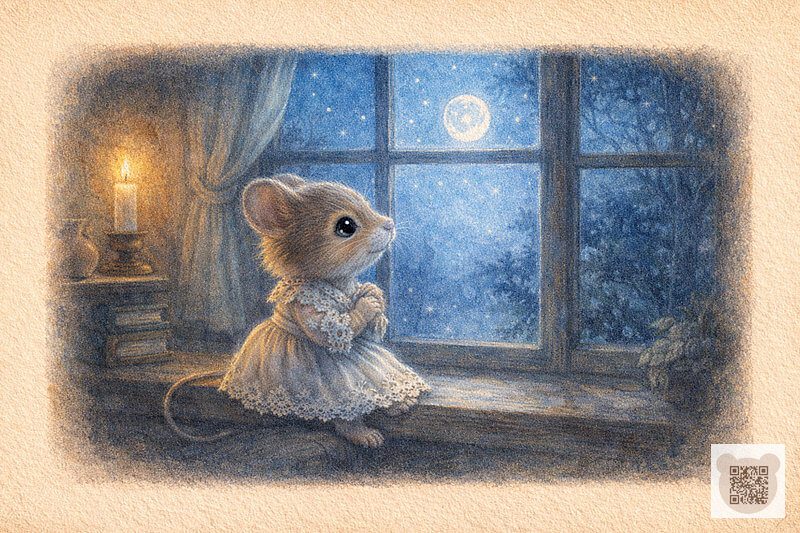
Mila was a tiny mouse, yet she possessed a voice that might well have belonged to a rather large goose. She wore a charming little lace dress and always carried so many pieces of news that they seemed ready to burst out of her at every meeting with her neighbors.
— GOOD DAY, MR. MOLE! — she cried straight into her neighbor’s sensitive ear. — HAVE YOU HEARD THAT I HAVE NEW SLIPPERS WITH POMPOMS?!
Mr. Mole would startle and hurry back into his burrow. And Mila, not the least embarrassed, would find another listener and continue her loud report.
One day a great event was expected in the forest — the annual Festival of Night Blooming. Once each year, and for only five minutes, the lovely Moon Primrose blossomed upon the clearing, filling the air with a scent of honey and stars. All the forest creatures gathered in complete silence, for the flower opened only when not a single sound could be heard in the woods. To see the flower was considered great fortune.
Old Owl, the master of the ceremony, raised his wing, calling for silence. Everyone held their breath. At any moment the flower would open. Already they could see a shy magical light shining from within the bud. And then Mila ran into the clearing.
— OH! WHY ARE YOU ALL SO QUIET HERE?! — she squeaked so loudly that three cones fell from the nearest fir tree. — AND DID YOU KNOW THAT TODAY I SAW THE BIGGEST…
— Shhh! — whispered the hare.
— Hush! — hissed the squirrel.
But Mila took this as an invitation to speak even louder. She began describing her breakfast in great detail, until the Moon Primrose, having barely shown the tips of its petals, frightenedly closed itself back into the bud.
— The festival is over, — hooted Owl sadly. — We shall meet here again in a year.
All the animals went home quietly. For the Night of Blooming marked the beginning of spring in the forest. Those who saw the Primrose bloom carried a drop of warmth in their hearts for the whole year — warmth that helped them endure forest dangers, the difficult season of raising their young, and the long cold winter.
Only Owl and a silent Mila remained in the clearing. For the first time in her life, Mila felt embarrassed by her own loudness.
— Mila, — said the old Owl thoughtfully, — every creature has two ears but only one mouth. Perhaps this is so that we may listen twice as much as we speak. And besides, silence is also music — one must simply learn how to hear it. And that is especially important in a great deep forest.
Mila tiptoed home. She removed her slippers with the pompoms so they would not slap against the floor, and she sat by the window for a long while. It turned out that if one remained quiet, one could hear the wind whispering through the alder catkins. One could hear Mr. Mole snoring comfortably in his burrow. And even the moonbeams seemed to ring softly as they brushed the leaves. This silence was the most interesting news she had ever discovered and the most wonderful music she had ever heard.
Vocabulary Work (enriching speech)
- Report — a detailed account of events (like on television or in a newspaper).
- Master of the ceremony — the one who keeps order at a celebration and tells everyone what to do.
- Hold one’s breath — to become still and stop breathing for a moment because of excitement or anticipation.
- Excessively — more strongly than necessary.
- To heed — to listen very carefully and respectfully.
Questions for Discussion (with a therapeutic effect)
- Why did Mila always speak so loudly? (She thought that this would make her news seem more important and help everyone notice her.)
- What happened to the magical flower because of Mila’s loud voice? (It was frightened and did not bloom. Discuss: “Are there wonders that love only silence?”)
- What did the old Owl teach Mila? (That ears are more important than the mouth, and that silence hides many interesting things.)
- Did Mila speak less afterward? (She learned to choose the right moment for speaking and to value the moments when one should simply listen to others.)
Game Exercise “Forest Silence”
Invite your child to play “The Moon Flower.”
You are the flower that “blooms” (slowly opening your palms) only when complete silence falls over the room.
Let the child try to freeze and hear any three sounds (the ticking of a clock, the rumble of cars beyond the window, your breathing).
This exercise is excellent for teaching self-control and attentiveness.
5. Hammy the Hamster and the Sticky Screen
Reading time: ~2 minutes.
This story helps a child realize that an excessive fascination with the virtual world can steal from us the brightest, most unrepeatable moments of real life.

Homa was a terribly house-proud hamster. His burrow was famous for its stores of dried clover and a collection of buttons he found near the garden gate. But lately Homa had lost all interest in buttons. He had acquired a “glowing little box” — a flat looking-glass that showed endless pictures of hopping grains and singing thrushes.
Hammy sat in his armchair made of pumpkin rind, propping his cheek on his paw. His eyes were fixed on the screen.
— Homa, — called his neighbor the ground squirrel, — come to the stream! The sky today is such a… color of oat-kissel!
— Later, — Homa muttered gloomily, without lifting his head. — They are showing how to hull seeds properly for the three-hundred-and-forty-second time. It is very important for self-education.
Hours passed. The burrow grew cool. Homa felt his paws go numb, and the screen became sticky with biscuit crumbs, yet he could not tear himself away. He watched videos of snow falling beautifully in distant mountains and tapped little “likes” with his paw.
Meanwhile, outside the window (which in a hamster’s home is usually tucked beneath the very root of an old pine) a marvel occurred. The sky truly turned gray, and then white fluffy starlets began to drift down. It was the first snow — the kind that smells of cleanliness and tastes of vanilla sugar if you catch it on your tongue.
All the forest folk poured out onto the clearing. They played snowballs, built icy slides, and even sampled the fresh drifts.
— Hammy! Come out! The snow is sweet as marshmallow! — they shouted into the ventilation hole.
But Hammy was busy. On the screen he was watching a cartoon about a polar bear. The screen shone so brightly that Hammy did not notice dusk creeping into his own burrow.
When the battery in the “box” finally died and the screen went black, Homa stretched and decided it was time for a walk. He put on his knitted scarf and dashed outside.
But alas! By then the snow was no longer fluffy. Rain had begun, and the lovely white drifts had turned into gray, cold, and thoroughly unappetizing slush.
Hammy stood in the middle of a puddle, clutching his dark, cold box to his chest. He had missed the tastiest event of the year because he had stared too long at its pale copy in a looking-glass.
— What a pity, — he sighed. — It turns out a video about snow is not nearly as sweet as a real drift.
Vocabulary Work (enriching speech)
- House-proud — someone who loves their home, cares for it, and stores up useful supplies.
- Fixed (his eyes were fixed) — when you look at something so intently you cannot turn away, as though bound by a chain.
- Self-education — learning something new on your own. (Hammy used this word as an excuse.)
- Copy — something that looks like the real thing but is not (like a picture of snow compared to real snow).
- Ventilation hole — a small window or little opening in a burrow that lets fresh air in.
Q&A Block
- What did Homa consider an “important matter” while he sat with the tablet? (Watching videos about seeds. Ask: “Did Hammy truly learn anything, or did he simply waste time?”)
- Why did Homa not notice that the forest celebration of the first snow had begun? (The screen’s light was too bright and hid the real world from him.)
- What is the difference between the snow in the “box” and the snow outside? (The snow in the box cannot be touched, smelled, or tasted. It is not real.)
- What do you think Hammy will do tomorrow when he sees something interesting outside the window again?
Game Exercise “A Trap for Attention”
Suggest a game: “Let’s find five things in our room that are more interesting than a screen.”
Something very soft.
Something that smells delicious.
Something that makes a sound.
This helps shift attention from a visual stimulus (the screen) to a sensory one (the real world).
6. Ludwig the Fox Cub and a Little Untruth
Reading time: ~2 minutes.
This instructive story clearly explains to a child that even a “small” lie creates a barrier between loved ones — one that cannot be removed by a simple washing.
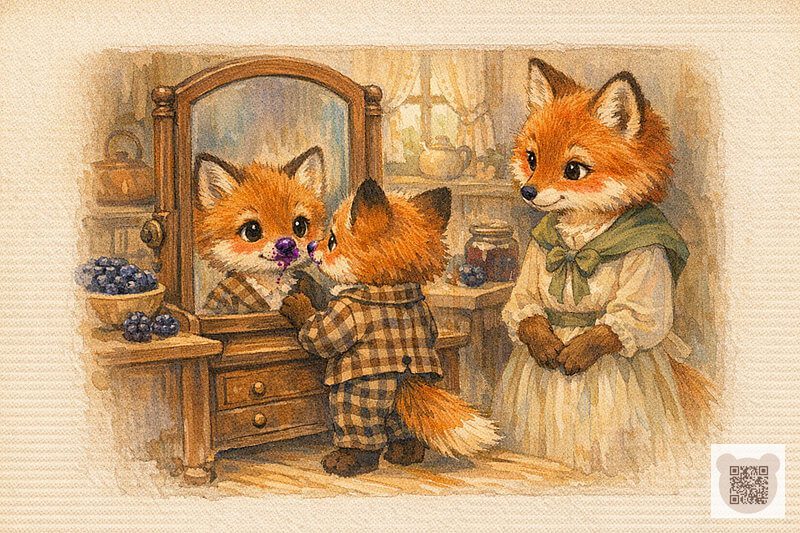
Ludwig the Fox Cub, of the family name Lisis-Khitris, took great pride in his russet coat and in his ability to creep on tiptoe, soundlessly, past Mr. Rrry the dog as he slept in the yard of the farm called “Apples and Plums.” Yet Ludwig had one fault — he could not confess to his misdeeds to save his life.
On Saturday afternoon his mother, Mrs. Lisusa, baked a magnificent blackberry pie. She set it to cool on the windowsill, covering it with a starched napkin.
— Ludwig, — she said sternly, — do not touch the pie. We shall take it this evening when we visit Boris the Badger.
When his mother stepped into the pantry for tea, Ludwig crept toward the window. The pie smelled so sweet that the very tip of the fox cub’s tail began to tremble. He decided that one small berry, pinched from the very edge, would change absolutely nothing. But where there is one berry, there is a second, and after that — a whole pawful of juicy filling.
When Mrs. Lisusa returned, she saw that the napkin had been moved and that an ugly hole yawned in the middle of the pie.
— Ludwig! — she exclaimed. — Have you been eating the blackberry pie?
— No, Mother, — replied Ludwig, looking straight into her eyes. — It must have been the magpie Chikka flying past. Or perhaps the pie itself shrank from… the heat.
Mrs. Lisusa said nothing. She took a little mirror and held it before her son’s muzzle. Ludwig’s nose, his whiskers, and even the tips of his paws were bright purple. To deny the obvious was as foolish as claiming that foxes could fly.
— What a pity, — sighed Mother. — Now we shall have to delay our visit. Go and wash yourself at once.
Ludwig ran to the washstand. He rubbed his nose with soap, splashed water everywhere, and tried with all his might. At last he thought himself perfectly clean.
— Mother, I am ready! I have washed! — he called from the washroom.
Mrs. Fox did not even turn around. She continued wrapping what remained of the pie.
— No, Ludwig, — she answered calmly. — I do not believe you. Ten minutes ago you said you had not touched the pie, although your nose was purple. Why should I believe you now?
Ludwig stood bewildered. He truly had washed, and his nose was clean, but the “little untruth” about the magpie now stood between him and his mother like a tall, thorny hedge of wild rose. He had to wash himself three more times and wait a long while before his mother looked at him with trust again.
They arrived late to their visit. Ludwig sat at the table in Boris the Badger’s house, sadly gazing at his clean nose reflected in the spoon. He understood at last: a lie is like blackberry juice — it is terribly hard to wash away, even when it seems very small.
Vocabulary Work (enriching speech)
- Yawns (a hole yawns) — when a large, noticeable empty space appears in something.
- To deny the obvious — to say “no” when everyone can clearly see the answer is “yes.”
- Bewildered — greatly surprised and confused by something unexpected.
- Trust — when people believe your words without needing to check them.
Q&A Block
- Why did Ludwig decide to deceive his mother, even though the evidence was right on his nose? (He was afraid to admit he had disobeyed and hoped that a “small lie” would save him.)
- What hurt Ludwig more: being scolded, or his mother not believing him when he told the truth? (His mother’s lack of trust. Discuss: “Is it easy to be friends with someone whose word cannot be trusted?”)
- Can a lie be “washed away” as quickly as a face? (No, trust returns slowly, even when you have begun to behave well again.)
- What will Ludwig do next time if he accidentally breaks a vase or eats an extra sweet?
Game Exercise “The Piggy Bank of Truth
Take a transparent jar and a handful of beans or little stones:
— Every honest word of yours is a heavy golden pebble in our jar of trust. If the jar is full, I believe you at once.
— But if you tell an untruth, we pour out a handful of stones. See how quickly the jar empties? To fill it again, many, many honest deeds are needed.
7. Puffy the Bunny and “No, I Don’t Want To!”
Reading time: ~1.5 minutes.
This tale helps a child clearly see that parents’ advice about safety and hygiene is not a dull prohibition, but a way to keep warmth, health, and cheerful spirits for play.
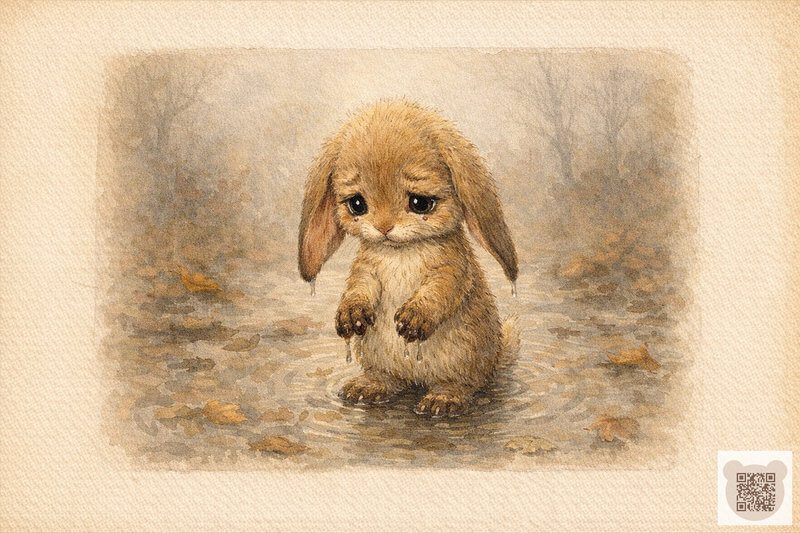
Puffy the Bunny possessed the softest ears and the most stubborn character in the entire neighborhood. That morning he sat upon a stool in the kitchen, folding his paws across his chest. His mother, Mrs. Hare, had already slid a bowl of warm oatmeal toward him three times, where a little piece of butter melted slowly.
— Puffy, dear, the porridge will grow cold, — she said kindly.
— No, I don’t want to! — replied Puffy, staring at the ceiling.
Then came the time for their walk. Outside it was a misty October morning, and the grass in the meadow was gray with cold dew.
— Puffy, put on your red rubber boots and your blue jacket, — his mother asked.
— No, I don’t want to! — Puffy stamped his paw. — I want to go in my silk waistcoat and barefoot. Boots are too heavy, and the jacket keeps me from jumping.
Mrs. Hare was a wise mother. She knew that some lessons are taught better by nature than by parents. She simply placed the boots in her bag and said:
— Very well, we shall go as you are. But I fear the dew is especially wet today.
Puffy hopped onto the porch. At first he was delighted. He bounced about, feeling light as a drifting dandelion seed. Yet after five minutes his silk waistcoat had grown damp. The paws he had been so proud of became cold and sticky with earth.
At the end of the path Puffy saw a magnificent shining puddle. It looked like a mirror dropped by a giant into the grass. Forgetting all caution, Puffy leapt straight into the middle of it.
Splash!
It was not the cheerful splash that comes when one wears boots. It was a cold, piercing AH! Dirty water slipped instantly between his toes and soaked his little tail. His paws went numb, and his belly twisted with hunger — for the oatmeal had been left upon the table.
— Mother, — whispered Puffy, trembling all over, — it seems my “no” does not keep me warm at all.
— Indeed? — said Mrs. Hare, taking a dry towel from her bag. — And I had thought “I don’t want to” was the warmest garment in the world.
Puffy said nothing. He allowed his mother to dry his paws and gladly plunged them into the heavy boots and warm jacket. When they returned home, even the cooled porridge seemed the most delicious treat in the world. From that day onward Puffy always checked the weather first — and only afterward decided whether it was worth saying his favorite word.
Vocabulary Work (enriching speech)
- Strong character — explain that here it means stubbornness. Ask: “Can a character be as hard as a stone that cannot be moved?”
- Caution — when you think first and act afterward, so as not to fall into trouble.
- Piercing (cold) — such strong cold that it seems to pass through clothes and skin straight to the bones.
- Numb — when paws grow so cold or stiff that they stop feeling anything.
Q&A Block (discussing with the child)
- Why did Puffy not want to wear his boots? (He felt they limited his freedom and lightness. Discuss: is everything that seems “uncomfortable” truly useless?)
- Did Mother scold Puffy when he refused to wear his clothes? (No, she gave him the chance to test his decision in practice. Ask: “Why do you think Mother acted this way?”)
- At what moment did Puffy change his mind? (When he felt the cold of the puddle and the emptiness in his little belly.)
- What warms better: the stubborn word “no” or a warm jacket? (The jacket. Rules — such as dressing for the weather — are not meant to upset children, but to keep them warm and dry.)
Game Reinforcement “Dress the Bunny”
Take any toy and invite the child to “prepare it for a journey”:
— It is raining outside. What shall we choose: a pretty ribbon or an umbrella?
— Should the little bunny take a sandwich along if he is going to the forest for the whole day?
This game helps the child step into the position of an adult and understand the logic of care.
🎨 Coloring Pages for the Instructive Fairy Tales: Free Download
All coloring pages are prepared in the format 533×800 px — a light and convenient size,
which downloads quickly and is suitable for printing on a home printer. 🖨️
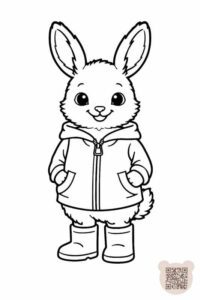
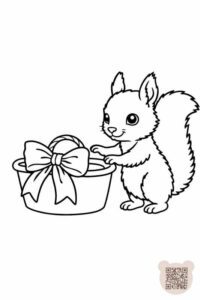
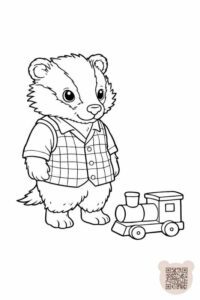
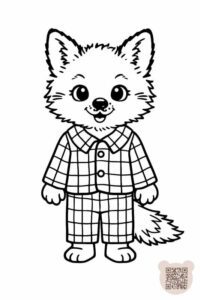
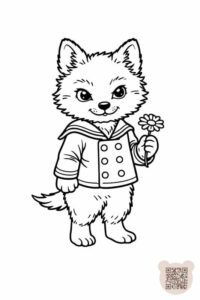
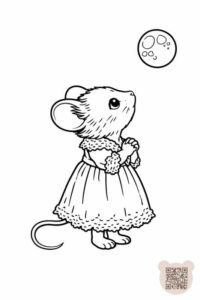
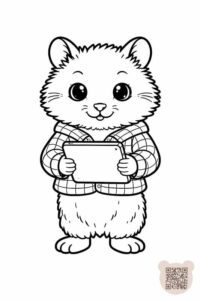
Would you like to reinforce the lesson through creativity? I have prepared exclusive coloring pages for these instructive fairy tales, which you can download for free and print with a single click.
While your child colors a favorite character — Boris the Badger or Ludwig the Fox Cub — discuss the story’s plot together once more. This is one of the best ways to develop fine motor skills and turn our short meaningful fairy tales into a complete educational activity. My coloring pages for children fully follow the plots of the woodland stories, helping a child visualize kind deeds and rules of behavior. Simply choose the character you like, press “download,” and create your very own fairy-tale book!
📖How to Discuss Instructive Fairy Tales about Good Behavior: Advice from a Teacher
For short, meaningful children’s fairy tales to bring the greatest benefit, it is important not merely to read the text but to create a space for reflection. Here are a few secrets for turning reading into effective therapy:
- Create a home ritual. Choose a time when the child is calm and ready to communicate. These short meaningful fairy tales with illustrations are perfect for examining details together, discussing the emotions of the characters through their expressions and posture.
- Listen together. If you have no strength left to read aloud, you may listen to our short meaningful fairy tales in a lively author’s audio narration. Be sure to stay nearby: this helps the child feel that the story matters to you as well.
- Avoid moralizing. The chief secret of gentle pedagogy is the absence of direct lectures. Instead of saying “you must not do that,” ask: “Why do you think the Badger felt sad?” These short tales with deep meaning are written so that a child can arrive at the right conclusion independently.
- Connect the story with real life. These meaningful tales are an excellent opportunity to recall a similar moment from everyday life. “Do you remember how yesterday we also forgot to put away the toy cars, just like Boris?”
- Use the principle “one day — one story.” Although these are very short meaningful tales, it is best not to read them all at once. Allow the child to “sleep on” the new idea so that the brain can gently strengthen the helpful habit.
- Read for pleasure. You may simply read our short meaningful fairy tales for children as a work of storytelling. The therapeutic effect will arise naturally thanks to the carefully balanced plots and vivid imagery.
❓Frequently Asked Questions about Instructive Fairy Tales
In this section I have gathered answers to the questions parents most often ask when choosing instructive fairy tales about good behavior for children.
- Why is it important to choose short meaningful fairy tales for children?
At the age of 4–6 a child’s attention span is limited. My very short meaningful fairy tales allow an important educational idea to be conveyed in 2–3 minutes without overloading a young child’s mind. The child manages to experience the story alongside the character without losing the thread of the narrative.
- How should these meaningful fairy tales be read to achieve results?
I recommend reading short meaningful fairy tales in a calm setting when you are not in a hurry. After finishing the story, pause for a moment. Allow the child to comment first on the little animal’s actions. My children’s meaningful tales are short, so you will still have plenty of time to discuss and reinforce the “lesson.”
- Can these short meaningful fairy tales be listened to in audio format?
Yes, for your convenience I have prepared a lively narration. You may listen to the short meaningful fairy tales directly on the website. This is an excellent option for moments when a parent’s eyes are tired or when you need to occupy a child with useful content during a journey.
- Do short fairy tales with deep meaning truly replace educational conversations?
Fairy-tale therapy works more gently and effectively than direct lecturing. When we discuss meaningful stories, the child does not feel pressure. They observe the consequences of the fox cub’s or the badger’s actions from the outside and draw their own conclusions, which gradually become their personal rules for life.
- Why do you suggest short meaningful fairy tales with illustrations?
A visual image is extremely important for preschool children. My short meaningful fairy tales with illustrations are created in a classical style that nurtures aesthetic taste. While examining the details (buttons on a waistcoat, drops of dew), the child remembers the story better and forms an emotional bond with the character they wish to imitate.
- What should you do if the child denies any resemblance to the character or refuses to discuss the story?
This is a perfectly natural protective reaction. If a child says, “I am not like Boris the Badger!”, never argue. My short meaningful fairy tales for children are specially designed so that we discuss the character, not the child themselves.
Teacher’s advice: keep the focus on the little animal. Ask: “Why do you think Boris behaved that way? Do you feel sorry for him?”
Result: the child subconsciously projects the situation onto themselves. Even if they outwardly deny the resemblance, these short fairy tales with deep meaning begin an inner process. In time you may notice how the child starts using the characters’ phrases or suggesting solutions from the stories in real life.
What age are these instructive stories suitable for?
Although the main focus of my activities is aimed at children aged 4, 5, and 6, these short meaningful fairy tales have a wider range of use:
- Toddlers aged 2–3: at this age children eagerly absorb new words and images. Bright illustrations and my calm audio narration help them grow accustomed to the natural rhythm of speech and to the basic ideas of “good” and “bad.”
- Young schoolchildren aged 7–8: for first-graders these fairy tales with deep meaning become an excellent exercise for independent reading. The themes of responsibility, honesty, and gadget-dependence (like Hammy the Hamster’s) remain very relevant in the early school years.
- Family reading together: my short meaningful children’s fairy tales are brief, which is why parents of children of different ages often choose them. Older children help the younger ones answer the questions, strengthening the bond between brothers and sisters.