A tale loved by many generations about the mischievous Kolobok, who ran away from home and ended up as a snack for the fox. However, despite the sad ending, I promise you, dear friends, a new twist in the continuation. Stay tuned for website updates!
All texts have been translated by me using AI, without the help of a professional translator. I do this with love and care to share fairy tales and materials in English. There may be some inaccuracies in the translation, but every word has been created with children and parents in mind. Thank you for your understanding and enjoy reading!
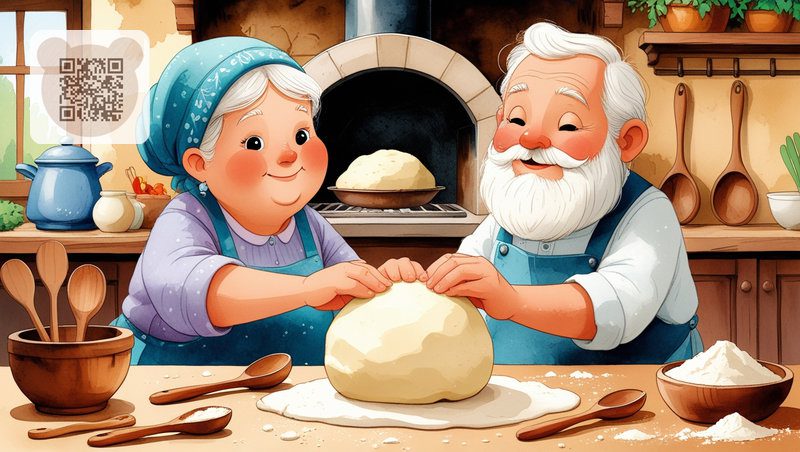
— Who do you see in the picture? — What did Grandpa ask Grandma to do? — Can you think of names for them?
Once upon a time there lived an old man and an old woman. And the old man said to the old woman: — Bake a kolobok, old woman! — What shall I bake it from? There’s no flour. — Oh, old woman! Sweep the storeroom, scrape the bins — and there’ll be enough flour.
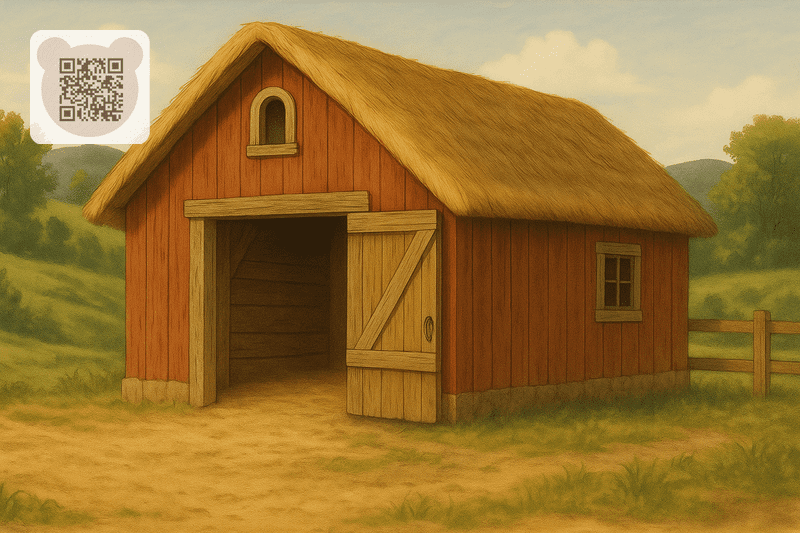
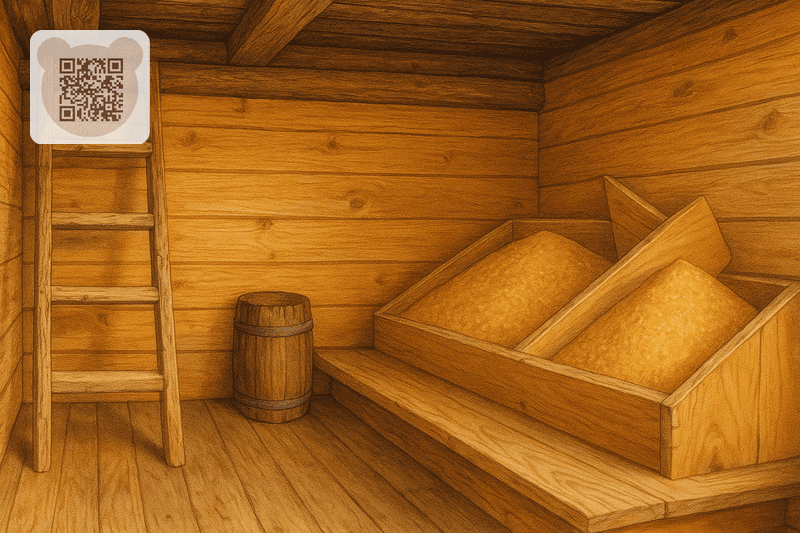
— This is a barn. Long ago, people stored grain and flour here. — A barn is a big shed with large boxes (bins) along the walls.— These are bins — wooden boxes placed along the barn walls. — People kept different types of grain and flour in the bins. For example, wheat grain and flour (for white bread) or rye grain and flour (for black bread).
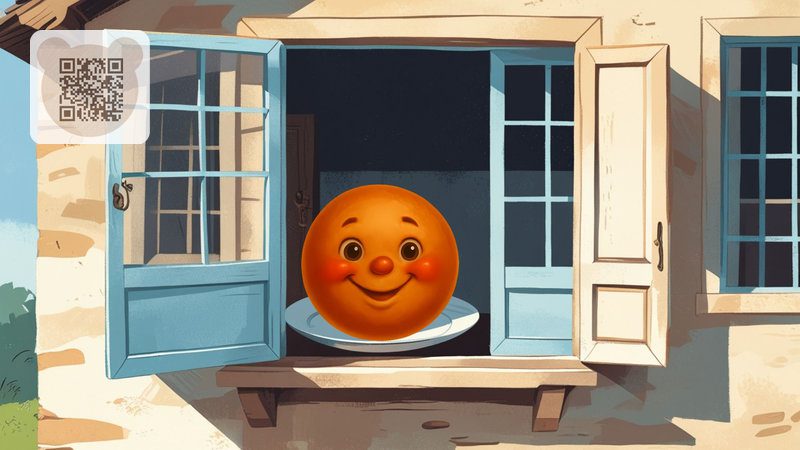
The old woman did just that: she swept the storeroom, scraped the bins, gathered a handful of flour, kneaded the dough with sour cream, rolled a kolobok, baked it, and placed it on the windowsill to cool.
— Who is the Gingerbread Man? — What is his personality like, do you think?
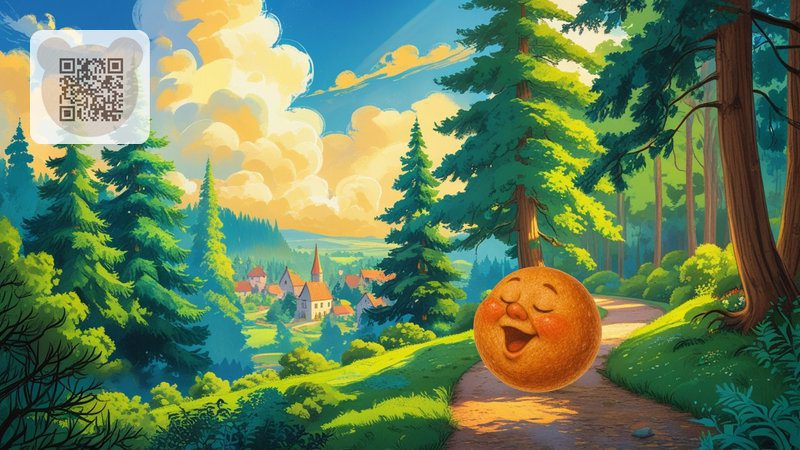
Kolobok got tired of lying there — from the windowsill he rolled onto the bench, from the bench to the floor, from the floor to the door, over the threshold and — rolled away down the path.
— What do you see in the picture? — How do you think he feels?
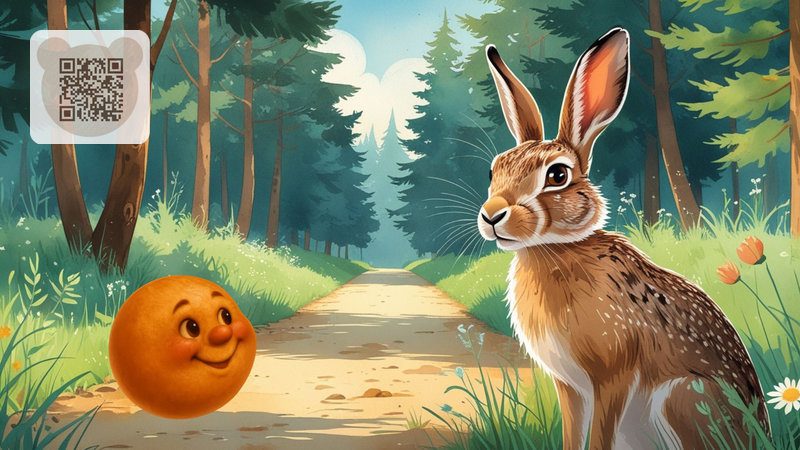
Kolobok is rolling down the road, and a hare comes toward him: — Kolobok, Kolobok, I’m going to eat you! — Don’t eat me, slant-eyed bunny! I’ll sing you a song:
— Who did the Gingerbread Man meet first? — How did he escape from the hare?
I am Kolobok, Kolobok, Swept from the storeroom, Scraped from the bins, Mixed with sour cream, Baked in the oven, Cooled on the windowsill. I ran away from Grandpa, I ran away from Grandma, And I’ll run away from you, bunny!
And Kolobok rolled on.
— Who do you see in the picture? — Why is the Gingerbread Man laughing?
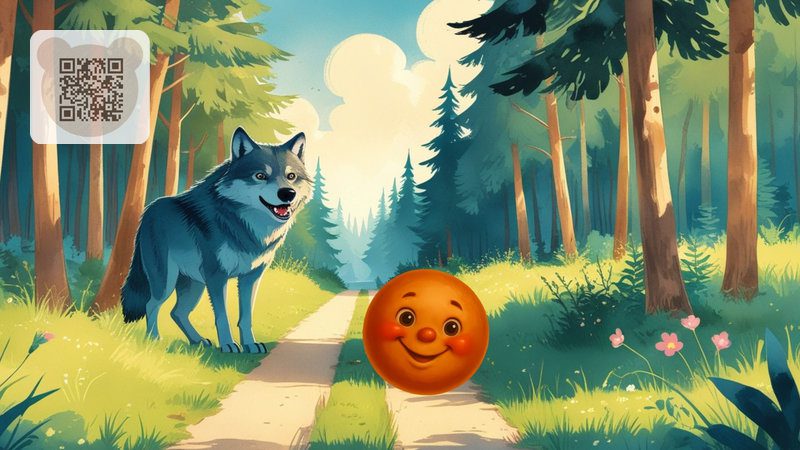
Kolobok is rolling along, and a wolf comes toward him: — Kolobok, Kolobok, I’m going to eat you! — Don’t eat me, gray wolf! I’ll sing you a song:
I am Kolobok, Kolobok, Swept from the storeroom, Scraped from the bins, Mixed with sour cream, Baked in the oven, Cooled on the windowsill. I ran away from Grandpa, I ran away from Grandma, And I’ll run away from you, wolf!
And Kolobok rolled on.
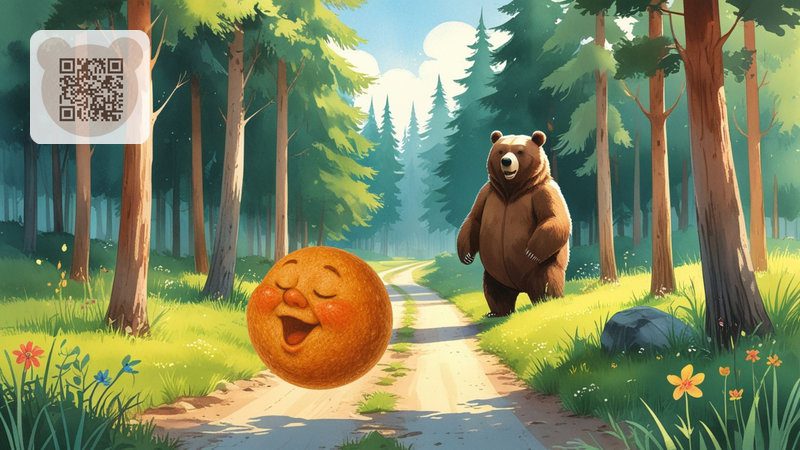
— Who do you see in the picture? — Do you think he was afraid of the bear? Why?
Suddenly, a bear came toward him: — Kolobok, Kolobok, I’m going to eat you! — Don’t eat me, clumsy-pawed one! I’ll sing you a song:
I am Kolobok, Kolobok, Swept from the storeroom, Scraped from the bins, Mixed with sour cream, Baked in the oven, Cooled on the windowsill. I ran away from Grandpa, I ran away from Grandma, And I’ll run away from you, bear!
And off he rolled again.
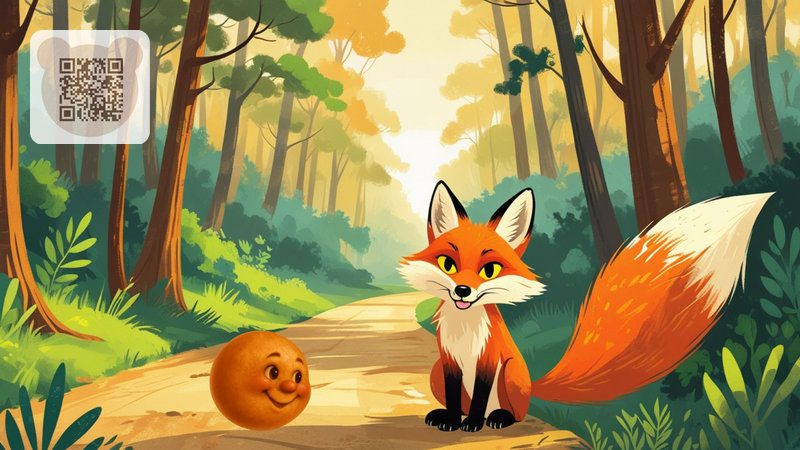
— Who is he talking to? — How does he feel? Why?
Kolobok is rolling along, and a fox comes toward him: — Kolobok, Kolobok, how rosy you are! Sing me a song! Kolobok sang his song:
I am Kolobok, Kolobok, Swept from the storeroom, Scraped from the bins, Mixed with sour cream, Baked in the oven, Cooled on the windowsill. I ran away from Grandpa, I ran away from Grandma, And I’ll run away from you, fox!
But the fox says: — I can’t hear you very well. Sit on my nose and sing it one more time.
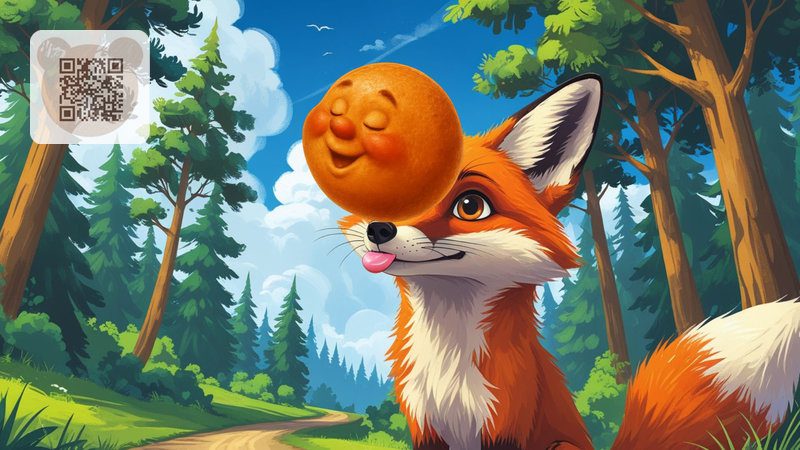
— Why did he sit on the fox’s nose?
Kolobok — hop onto the fox’s nose and started singing. — Move a little closer, Kolobok, right to the very tip of my nose — I can’t hear well!
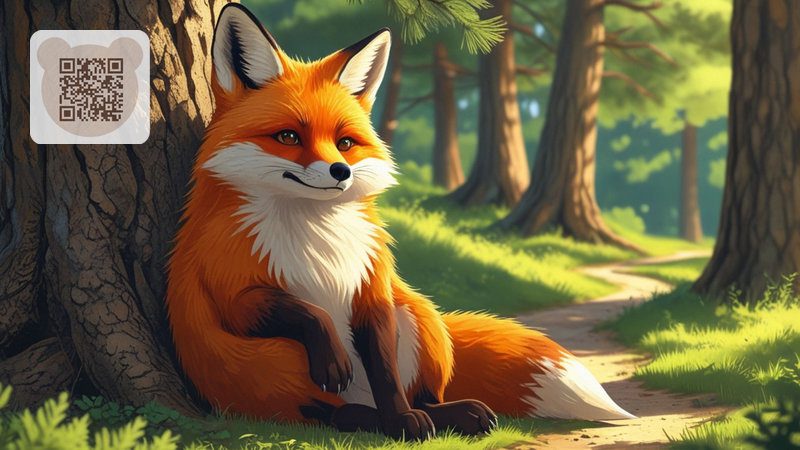
— Who do you see in the picture? — Where did the Gingerbread Man go? — Why does the fox have such a big belly?
Kolobok moved closer. The fox — snap! — and ate him.
And that’s the end of the tale, and whoever listened — well done!
Support the creation of new fairy tales for children! ❤️
Let’s play and learn: activities based on the Kolobok tale
When reading the story of Kolobok has become a warm tradition — it’s the perfect time to turn it into a game. Simple activities based on the plot help a child better understand the meaning, develop speech, thinking, and even role-play interaction skills. Most importantly — it’s fun and cozy for the whole family.
Creative tasks
Color Kolobok and all the animals. Use classic illustrations or create your own. Let your imagination run wild — Kolobok in a hat, and the bear wearing glasses! Draw Kolobok’s path: from the oven to the forest — with twists, obstacles, and characters along the way.
Speech therapy games
Repeat the sounds: “Ko-lo-bok”, “Rol-led a-way”, “Fox” — break the words into syllables and say them together. Sound imitation: how does the bear growl? how does the hare hop? This game helps train articulation through a fun dialogue.
Comprehension questions
(for children aged 3–5 — short and simple answers, for 5–6 — more detailed)
Who baked Kolobok?
Why did Grandma decide to bake Kolobok?
How did Kolobok run away from home?
Who did he meet in the forest? Name them in order.
What did Kolobok sing to each animal?
Why didn’t the animals eat Kolobok right away?
How was the fox different from the other animals?
What happened to Kolobok at the end of the story?
Logic and thinking
Why was Kolobok able to escape from the hare, the wolf, and the bear?
Why do you think the fox praised Kolobok?
Who is the cleverest animal? Why do you think so?
What would happen if Kolobok didn’t sing his song?
If Kolobok hadn’t stopped at the fox — how might the story have ended?
Speech activity and retelling
Tell how Kolobok rolled down the path.
Tell Kolobok’s song. You can make up your own.
Come up with a new ending where Kolobok wasn’t eaten.
Tell the story from Kolobok’s point of view / from the fox’s point of view.
Creative tasks
Draw Kolobok and the animals he met.
Sculpt Kolobok from clay or dough.
Invent a new animal that Kolobok could have met. What would it look like? What would it say?
Playful tasks
Game “Who is it?”
I read the description of the animal, and you guess who it is:
“He’s gray, has ears, hops through fields. Loves carrots, afraid of the wolf. Kolobok met him first…”
“He’s gray, a predator, feared in the forest. Kolobok also met him…” (wolf)
“He’s big and strong, loves honey, sleeps in winter. Stomps loudly through the forest. Kolobok sang him a song…”
Game “What came first?”
Who came before the wolf?
And who came after the hare?
Was Kolobok baked first or did he roll off into the forest first?
The Kolobok tale teaches children to be careful, not to trust every stranger, and always think before acting. Read fairy tales with your children on the Baby-bear Club website — it develops speech, thinking, and imagination. And it also effectively prepares your child for reading lessons in school.
Afterword for parents
Dear parents, grandparents, and educators!
Evening. Warmth. A child on your lap. In front of you — a story you’ve known since childhood. You open the page, and Kolobok looks back at you — a beloved character of many generations.
Reading the tale of Kolobok means not just entertaining, but developing: speech, memory, thinking, emotional intelligence. This page is more than just text. Here, you can read the Kolobok tale with pictures, get tips on how to make reading more mindful, and receive conversation and learning activities — all in one place, right here on this website.
Kolobok tale — read fully and for free
Before you is a cultural mosaic, where a simple story about a round hero becomes a maze of meanings, traditions, and emotions. The Kolobok tale is a folkloric masterpiece, lovingly preserved in the cultural memory of Ukrainians.
Here, you can read the Kolobok tale in full, free, and online. The story is presented in its original form, so that your child can experience the authentic sound of the tale, where the language, intonation, and structure remain true. This isn’t just reading — it’s an invitation to dive into folklore, where every image has stood the test of centuries.
Reading the story of Kolobok means opening a kaleidoscope of emotions and meanings that are interwoven in this simple but deeply symbolic tale. I invite you to read the original story with your child.
How to read the Kolobok tale with a child
When you open the Kolobok tale to read with your child — it’s not just about the words on the page. It’s about a living dialogue, the warmth of your voice, shared glances, and a journey together through images and meanings. You are the guide in this world. And how deeply the story touches your child’s heart depends on how you read.
Try reading not “line by line,” but live. Use intonation, facial expressions, take pauses. Repeat the characters’ phrases — especially Kolobok’s spirited song — with expression, letting the child join in, laugh, be surprised, and participate. When reading Kolobok becomes a two-person theater — the child doesn’t just listen, they take part.
Ask open-ended questions as you read:
Why do you think Kolobok ran away?
What would you have done in his place?
Why didn’t the animals stop him?
This kind of reading develops thinking and emotional intelligence — and helps the child safely explore important themes: fear of being eaten, the desire for independence, stubbornness, and the search for boundaries. Kolobok represents a young child learning to separate from the adult world. He runs from Grandma and Grandpa, talks to strange animals, is full of confidence, but doesn’t notice danger when it’s real.
Often, we take the story literally — a clever bun who tricked everyone and then got caught. But if you read “Kolobok” more closely — it’s not about the fox, or the escape, but about the importance of recognizing limits, saying “no,” distinguishing kindness from manipulation. It’s a deeply psychological story that opens the door to meaningful conversations — gently and lovingly, as we adults do when we read Kolobok together with a child.
Kolobok with pictures: reading and discussing together
It’s much easier for young children to get into the story if they not only hear the words, but also see bright, expressive illustrations. That’s why reading Kolobok with pictures is so important — it makes the story visible, alive, and understandable.
Pictures help children listen, observe, ask questions, and think. For example, look at Kolobok’s face together — is he happy? scared? overconfident? These little details become a great starting point for developing emotional intelligence and the ability to recognize feelings.
When you read the Kolobok story with your child and look at the pictures together — it becomes an interactive activity. Ask:
What’s happening in the picture?
What do you think Kolobok is feeling?
What will happen next?
These kinds of questions build observation skills, speech, and imagination. They’re especially helpful for children with speech delays or shy kids who find it easier to talk about characters than themselves.
Under each picture, you’ll also find guiding questions — for those times when you’re tired and don’t feel like inventing anything.
Even a simple illustration can be a “conversation starter” if you treat it not just as decoration, but as a reason to connect. So reading Kolobok with pictures means not just bringing the story to life — but building a dialogue where both you and your child are heard.
Did you know that the Kolobok tale is performed in theaters all over the world? In Japan, for example, the character is called “Okuranbo” and becomes a figure who learns politeness, attentiveness, and patience. In Germany, Kolobok is sometimes depicted as square instead of round — to highlight his “uniqueness.”
Why you should read Kolobok again and again
Reading fairy tales isn’t just a bedtime routine. It builds attentiveness, develops thinking, and strengthens the parent–child bond. Especially when the story is read mindfully — with discussion, games, and engaging the child in the process.
In this article, you’ve found everything you need to make reading “Kolobok” meaningful:
the full original text;
illustrations;
tips;
game-based tasks.
You can read the Kolobok story every evening — and each time discover something new. Try it tonight — make the tale part of your cozy bedtime ritual. Let your reading become the start of a bigger conversation about trust, freedom, and kindness.