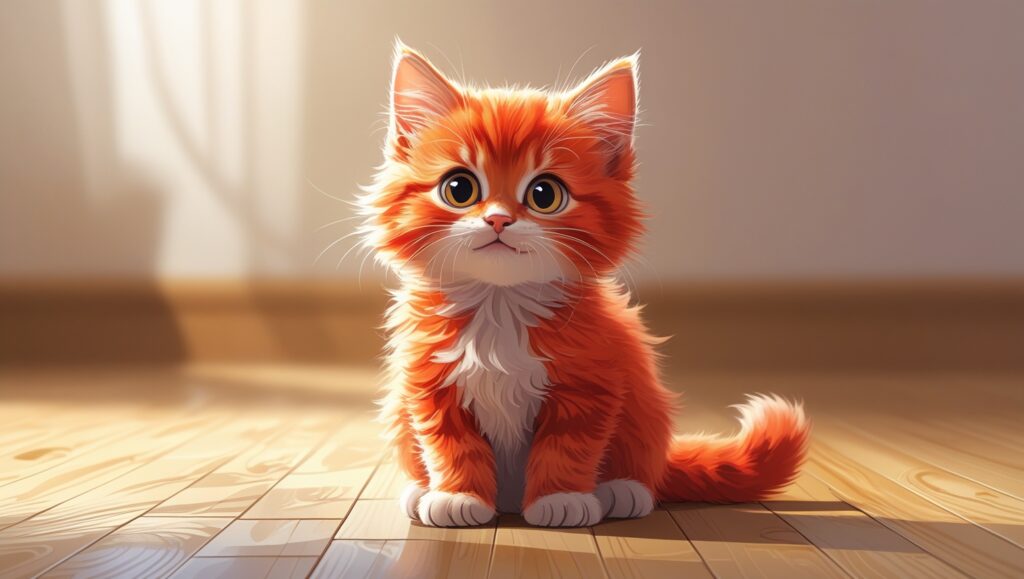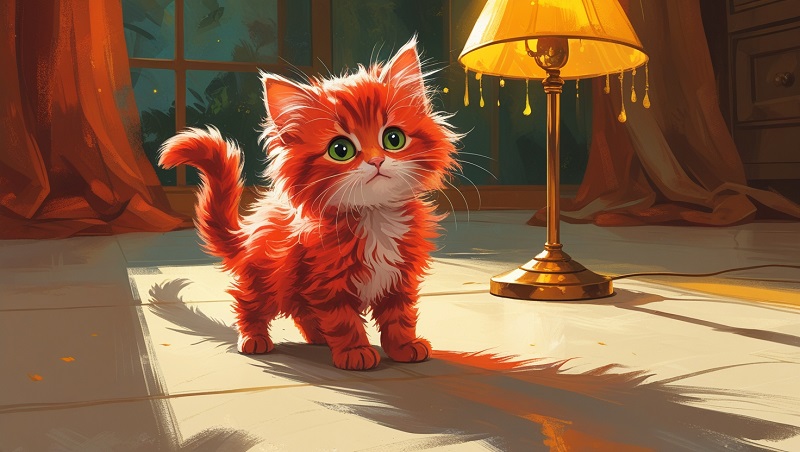
Once upon a time, there was a ginger kitten named Murkotyk. It was still very small, fluffy, and very curious. Everything was interesting to it: why the wind rustles in the grass, where shadows go when evening comes, and what “one,” “two,” and “three” mean.
The tale: learning to count to 5
Once upon a time, there was a ginger kitten named Murkotyk. It was still very small, fluffy, and very curious. Everything was interesting to it: why the wind rustles in the grass, where shadows go when evening comes, and what “one,” “two,” and “three” mean.
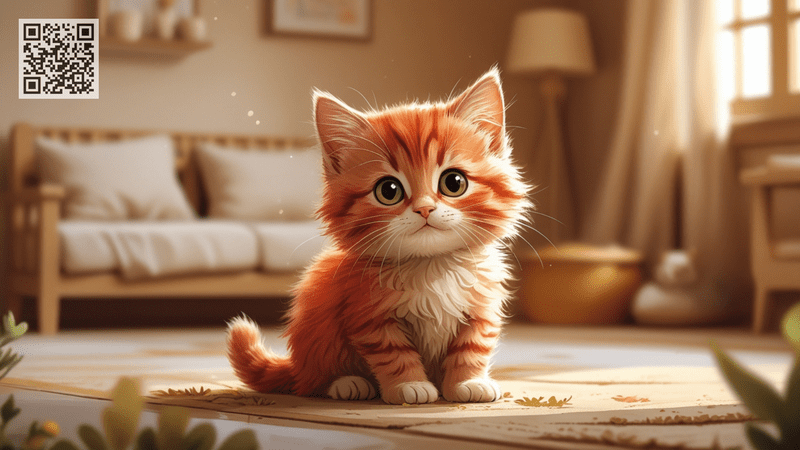
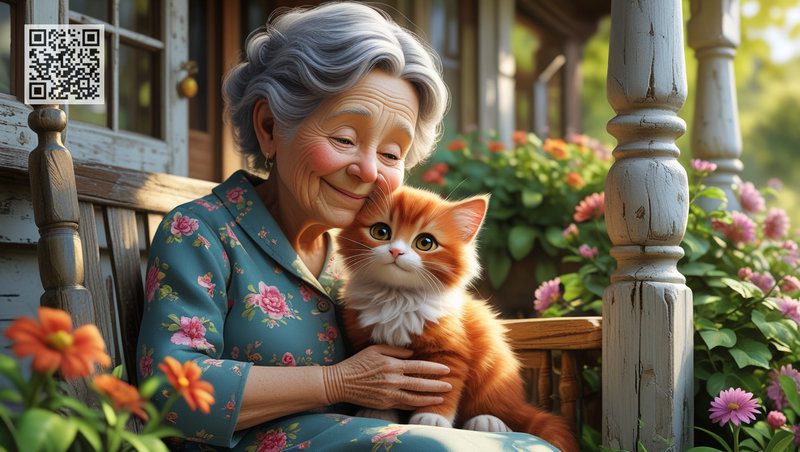
He lived with a kind grandma, in a house with wooden shutters that smelled of bread and warm milk. Every evening, Grandma would tell him:
— You’re growing, Murkotyk. One day, you’ll learn to count. It’s just like learning to look at the world more carefully.
The kitten would nod and purr:
— Pur-r-r-r. I’ll do my best.
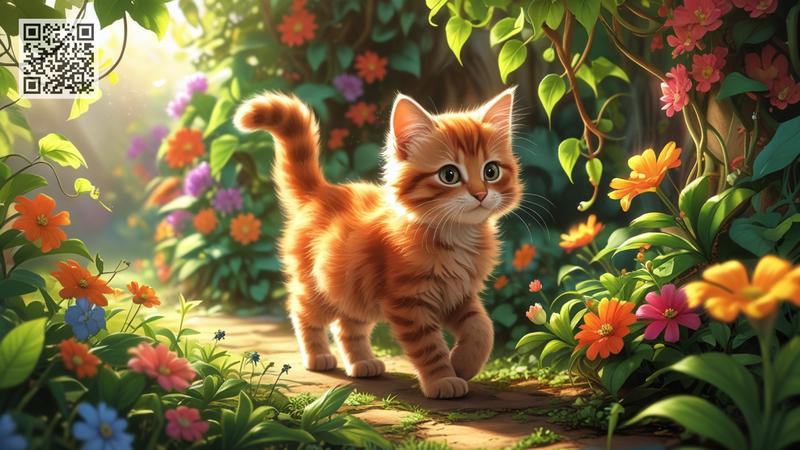
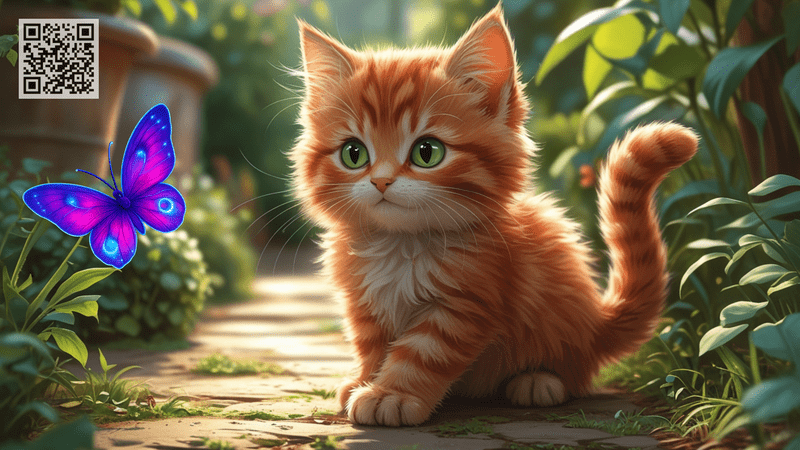
Two birds were sitting on a branch. Murkotyk crouched down to the ground, as if he wanted to sneak up. But then he changed his mind.
— Two, — he whispered. — Two birds. I won’t scare them, I’ll just count.
And again, his chest felt soft and calm.

Under the apple tree lay three red apples. He walked up and touched one with his nose.
— One… two… three, — he whispered, trying not to lose count. — Three apples.
The wind rustled through the leaves. As if it confirmed: yes, you understood everything correctly.

Support the creation of new fairy tales for children! ❤️


Why read this tale to a child
Why is it worth reading counting-themed kitten stories to children? Fairy tales are not only a way to entertain a child but also a powerful tool for early development. Especially effective are stories about cats, as images of domestic animals are familiar and understandable to young children. And if the hero is a ginger kitten, like in the tale about Murkotyk the kitten, it sparks even more interest: warm color, a soft fluffy creature, like a real friend you want to play and learn with.
The tale about the little ginger cat Murkotyk gently introduces the child to the world of numbers from 1 to 5 through images, emotions, and simple actions. This approach helps the child not just memorize numbers, but experience each number as an important discovery.
The image of Murkotyk as an emotional anchor
Little kitten Murkotyk is a metaphor for the child themselves: curious, attentive, taking their first steps in discovering the world. When children read the story about Murkotyk the kitten, they identify with the hero, experience the same emotions — wonder, joy, interest. This increases engagement and helps better remember the numbers.
Learning through observation, not memorization
Counting in the tale is woven into real life: a butterfly, birds on a branch, apples under a tree. The child learns to see, to notice, to pay attention. This type of learning is natural and corresponds to developmental characteristics at the age of 2–4 years, when sensory and emotional perception come to the forefront.
Why this works
-
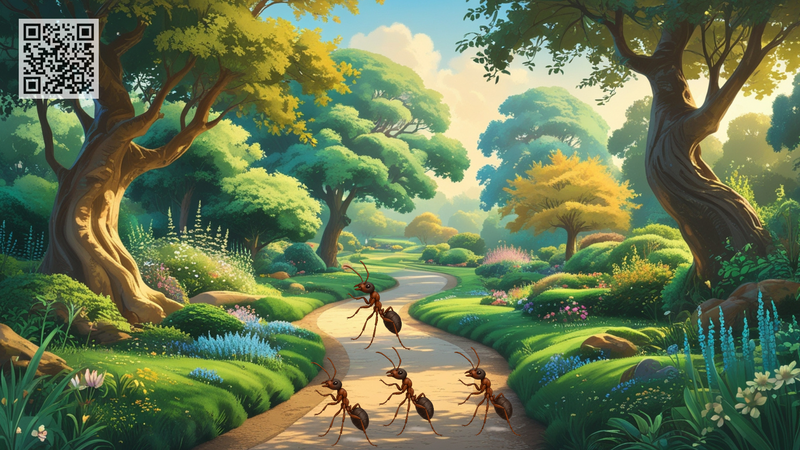
Visual images (butterfly, apple, ant) help connect the number to a concrete object.
-
Repetition and rhythm create a sense of confidence in the child.
-
Calm pace and emotional comments by the character (for example, “the world felt cozier”) develop not only counting skills but also emotional intelligence.
Age characteristics
The tale about the ginger kitten is suitable for children aged 2 to 5. It works perfectly as:
-
the first story about numbers;
-
a bedtime story;
-
a starting point for early development activities.
If you’re looking for kind, simple stories about kittens with educational value — Murkotyk’s story is a great choice.
Tips for parents
-
While reading, ask your child to count the objects in the pictures along with the kitten.
-
Don’t hesitate to use your child’s finger (Find, point to, and count the birds!) — this adds tactile memory to mechanical memorization. And preschoolers learn best through hands-on experiences.
-
After reading, suggest that your child find their own butterflies, apples, or birds in the world around and count them.
-
During learning, try not to use overly diminutive names for objects — this makes it harder to grasp the educational task.
-
Use favorite toys to act out the plot.
-
Count anywhere: seashells in the sandbox, spoons in the kitchen, cars by the roadside — once during daily activities is enough. The child won’t get tired and will gladly play counting games.
-
Be sure to download and print the free PDF file — with cards and counting games. This way you can play and count to five many times. Start simple.
Fairy tales with kind characters like Murkotyk help a child learn and form a warm, trusting attitude toward learning. Keep reading stories about cats — through play, imagination, and love, children learn best.