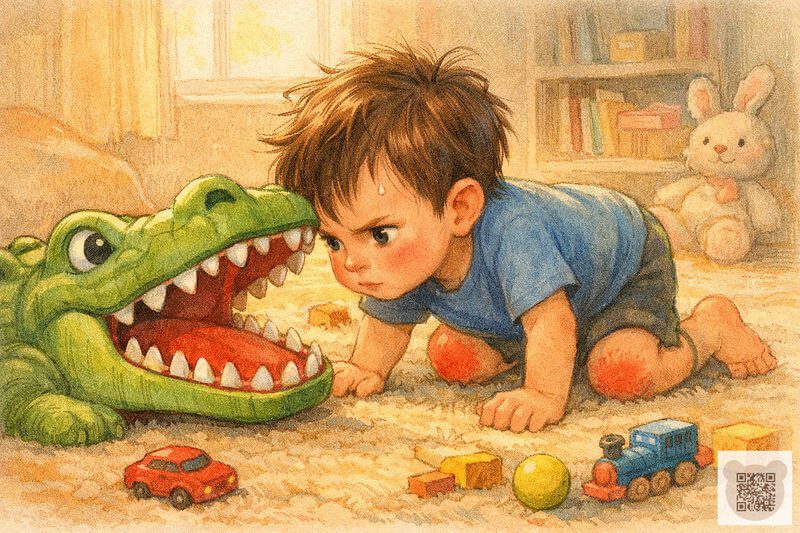
Let’s be real: modern parenting feels like being a 24/7 cruise director on an endless voyage. We buy toys that flash, sing, and practically hire a solicitor to sue for our attention. And then we wonder why, after ten minutes of “Cocomelon” or a session with an interactive unicorn, a child dissolves into a puddle of pure, unadulterated rage.
What Is Low-Stimulation Play, and Why Is Everyone Raving About It?
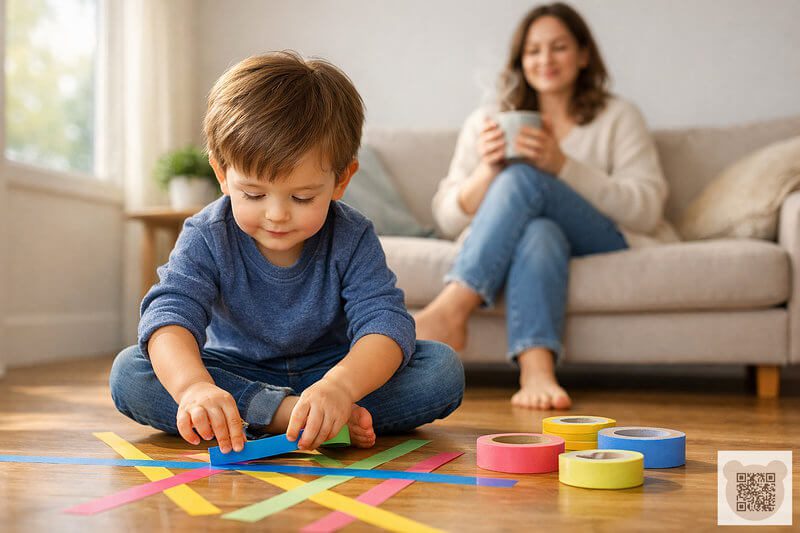
In the U.S. and across Europe, low-stimulation play is having a massive moment. And no, this isn’t a secret cult of wooden-block devotees. It’s a global manifesto for restoring a child’s ability to concentrate—and finally granting parents a lawful half-hour with a coffee that is actually hot. This trend, born in minimalist Scandi-blogs and perfected by TikTok “slow-parenting” gurus, is the ultimate survival strategy for the digital age.
This trend, born in the minimalist blogs of Scandinavia and perfected in the TikTok feeds of American mothers, is no longer just a “vibe”—it’s a movement. And it is not merely another fashion for “aesthetic toys.” For many of us, it has become a matter of survival: in a world where anxiety already runs high, further overcharging a child’s nervous system with a toy that screams in three languages and blinks like a 3:00 AM rave is a rather poor strategy.
Mothers from New York to Kyiv and London to Warsaw are already ditching interactive monsters in droves, choosing open-ended toys and plain old cardboard instead. Why? Because we have finally realized the golden rule of play: the less the toy does, the more the child’s mind must do.
What Is Wrong with “Fun” Toys? (The Dopamine Trap)
Let’s be honest: most modern toys are designed not to help children grow, but to be foisted upon tired parents in the shop. Bright plastic, neon colors, forty built-in tunes, and flashing diodes—this is sensory fast food.
The trouble lies in the dopamine loop. When a child presses a button and everything around them erupts in lights and sound, the brain receives a cheap, rapid jolt of dopamine. This creates instant dependence—pure overstimulation.
What happens next:
- The Dopamine Crash: The second the gadget goes silent, a hard comedown begins. The real world (where oatmeal does not sing and blocks do not glow) seems unbearably gray and sluggish.
- The “I’m Bored” Syndrome: This isn’t a lack of imagination; it’s withdrawal. The brain is simply demanding another dose of noise.
- Meltdowns “Out of Nowhere”: The nervous system can’t process the sensory torrent and retreats into a defensive scream.
In the U.S., this is known as “The Battery-Operated Trap.” We think we’re buying development, but we’re actually buying a one-way ticket to an emotional roller coaster.
Battle of the Titans: Screeching Plastic vs. An Ordinary Box
Let’s be honest: the toy industry thrives on two things—our parental guilt and the lie that an $80 “smart” robot will turn a child into a prodigy while we finish our coffee. We see a box promising to teach a toddler Mandarin through song, and we willingly hand over our credit cards for a chunk of singing plastic.
The result is always the same. Fifteen minutes later, the robot lies in a corner wheezing its dying “I-love-you,” while your child is blissfully picking at a hole in the wallpaper or trying to wear a saucepan as a hat.
We decided to compare a typical “investment in development” with the ordinary household junk you already have. A word of warning: the figures in the “cost per minute of peace” column may trigger an immediate urge to demand a refund at the nearest toy shop.
| Parameter | The “Mega-Bot 3000” (Battery-operated) | Painter’s Tape or a Kitchen Colander |
|---|---|---|
| Soundtrack | Shrieks “I love you!” in 5 languages until the batteries die (or your sanity does). | A noble hush. Or a gentle, creative “whoosh.” |
| Play Scenario | Press a button, see lights. Your kid goes into “zombie mode” watching the show. | Outer space, a deep-sea helmet, a racetrack, a drum kit. The child is the creator. |
| Dopamine Level | A rocket-like surge, followed 15 minutes later by a full nuclear meltdown. | A steady flow. The child slips into a flow state. |
| What It Develops | The index finger (for pressing buttons) and your neighbors’ patience. | Imagination, fine motor skills, and common sense. |
| Cost Per Minute of Peace | $12.50. Lasts exactly until the robot gets stuck under the sofa. | $0.02. Your kid will be mesmerized by the colander until they’re hungry. |
| Cost of 1 minute of peace | $12.50. Lasts exactly until the robot gets stuck under the sofa. | $0.02. A child will be mesmerized by a colander forever—or at least until snack time. |
The Moral of the Story: Fewer Buttons, More Brain
Looking at these figures, you might ask: “So what, are we never supposed to buy toys again?” Take a breath. I’m not suggesting you retreat to a cave and carve dolls out of beets (though that’s actually a top-tier low-stim activity). The point is this: invest in the environment, not the gadgets.
When you buy a “smart” toy, it does all the work for the child. It sings, it flashes, it entertains. Meanwhile, the child’s brain is stuck in “passive spectator” mode. But when you hand a child painter’s tape, a colander, or an empty box, their mind has to switch into high gear, transforming that humble household junk into an adventure.
Your survival plan for the coming week:
- Take stock: Hide 70% of the battery-operated toys in a cabinet (well out of reach, on the top shelf).
- Legitimize the “junk”: Leave a basket within reach filled with things that would ordinarily be tossed (cardboard tubes, fabric scraps, clean plastic containers). In the U.S., this is called Loose Parts Play.
- Time it: Just watch how many minutes pass before your “bored” child begins constructing something incredible out of sofa cushions and clothespins.
Remember: silence in the house while a child is busy with “boring” play is not a sign that you are a “lazy” parent. It is a sign that, at this very moment, new neural pathways are being built inside your child’s brain.
And in the meantime, you can finally finish your coffee in peace. Or even sit in silence. We give you full permission.
How to Shift to “Slower” Tracks: Low-Prep Hacks for Weary Parents
Shifting to low-stim play isn’t about living in a cave or renouncing civilization. It’s about reclaiming your home. The DIY approach is perfect here because it’s about the process, not the Pinterest-perfect result. And no, you don’t need to build a matchstick cathedral while your kid dismantles the kitchen.
The secret weapon? Low-prep activities. Use what’s already sitting under your sink or in your pantry.
1. “The Great Ice Rescue”
Freeze small dinosaur figures—or just some berries—in a container of water. Give your child a syringe of warm water, a dropper, and a little salt.
Why it works: This is an incredibly powerful sensory play activity. A child goes quiet as they focus on the melting ice. It builds patience and concentration in a way no iPad ever could.
2. Painter’s Tape: 1,001 Ways to Survive
Ordinary paper tape is the absolute MVP of low-stimulation tools.
- Make “roads” for toy cars across the hardwood floor.
- Stick strips to the wall for the child to peel off (this is a top-tier activity for developing fine motor skills in toddlers).
It’s cheap, silent, and takes exactly three seconds to clean up.
It’s cheap, it’s quiet, and it disappears in a second.
3. The Great Dishwashing
Yes, I am entirely serious. Pull up a learning tower or a sturdy stool by the sink, hand over a sponge and a few unbreakable bowls. For a child under 6 years old, this isn’t a chore—it’s the magic of commanding the elements.
The payoff: Basic life skills and absolute silence in the house for twenty glorious minutes.
4. Sorting the “Junk”
Give your child an egg carton and a handful of dried beans, different pasta shapes, or large buttons. The mission? Sort them into the little compartments.
Why it works: In the U.S. and UK, these are known as Montessori-inspired games and Quiet Time activities. They soothe the pulse of both child and parent, allowing you to just be for a while.
Pinterest Cheat Sheet: What Should You Search For?
If the “Slow Parenting” movement has inspired you, but your brain can only come up with “build a blanket fort,” head straight to Pinterest. They’ve already done the heavy lifting for us.
To avoid drowning in endless pictures, use these “golden” search terms (best in English—the creative base in the U.S. and Europe is many times larger):
- Low stimulation play ideas — the foundation of the whole affair. Activities that won’t set your eye twitching.
- Independent play toddler — how to keep a little person so thoroughly occupied they forget you exist for 20 minutes.
- Open ended toys DIY — toy ideas from things that should have been in the recycling bin (cardboard, tubes, clothespins).
- Sensory bin filler ideas — what to put in a tub so a child disappears into it heart and soul (grains, foam, water, kinetic sand).
- Quiet time activities for kids — ideal occupations before bedtime or a nap.
- Loose parts play — the magic of playing with “unstructured” bits and pieces (buttons, pebbles, chestnuts).
Pro-tip: Simply save a few pins using these searches, and Pinterest’s clever algorithm will start serving you brilliant “low-stim” ideas all on its own.
The Boredom Window: Do Not Shut It
The hardest thing for a modern parent is enduring the first five minutes of a child’s whining. In the U.S., this phenomenon is often called the “Parental Entertainment Trap” (the parent-as-performer trap). The moment a child starts trailing around the house with a woebegone face, our reflex fires: “I’m a bad parent, my child is being neglected!” Out comes the tablet, just so we don’t have to hear that long-drawn “I’m bo-o-o-red.”
Stop. Breathe.
Boredom is not emptiness. It is an incubator for imagination and the very foundation of creative thinking. The moment the brain stops being fed ready-made content from the outside, it starts its own inner engine. Only after passing through that “dying swan” stage of boredom does a child begin turning a sofa cushion into an intergalactic cruiser and an ordinary stick into a device for commanding reality itself.
How to “Not Interfere” Properly: A Survival Guide
Our task is not to entertain, but to create the right environment (that DIY context) and then make a timely tactical retreat.
- Endure the “whining pause”: On average, the transition from the despair of “there is nothing to play with” to active imagination takes 5 to 12 minutes. Simply know that this stretch must be weathered.
- The “Open Shelves” Method: Don’t hide everything in closed drawers. At the child’s eye level, place a basket of “mysterious objects”: fabric scraps, cardboard towel tubes, old clothespins. In the U.S. and UK, this is called Loose Parts Play. It is the gold standard for nurturing creativity.
- Become a “Passive Spectator”: If the child asks you to play, use the technique of Sportscasting (commentary). Instead of building the tower for them, say: “Oh, I see you’ve taken the blue block. I wonder if it will balance on that red one.” You are present and engaged, but the engine of the game remains the child.
A useful insight: Boredom teaches self-regulation. A child who knows how to occupy themselves is, in later years, less vulnerable to anxiety and digital dependence. In the U.S., articles on this subject go viral because they give parents official “permission” to sit on the sofa and scroll their feed (or this article) while the child saves the world in the next room.
The Parent’s Decoder Ring: What Your Child Is Really Saying
Sometimes it feels like a preschooler is an emissary from another planet, sent specifically to test the durability of your eardrums. In reality, 90% of “bad” behavior before age 6 is just the nervous system crying out for help.
Here is a Decoding Table to help you understand when it’s time to switch off Cocomelon and fetch the tub of dry rice.
| The Signal (What the child does) | The Translation (Into “Adult”) | What’s Happening in the Brain | Urgent Low-Stim Remedy |
|---|---|---|---|
| Aimless running and shouting (“Zoomies” mode) | “I’m overheated! Power down the world—I can’t handle it!” | Sensory overload. The brain is redlining and can’t keep up with incoming signals. | Kill the lights/TV. Offer “heavy” sensory input: a weighted blanket or a firm “bear hug.” |
| Meltdown over the “wrong” cup | “My self-regulation reserves are at zero. This cup is just the final straw.” | Dopamine crash. Usually happens after Cocomelon or a trip to the mall. | Don’t argue about the cup. Let them play with water (sink/bath)—water is the ultimate grounding tool. |
| Whining “I’m bo-o-o-red” | “I’ve forgotten how to generate my own ideas. Feed me ready-made content!” | Digital dependence. The brain is wired for instant, high-speed stimulation. | Hold the pause. Do not offer entertainment. Leave a basket of “recyclables” in sight (ribbons, cardboard tubes). |
| Aggression (throwing things, shoving) | “I need to feel my physical boundaries and the world around me.” | Seeking proprioceptive input. The brain isn’t getting enough signals from the muscles and joints. | “Heavy work” play: hauling sofa cushions, building a blanket fort, or a “pillow fight” to release tension. |
| A “glassy” stare or “zoning out” | “System frozen. Rebooting…” | Protective shutdown. The brain has simply “blown a fuse” to prevent a total burnout. | Leave them be. Don’t touch, don’t ask “what’s wrong?” Just sit nearby with a quiet cup of tea. |
Support the creation of new fairy tales for children! ❤️


The Takeaway: Stop Being the Lightning Rod
The most important thing to take from this table is this: your child is not a broken machine, nor a tiny tyrant determined to give you a nervous breakdown. Before age 6, a child’s brain is like a power station still under construction—fuses are constantly tripping from lights that are too bright and music that is too loud.
Your superpower isn’t entertaining; it’s knowing when to “lower the voltage.”
When you stop interpreting a scream as a personal insult and start seeing it as a “dopamine crash” or a “search for boundaries,” the magic begins. You exhale. You don’t reach for ultimatums or the tablet, but for a basin of water or a roll of painter’s tape.
What should you do right now? Print this decoder (or save a screenshot) and hang it on the fridge. The next time “unexplained” chaos erupts, simply consult the list. Most likely, the answer isn’t a new toy from Amazon, but ten minutes of quiet fiddling with beans and the steady calm of your presence.
Silence in the home doesn’t start with noise-canceling headphones; it starts with giving your child the gift of “doing nothing.” Try it—it works better than any AI nanny.
Summary for the Survivors: How to Survive the First Week
Let’s take off the rose-colored glasses: the shift to a low-stim routine won’t happen at the snap of your fingers. If your child is used to “digital fast food”—bright cartoons and singing plastic monsters—they will demand another hit. Loudly. Meltdowns in the style of “Give me back my dopamine!” are perfectly normal for the first few days. It’s a digital detox.
What to expect on this journey:
- The first 48 hours: System resistance. The child may be more fretful than usual because their brain hasn’t yet learned to draw joy from “slower” forms of play.
- After one week: The magic happens. You’ll notice the background noise in your house has dropped. The child is calmer, and their games are more intricate. That same box of rice suddenly becomes a construction site for an hour instead of two minutes.
The Parent Bonus: You stop being the “Chief Entertainment Officer.” Your role shifts from “performer” to “observer.”
Remember: less noise, more meaning. A child doesn’t need batteries to be happy; they need space and your quiet presence nearby (even if you’re just finally drinking that well-earned, actually hot coffee).
Good luck. You’re doing something incredible—you’re giving your child back their own imagination.