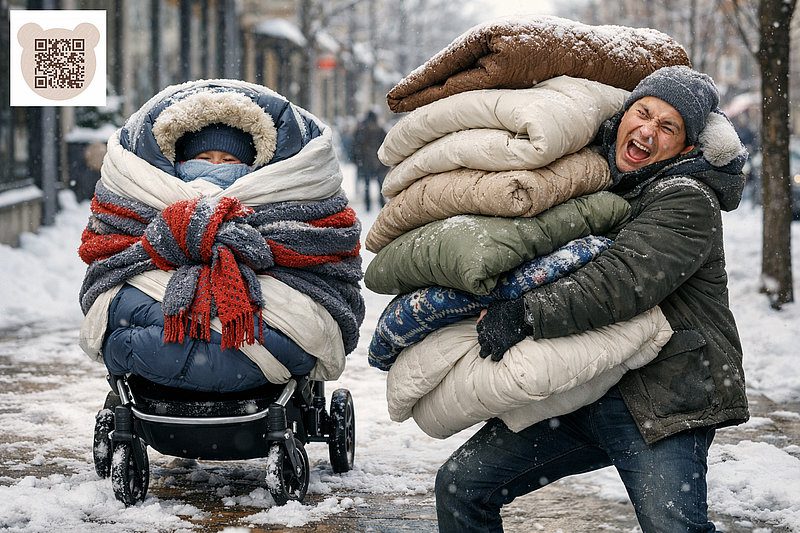
“Careful, don’t fall!” — that universal warning has never actually helped anyone. While you sip your hot cocoa, high-speed winter fun can instantly turn childish delight into an emergency trip to the dentist and a scramble to save their precious smile. Statistics don’t lie: lately, local dental offices have been overflowing with little patients injured after a “fun” ride downhill.
Numbers that make you pause: up-to-date statistics 2024–2025
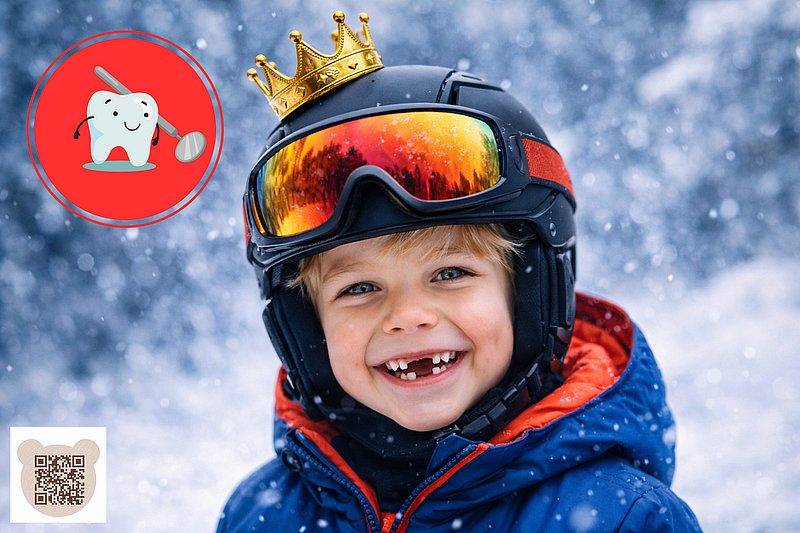
I hate to scare you, but the figures quickly take off the rose-tinted glasses and force us to take a child’s safety seriously. Here is what global statistics from recent years are telling us:
- The head and face are prime targets. According to a Health Infobase Canada report (updated in 2024), head and facial injuries account for more than 33% of all hospital visits after sledding accidents. Moreover, over 10% of these cases involve serious concussions requiring lengthy rehabilitation.
- Tubing means uncontrollable speed. Research by Children’s Hospital Colorado (2024) shows that inflatable tubes can hit speeds of 40–50 km/h. Since there’s no way to brake, the risk of colliding with an obstacle is 45% higher than with ordinary plastic sleds. This makes tubing the most dangerous winter equipment for preschoolers.
- The dental bill shock. According to the International Association of Dental Traumatology (IADT), dental injuries spike by 20% during the winter season. The upper front teeth suffer most often when a child falls face-first or strikes ice. Timely help within that first crucial hour (60 minutes) is decisive for saving the tooth.
Safety isn’t about restricting a child’s freedom; it’s about the chance to enjoy winter without pain and unnecessary doctor visits. Understanding that 30% of injuries could be avoided simply by putting a protective helmet on a child changes the whole approach to a walk. This applies to any kind of children’s winter gear.
Teeth Intact: Rules for Winter Survival
Winter isn’t just about Instagram photos in the snow; it’s also the peak season for tooth injuries in little mouths. If you think baby teeth are just a “demo version” and not worth worrying about, I’m here to dispel that myth. An injury in the preschool years lays the foundation for problems that can last a lifetime.
I decided to add a bit of a chill (and healthy common sense) so that your walks end safely at home, not in the waiting room of the maxillofacial department.
1. Tubing Is an Unguided Rocket
The inflatable “donut” is arguably the most treacherous piece of equipment out there. It has no brakes, no steering, and no brains. A child inside it is merely a passenger, flying face-first into the unknown.
Educational verdict: Letting a preschooler go tubing where there is even one tree, pole, or another child is a lottery — and the odds are definitely not in your favor.
What to do: Only single descents on empty, gentle slopes. No “trains” of riders! That isn’t fun — it’s dangerous.
2. Metal Sleds: Greetings from the Past
Those classic metal sleds from our own childhood are a perfect tool for knocking out front incisors. One sharp “stop” against a curb—and the child, carried by inertia, face-plants right into the metal frame.
Advice: Teach your child how to bail safely. Before heading to the hill, practice at home with pillows: if it feels scary, ditch everything and roll onto your side. Better a dirty snowsuit than a gappy smile.
3. The Icy “Experiment”
A total classic: “What happens if you lick a metal fence?” Spoiler alert: There will be lots of blood and a call to a psychologist—for the parents.
Important: If it happens—do not yank! Do not try to tear the child away by force. If you are a thoughtfully prepared parent, you have warm water in a thermos. Pour, gently unstick, and hug.
What If the “Bang” Has Already Happened? (A Nerve-Saving Plan)
When a child comes flying toward you with a mouthful of snow and blood, the crucial thing is not to faint before they do.
- Turn off “panic hysteria” mode. The child looks into your eyes. If they see the end of the world there, they will scream so loudly the whole neighborhood will hear. Stay calm: “I’m here, we’ll sort this out now.”
- Search for the artifacts. If the tooth is missing, look for it in the snow. Just don’t wash it with soap or rub it with a towel! Place it in a clean container with saline solution or ordinary milk. This helps preserve the chances for a specialist to save it.
- Cold is your friend. Apply snow (through a mitten or scarf) to the lip. This will help prevent swelling that takes up half the face.
- Fast reaction. You have very little time to find help. Don’t wait until Monday or hope it will “go away on its own.”
Why Look For and Keep the Tooth? (An Explanation for Parents)
I don’t suggest launching a search operation in the snow for no reason. Here are three reasons why a “dirty” knocked-out tooth isn’t rubbish, but a viable chance for rescue:
- Replantation (the tooth can be put back). If it is a permanent tooth, modern medicine can return it to its place. But this is only possible if the periodontal ligament (microscopic cells on the root) is alive. If the root dries out or is treated with antiseptics, the cells die and the tooth will not take.
- Milk is a “life-support system.” Saline solution or ordinary milk has the ideal environment (pH and composition) to keep these root cells alive for a short time. Tap water is unsuitable—it causes rapid cell damage to tooth cells.
- Why you must not rub it with a towel. Even if the tooth is sandy or dirty, do not touch the root! By wiping it with a towel, you strip away living tissue, turning the tooth into a “dead bone” that a dentist can no longer return to the jaw.
- Diagnosis for the dentist. Even if the tooth is a baby tooth and will not be replanted, the doctor must ensure it came out whole. If the root broke off and remained inside, this is a direct threat to the bud of the future permanent tooth.
A found tooth in a glass of milk is the difference between a 15-minute doctor visit and complex prosthetic surgeries in the future. It is your pass to forgetting this incident like a bad dream.
How Not To Become a Horror Story Hero? (Prevention)
I’m fully in favor of an active childhood—but with a switched-on brain:
A helmet is stylish. Teach your child that a helmet on skis or skates is like a prince’s crown—only way more useful.
Terrain analysis. If the hill is crowded, with everyone piling onto one another, it is not a place for play. It is a place for injuries. Teach your child to wait their turn. That’s education.
Moms and dads, protect those priceless smiles! Let the only “toothy” experience this winter be enjoying sweet, juicy mandarins.
Support the creation of new fairy tales for children! ❤️


Checklist: Safe Winter Fun – Preventing Face and Mouth Injuries
This guide will help you prep your child for the snow and ensure you’re ready if things take an unexpected turn.
1. Equipment Safety Check
- Skip the metal: Opt for modern plastic sleds or snow saucers with a low center of gravity. Metal components are the primary cause of dental injuries during collisions.
- Tubing on designated tracks only: Ensure the slope is free of trees, rocks, and poles. Since “donuts” are unpredictable, safety depends entirely on a clear path.
- Head protection: If your child is skating or skiing, a helmet is a must. It protects the brain and helps shield the jaw during a fall.
2. Safety Skills: What to Teach Your Child
- The Art of Falling: Practice falling “like a ninja” at home — landing on the side, curling up, and protecting the face with the hands.
- The Safety Gap: Teach your child to wait until the path is completely clear before starting their descent.
- The “Cold Metal” Rule: Explain (firmly, but without scaring them) why they should never touch frozen metal with their tongue or lips.
3. Parent’s Emergency Kit
- Antiseptic wipes and clean water: To quickly rinse snow or debris from a scrape.
- A thermos with a warm drink: Use it to “thaw” lips or a tongue if they get stuck to metal (pour warm water gently — never pull!).
- Emergency contacts: Keep your dentist’s or a 24-hour clinic’s number on speed dial to avoid frantic googling in the cold.
4. First 3 Minutes: What to Do If an Injury Happens
- Stay calm: Your panic is scarier for the child than the sight of blood.
- Control bleeding: Apply firm pressure with a clean cloth or gauze.
- Search the area: If a permanent tooth is knocked out, find it and place it in a container of milk or saline. This is vital for successful re-implantation.
Apply cold: Use a snow-filled cloth or a cold pack on the cheek to minimize swelling.
💡 The “Golden Hour” Rule
In dental emergencies, time is everything. You have roughly 60 minutes to get a knocked-out permanent tooth to the dentist for a chance to save it. Acting fast during this “Golden Hour” can make the difference between a simple re-implantation and a permanent loss.
- Save this checklist to your phone! May your winter with “Baby-Bear Club” be full of joy, not emergency rooms.
Дорогой друг! Теперь я адаптирую все свои и народные сказки для детей с высокой эмоциональной чувствительностью — без жестоких сцен, с мягкими концовками и искренними чувствами. Я берегу детскую душу и хочу, чтобы каждая история учила доброте и сочувствию. О причинах читайте на странице «Про автора».